Every year, the Jackson Hole Symposium is one of the most closely watched events on the financial markets.
This year was no exception, as Federal Reserve (Fed) Chair Jerome Powell's speech marked a turning point in monetary expectations, with immediate repercussions for Commodities, particularly Gold.
A more conciliatory Fed, relieved markets
By confirming that the US central bank was considering a first interest rate cut as early as September, Jerome Powell gave investors the signal they had been waiting for.
The Fed Chair's comments highlighted the fact that inflation is now better contained, but also a worrying slowdown in employment.
As a result, markets are now betting massively on rapid monetary easing, with over 86% probability of a 25 basis points (bps) cut as early as September, according to the CME FedWatch tool.
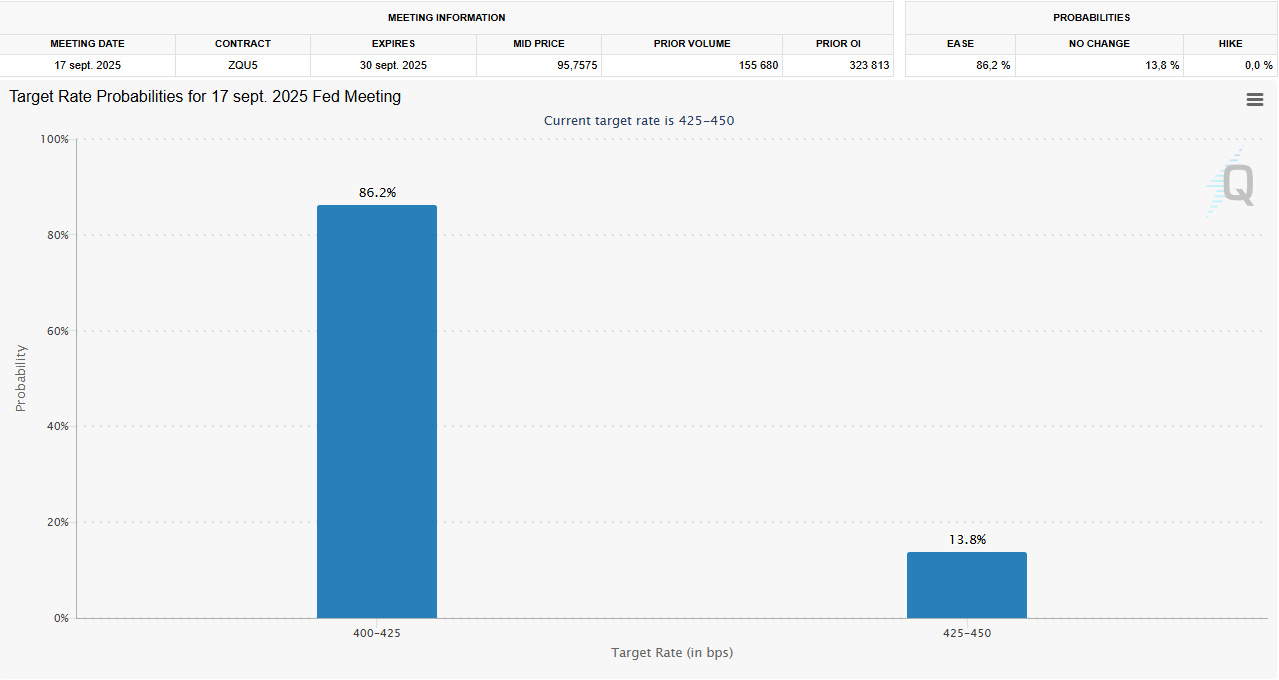
Fed Watch Tool. Source: CME Group.
This more dovish tone immediately weakened the US Dollar (USD) as an immediate reaction, creating a favorable context for the entire Commodities complex, whose prices often move inversely to the US currency.
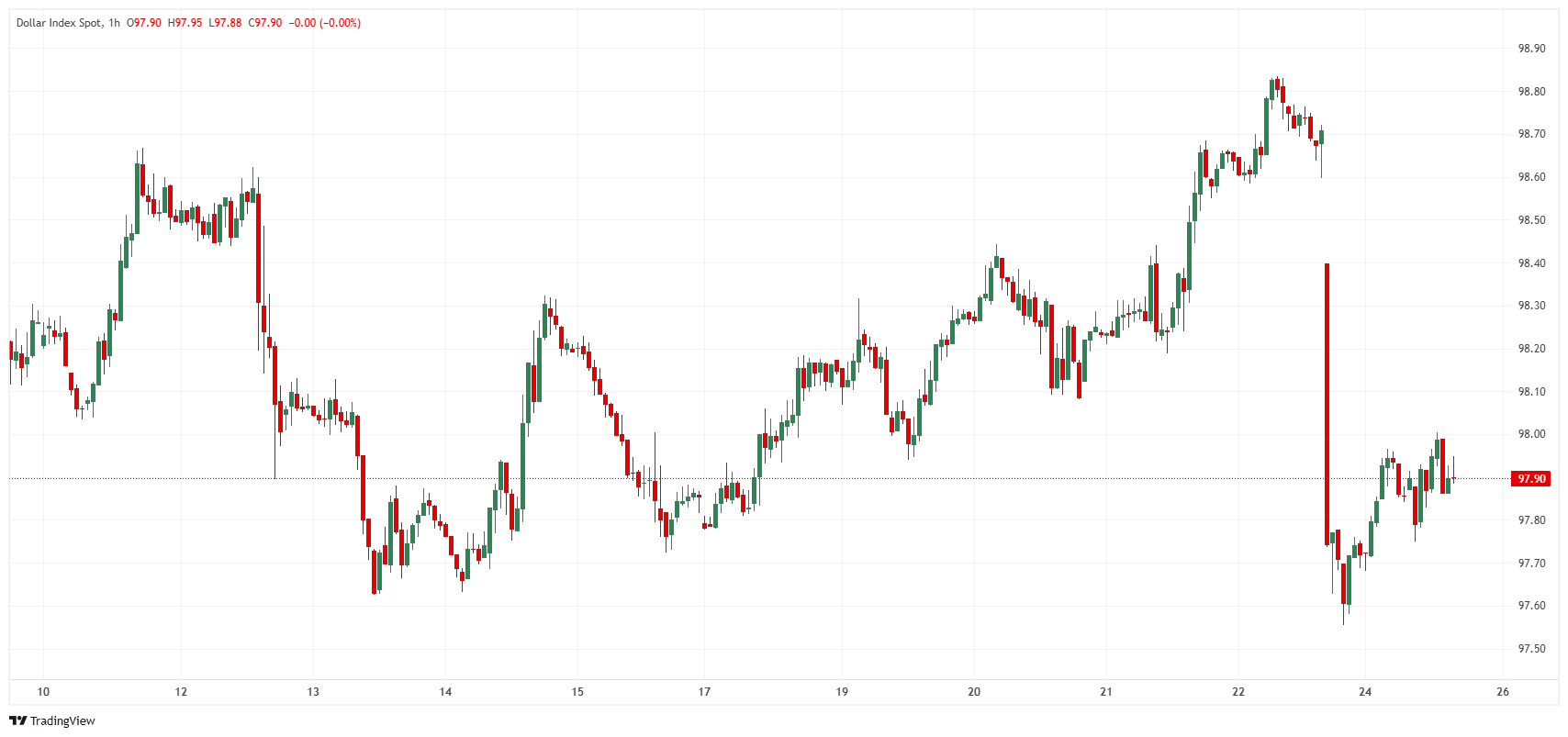
US Dollar Index (DXY) 1-hour chart. Source: FXStreet.
Gold in the spotlight, boosted by the prospect of lower interest rates
Gold, the safe-haven par excellence, was the first to benefit from this change in tone from Chair Powell. The yellow metal surged by almost 1% after the speech, breaking through new technical thresholds and resuming the upward momentum interrupted in recent weeks.
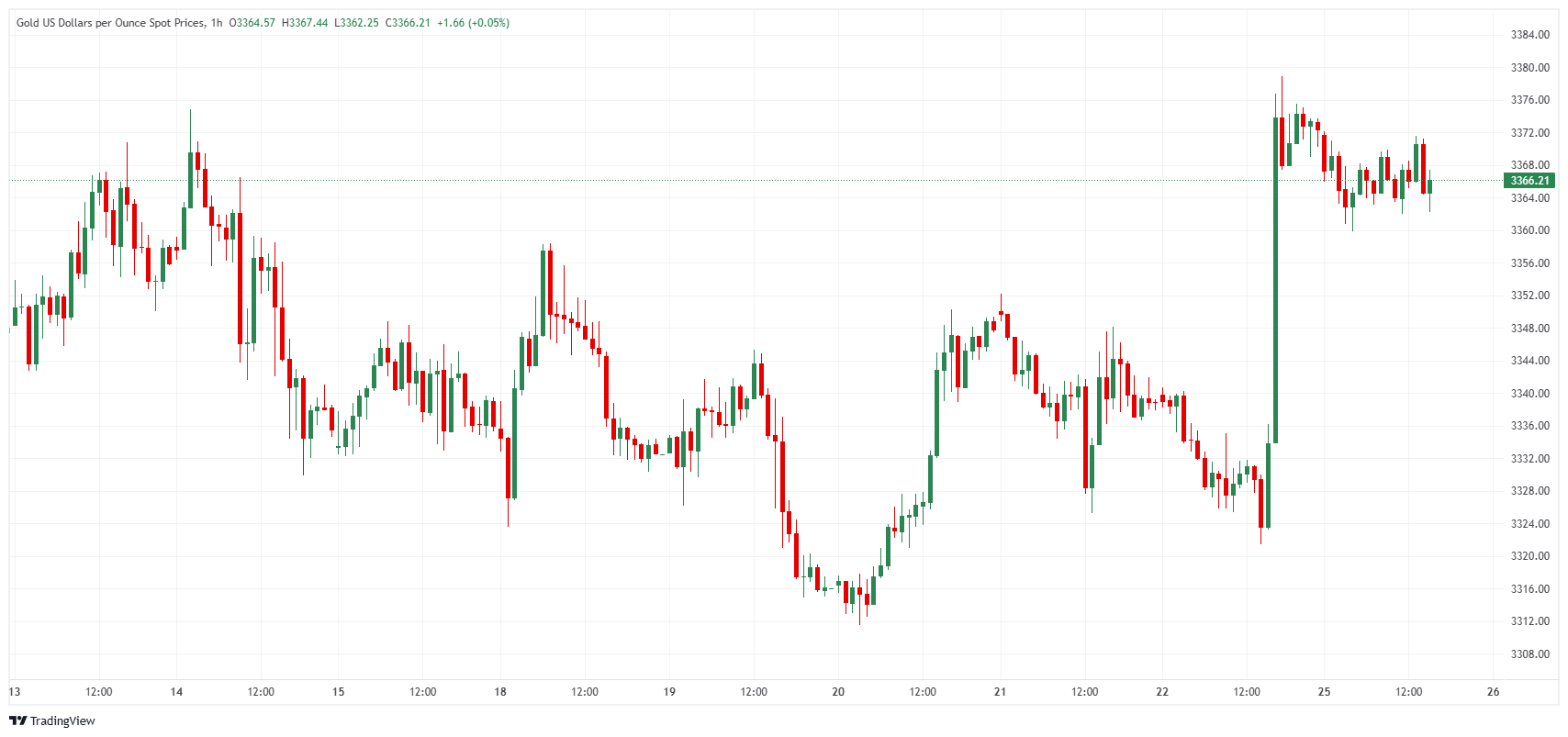
Gold price 1-hour chart. Source: FXStreet.
Investors see a double opportunity. On the one hand, Bond yields are set to fall with lower interest rates; on the other, a weaker US Dollar makes Gold more attractive to international buyers.
Physical demand also helped to sustain the movement: Swiss exports in July showed a notable increase to the United States and India, where the festive season traditionally stimulates jewelry buying, noted Kedia Advisory.
For its part, China maintained solid premiums on its imports, a sign that consumption remains robust despite economic uncertainties.
Silver, Oil and other Commodities follow suit
While Gold caught the eye, the Powell effect was also felt in Silver, which advanced even more strongly, benefiting from its hybrid role between safe-haven asset and industrial metal.
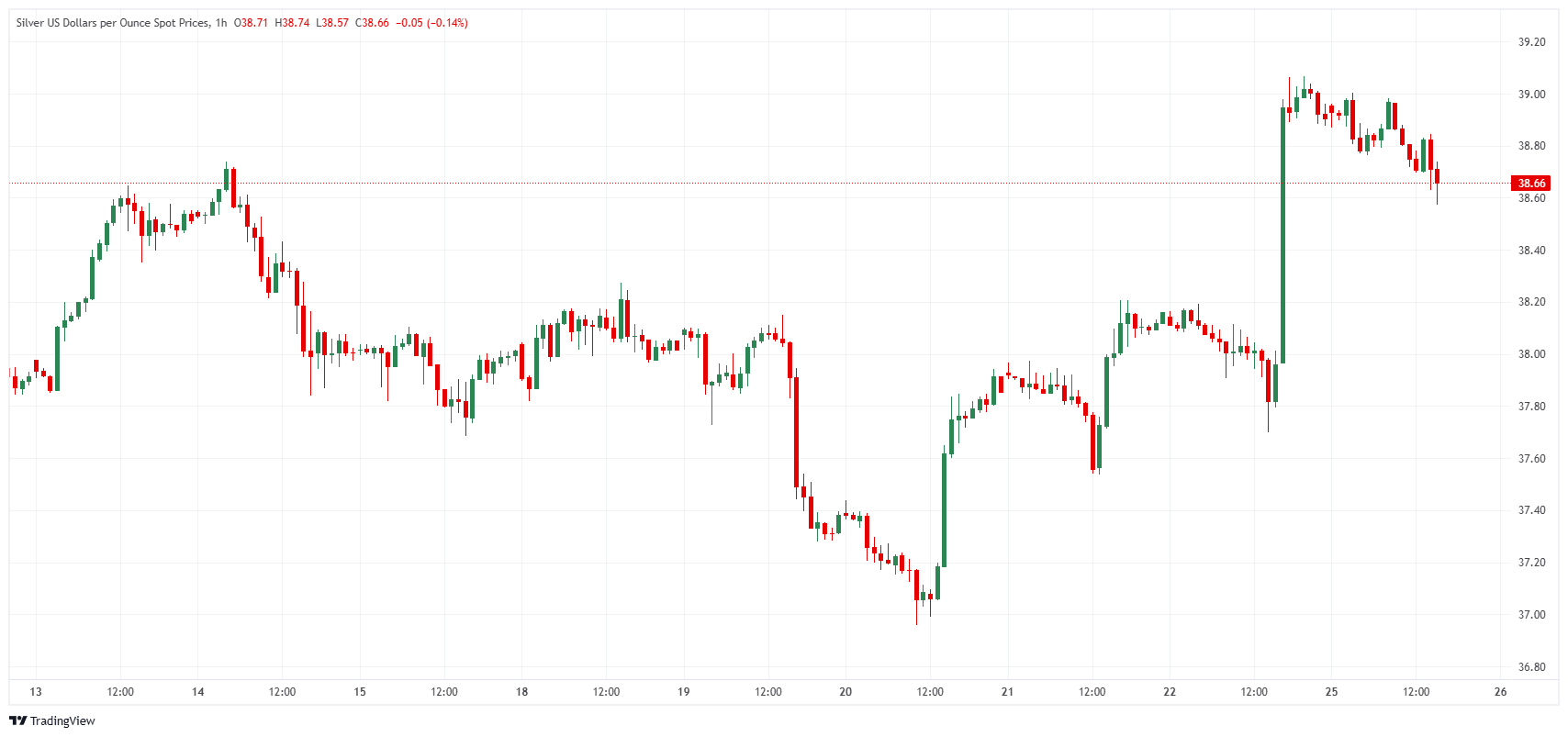
Silver price 1-hour chart. Source: FXStreet.
Analysts are puzzled by the performance gap between Silver and Gold, some seeing it as a sign of Silver's own dynamic, often more volatile but capable of outperforming when precious metals recover.
On the Energy front, the Fed's accommodating message offset a more complex context. Oil prices, already buoyed by uncertainties linked to the Russia-Ukraine conflict and US sanctions, found the prospect of lower interest rates an additional factor of short-term support.
Nevertheless, the fundamentals remain fragile. Supply remains abundant, and global demand could suffer if the economic slowdown worsens.
Fragile but revealing support
Jerome Powell's speech at Jackson Hole confirms the extent to which US monetary policy remains a major catalyst for Commodities.
The expected cut in key interest rates acts as a powerful psychological and technical driver for dollar-denominated assets, starting with Gold.
But this impetus rests on a precarious balance. If inflation were to rise again, and the Fed needs to pause cutting interest rates, the dynamic could quickly reverse.
For the time being, Gold has emerged stronger from the Jackson Hole Symposium and remains in the spotlight. As a barometer of investor confidence in the Federal Reserve, it could soon test new all-time highs if the central bank confirms its accommodative stance.
Information on these pages contains forward-looking statements that involve risks and uncertainties. Markets and instruments profiled on this page are for informational purposes only and should not in any way come across as a recommendation to buy or sell in these assets. You should do your own thorough research before making any investment decisions. FXStreet does not in any way guarantee that this information is free from mistakes, errors, or material misstatements. It also does not guarantee that this information is of a timely nature. Investing in Open Markets involves a great deal of risk, including the loss of all or a portion of your investment, as well as emotional distress. All risks, losses and costs associated with investing, including total loss of principal, are your responsibility. The views and opinions expressed in this article are those of the authors and do not necessarily reflect the official policy or position of FXStreet nor its advertisers. The author will not be held responsible for information that is found at the end of links posted on this page.
If not otherwise explicitly mentioned in the body of the article, at the time of writing, the author has no position in any stock mentioned in this article and no business relationship with any company mentioned. The author has not received compensation for writing this article, other than from FXStreet.
FXStreet and the author do not provide personalized recommendations. The author makes no representations as to the accuracy, completeness, or suitability of this information. FXStreet and the author will not be liable for any errors, omissions or any losses, injuries or damages arising from this information and its display or use. Errors and omissions excepted.
The author and FXStreet are not registered investment advisors and nothing in this article is intended to be investment advice.
Recommended content
Editors’ Picks

EUR/USD advances to two-day highs; focus is back to 1.1300
EUR/USD manages to partially reverse the ongoing leg lower and advances to the upper-1.1200s on turnaround Tuesday. Somewhat easing fiscal concerns in France appear to have sparked some optimism in market participants, weighing on the US Dollar and lending the pair a lifeline.

GBP/USD climbs to multi-day tops near 1.3300
GBP/USD rapidly leaves behind Monday’s downtick and refocuses on the upside, advancing to four-day peaks and approaching the 1.3300 hurdle. Cable’s marked recovery follows the selling bias in the Greenback and the generalised upbeat tone in the riskier assets.

Gold trades with modest gains; still below $4,200
Gold builds on Monday’s marginal bounce, although it struggles to reclaim the key $4,200 mark per troy ounce on Tuesday. The yellow metal’s advance comes on the back of the fresh downside momentum in the US Dollar in tandem with retreating US Treasury yields across the curve.

Crypto Today: Bitcoin, Ethereum, XRP bulls battle to restart uptrend amid ETF outflows
Bitcoin upholds a robust bullish outlook, trading at $85,837 on Tuesday as sellers push to regain control over the trend. Altcoins, meanwhile, reflect Bitcoin’s ranging action, with Ethereum trading sideways above $2,700 and Ripple hovering around the pivotal $1.50 level.

Japanese Yen nears 158.00: Two analysts agree it's bullish, and disagree on how far the breakout goes
The JPY is drifting near 158.00 against the USD ahead of a busy week of Japanese data and a still-unclear BoJ timetable. The two most recent FXStreet analyses agree on the direction, but they disagree on the target and the mechanism.

WTI futures breach below $90.00, three-week lows
Front-month WTI prices remain under pressure on Tuesday, breaking below the key $90.00 mark per barrel to reach fresh three-week troughs. In the meantime, prices decline for the fourth day in a row on the back of hopes of a diplomatic solution to the US-Iran-Hormuz conflict.