Why economic factors are your trading compass

Successful forex trading isn't just about reading charts; it's about understanding the powerful economic forces that drive currency movements. This enhanced analysis blends technical insights with crucial economic drivers to provide a more comprehensive outlook on key currency pairs.
Important economic factors influencing forex
Understanding these fundamental factors is essential for any forex trader:
- Interest rates: Central bank policies (Federal Reserve, Bank of Japan, Reserve Bank of New Zealand, Bank of England, European Central Bank, Reserve Bank of Australia) and their interest rate decisions are paramount. Generally, higher interest rates attract foreign investment, increasing demand for a currency and causing it to appreciate.
- Inflation: Inflation rates significantly influence central bank policy. High inflation often leads to interest rate hikes to control prices, directly affecting currency values.
- Economic growth: Key indicators like GDP growth, employment levels, manufacturing output, and retail sales reflect a country's economic health. Stronger economies tend to have stronger currencies.
- Geopolitical events: Political instability, wars, trade disputes, and global crises can inject uncertainty and volatility into the Forex market.
- Commodity prices: For commodity-exporting nations (like Australia and New Zealand), fluctuations in commodity prices (e.g., oil, metals, agricultural products) can significantly impact their currencies.
- Market sentiment: Overall investor confidence or fear can drive capital flows and influence currency valuations.
Enhanced pair-specific analysis with economic factors
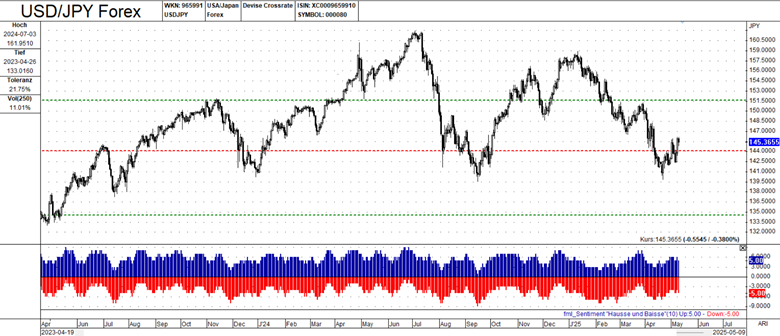
USD/JPY; downtrend on the longer timeframe; potential oversold conditions in the short term. The USD/JPY downtrend may persist if the Bank of Japan signals policy changes or global risk aversion increases. However, continued aggressive Fed rate hikes could support the USD
The Federal Reserve's interest rate policy is crucial. Aggressive rate hikes to combat inflation could strengthen the USD. The Bank of Japan's historically ultra-loose policy means any shift towards tightening could significantly strengthen the JPY. Relative economic performance plays a role. Stronger US growth could support the USD, while stronger Japanese growth could support the JPY. The JPY is a safe-haven currency; global economic uncertainty may strengthen it.
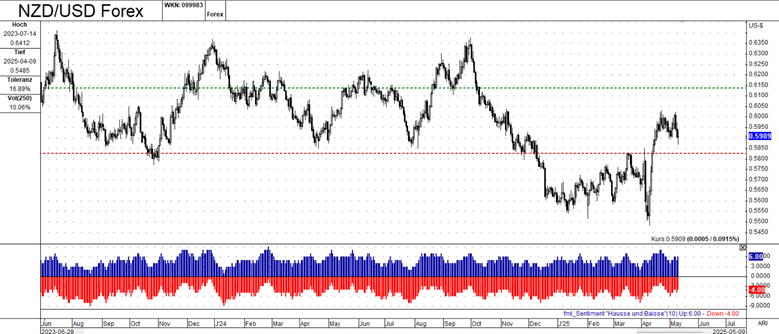
NZD/USD downtrend; oversold conditions in the short term. Combined Outlook: The downtrend is likely to continue unless there's a significant rebound in commodity prices or a shift in RBNZ policy. USD strength will also be a major headwind.
The Reserve Bank of New Zealand's interest rate decisions are critical in their fight against inflation. As a major exporter of dairy and agricultural products, global demand and prices significantly influence the NZD. Overall USD strength, driven by Fed policy or safe-haven demand, will pressure the NZD. Domestic economic performance, including employment and consumer spending, impacts the NZD.
-638826102792865541.png)
GBP/USD uptrend; potential overbought conditions in the short term. The uptrend could be challenged if the UK economy weakens significantly or if the Bank of England signals a pause in rate hikes. USD strength remains a threat.
The Bank of England's response to high inflation and potential economic slowdown is crucial. Aggressive rate hikes could support the GBP, but recession concerns could weaken it. GDP growth, inflation, and Lingering economic effects of Brexit can still weigh on the GBP.
-638826102931763190.png)
EUR/USD uptrend; potential overbought conditions in the short term. The uptrend could face headwinds if the Eurozone economy slows down or if geopolitical risks escalate. USD strength will also be a factor.
The European Central Bank's monetary policy is the primary driver, influenced by inflation and the Eurozone's economic health. Economic growth, inflation, and unemployment figures across the Eurozone are important. The USD's performance is a major counterbalance. The war in Ukraine and its impact on energy prices and the European economy create uncertainty for the EUR.
-638826103132201626.png)
AUD/USD downtrend with a short-term bullish correction. The downtrend is likely to persist unless commodity prices rise significantly or the Chinese economy rebounds strongly. Global economic slowdown and USD strength are negative factors for the AUD.
The Reserve Bank of Australia's interest rate decisions are important. Australia's role as a major exporter of iron ore and coal means global demand and prices significantly influence the AUD. As a major trading partner, China's economic health impacts demand for Australian exports and the AUD. Overall global economic growth influences demand for commodities and risk sentiment, affecting the AUD. USD strength remains a key driver.
The power of combining technical and economic analysis
The most effective forex analysis integrates both technical and fundamental approaches to:
- Confirm trends: Use economic factors to validate trends identified through technical analysis.
- Identify drivers: Pinpoint the key economic forces likely to influence each currency pair.
- Assess risk: Evaluate potential risks and uncertainties associated with economic events and data releases.
- Develop scenarios: Create different trading scenarios based on potential economic outcomes and their impact on currency prices.
By understanding both the technical patterns and the underlying economic drivers, Forex traders can make more informed and strategic decisions.
Author

FxPro Traders Research Team
FxPro Traders
The FxPro Traders Research Team delivers advanced analysis and strategies designed to empower your success in today's dynamic forex markets.