Tether freezes $5.2M in USDT linked to phishing scams


Stablecoin issuer Tether froze $5.2 million of its stablecoin Tether (USDT $1.00) linked to phishing scams on May 14. This USDT was stored in 12 Ethereum wallets tagged as “USDT Banned Address.”
On-chain analytics firm SlowMist’s chief security officer said that the addresses were being used for laundering funds from phishing scams without elaborating further.
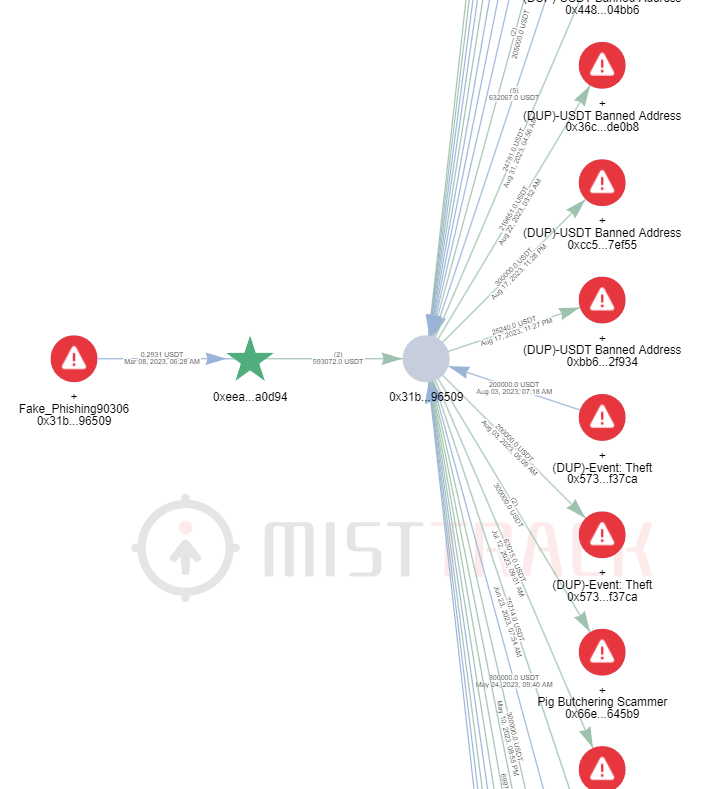
Source: MistTrack
Tether, the world’s largest stablecoin issuer, has frozen billions of dollars of assets linked to hacks, exploits and scams. In an X post, Tether CEO Paolo Ardoino said the firm has blocked more than $1.3 billion since it launched, with approximately $1.6 million related to terrorist financing.
In January 2022, Tether added three Ethereum addresses holding more than $150 million worth of USDT to its blacklist. In October 2022, Tether froze $8.2 million in USDT on Ethereum and added 215 Ethereum-based USDT addresses to its blacklist.
In late 2022, Tether had frozen over $360 million in assets. In October 2023, the stablecoin issuer froze $817,000 in USDT linked to terrorist activity in Ukraine and Israel. A month later, it froze $225 million in USDT linked to romance scammers.
The stablecoin issuer has also worked with 24 law enforcement agencies across more than 40 countries. The firm collaborated on 198 requests from law enforcement agencies to block wallets in the last 12 months and 339 in the last three years.
Tether also offered secondary market controls to freeze activity connected with sanctioned persons on the United States Office of Foreign Assets Control Specially Designated Nationals list. Any company or individuals controlled or owned by sanctioned countries are included on the list.
The use of decentralized ledger technology allows crypto firms to monitor funds on-chain, and the centralized nature of stablecoins allows its issuers to freeze assets linked to illicit activities on requests of law enforcement agencies.
Cointelegraph reached out to Tether for comments on the banned addresses and which phishing scams they were linked with but didn’t get a response by publication.
Author
Cointelegraph Team
Cointelegraph
We are privileged enough to work with the best and brightest in Bitcoin.