XRP targets breakout above $1.50 amid subdued retail and institutional demand
- XRP pares losses as bulls target a short-term breakout above $1.50.
- The MACD upholds a buy signal while the MFI indicator rises above the midline, suggesting a potential bullish shift.
- Muted buying interest among retail and institutional traders could keep XRP rangebound.

Ripple (XRP) is supported above $1.40, and trading around $1.47 at the time of writing on Wednesday. The increase, although minor, has erased losses posted the previous day. However, low activity in both the institutional and retail environments may temper XRP’s bullish scope, currently targeting Sunday's high at $1.67.
XRP retail and institutional demand weakens
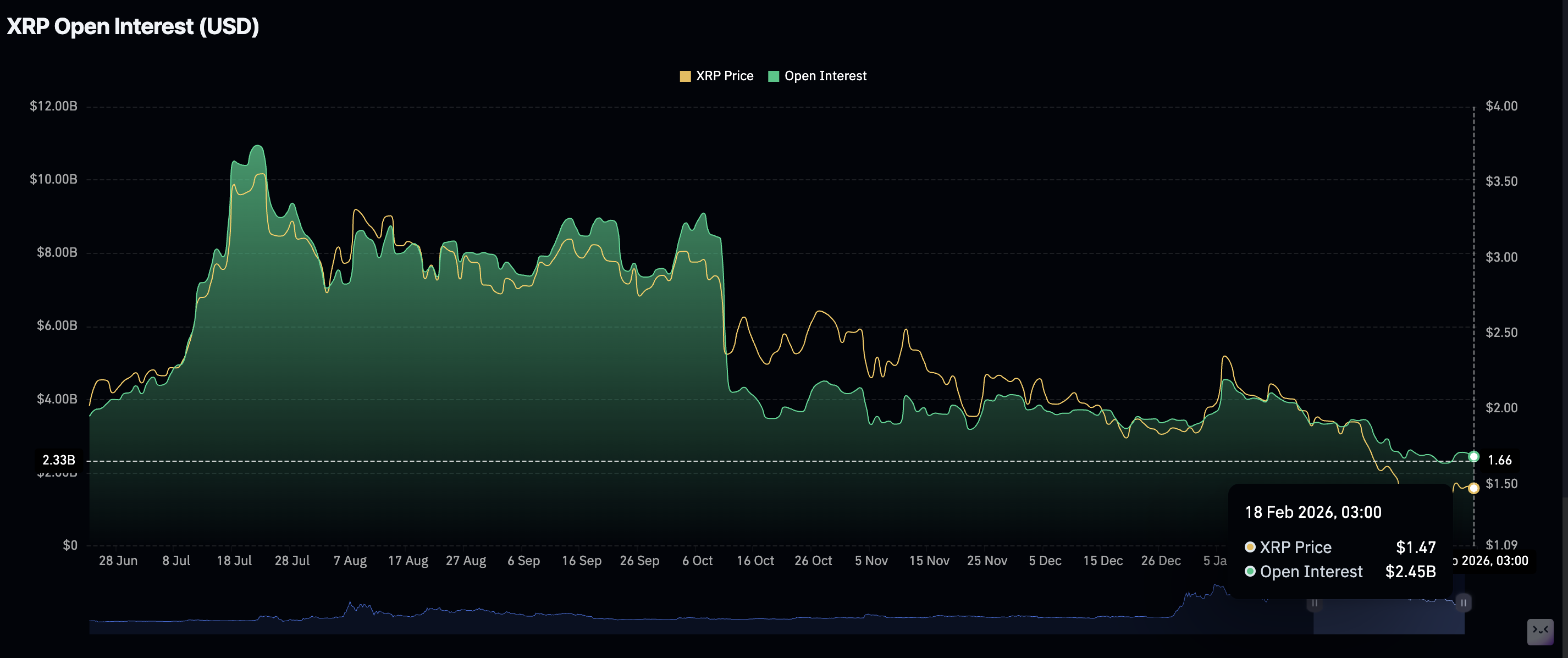
Since reaching its record high of $3.66 in July, XRP has struggled to sustain rebounds, leading to volatile price fluctuations amid a weakening retail derivatives market.
The XRP futures Open Interest (OI) stands at $2.45 billion on Wednesday, down from the $2.53 billion recorded on Tuesday. In contrast, the futures OI peaked at $10.94 billion in July, coinciding with the token’s all-time high.
The overextended decline in retail activity mirrors the drawdown in XRP price. As OI fades, traders close positions in droves and refuse to open new ones, leaving XRP vulnerable to market pressures and risk-off sentiment.
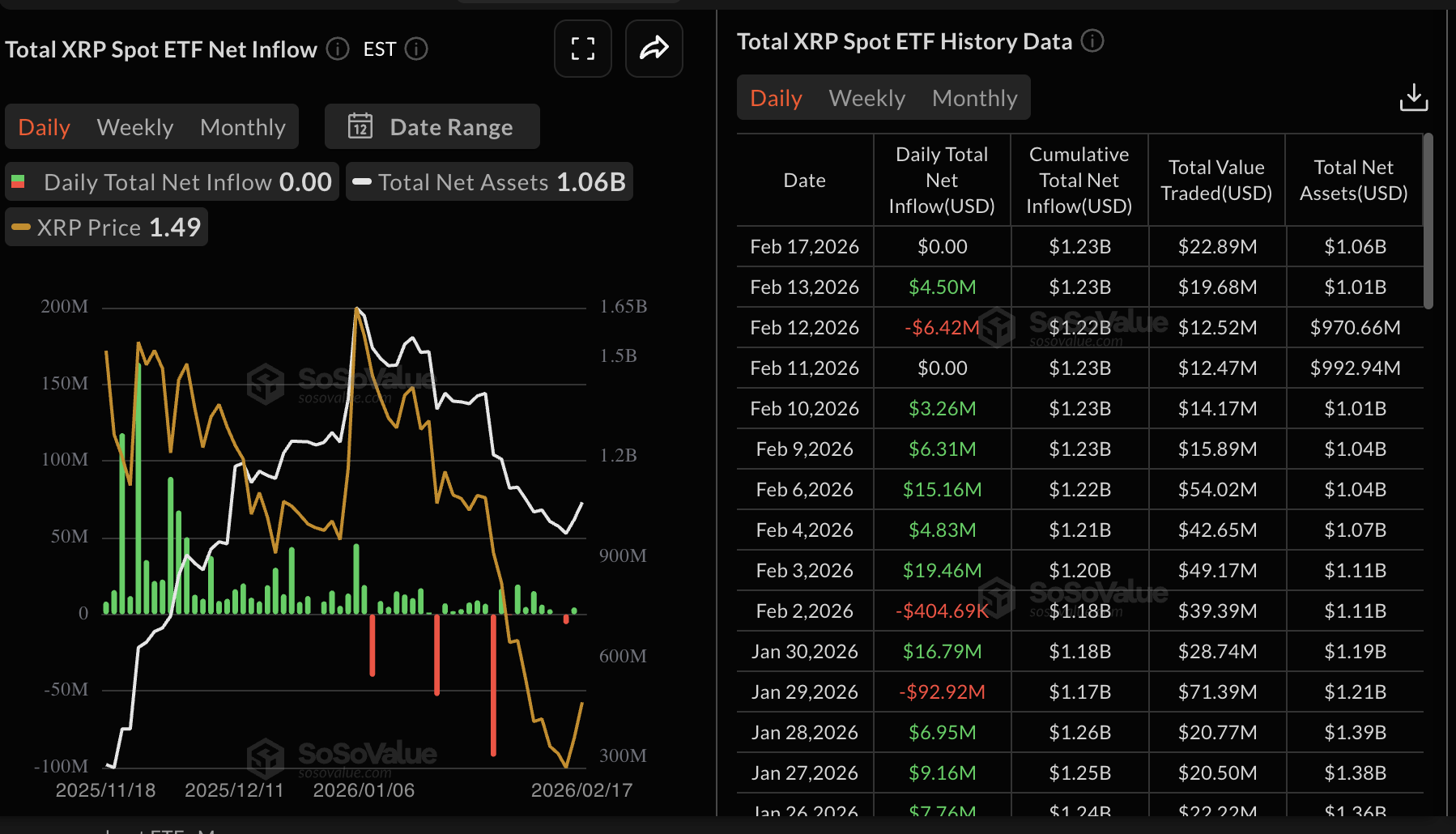
XRP spot Exchange-Traded Funds (ETFs) also experienced a steady decline in investor interest, as evidenced by muted activity on Tuesday. According to SoSoValue data, US-listed XRP spot ETFs remained quiet, with no flows, leaving cumulative inflows at $1.23 billion and net assets under management at $1.06 billion.
As interest in related investment products fades, overall risk appetite also diminishes. Weak sentiment dampens XRP’s recovery potential, while increasing the probability of an extended bearish trend.
Technical outlook: XRP steadies above support as sideways trading extends
XRP has remained below the high on Sunday at $1.67, while support around $1.40 holds. Despite the Moving Average Convergence Divergence (MACD) indicator having sustained a buy signal since Saturday, the overall structure remains bearish.
The 50-day Exponential Moving Average (EMA) at $1.71, the 100-day EMA at $1.92 and the 200-day EMA at $2.13 trend lower, limiting the upside. A continued decline below the demand zone at $1.40 may retest last Friday’s low at $1.35.
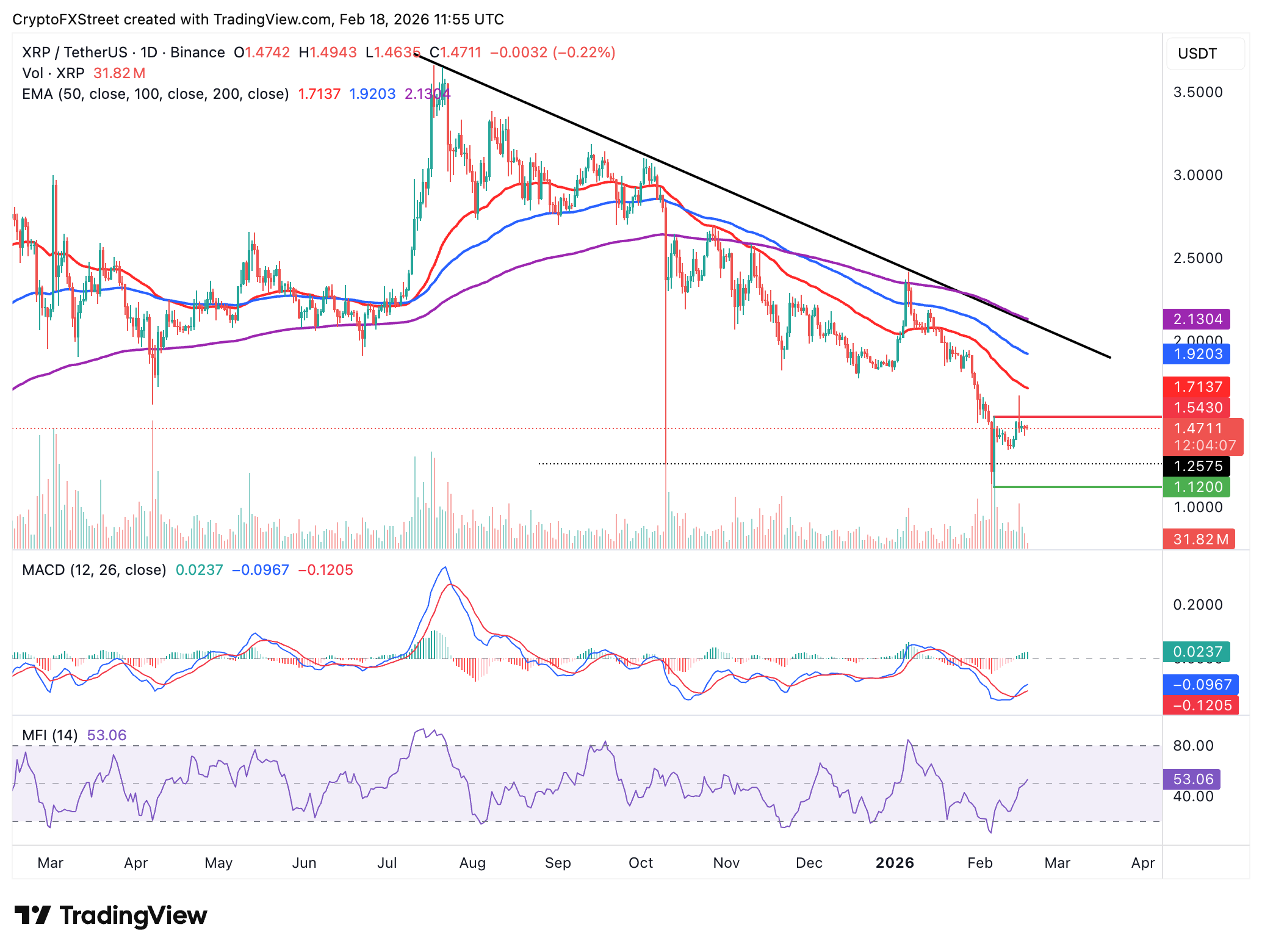
Meanwhile, the Money Flow Index (MFI), an indicator that tracks the flow of money in and out of XRP, is rising to 53, suggesting steady risk appetite. A higher increase in the MFI would confirm a bullish shift, with XRP likely to break out toward $1.67.
Near-term targets include a break above the psychological hurdle at $1.50 and the next seller concentration at $1.54, which aligns with the February 6 high.
Cryptocurrency metrics FAQs
The developer or creator of each cryptocurrency decides on the total number of tokens that can be minted or issued. Only a certain number of these assets can be minted by mining, staking or other mechanisms. This is defined by the algorithm of the underlying blockchain technology. On the other hand, circulating supply can also be decreased via actions such as burning tokens, or mistakenly sending assets to addresses of other incompatible blockchains.
Market capitalization is the result of multiplying the circulating supply of a certain asset by the asset’s current market value.
Trading volume refers to the total number of tokens for a specific asset that has been transacted or exchanged between buyers and sellers within set trading hours, for example, 24 hours. It is used to gauge market sentiment, this metric combines all volumes on centralized exchanges and decentralized exchanges. Increasing trading volume often denotes the demand for a certain asset as more people are buying and selling the cryptocurrency.
Funding rates are a concept designed to encourage traders to take positions and ensure perpetual contract prices match spot markets. It defines a mechanism by exchanges to ensure that future prices and index prices periodic payments regularly converge. When the funding rate is positive, the price of the perpetual contract is higher than the mark price. This means traders who are bullish and have opened long positions pay traders who are in short positions. On the other hand, a negative funding rate means perpetual prices are below the mark price, and hence traders with short positions pay traders who have opened long positions.
Author

John Isige
FXStreet
John Isige is a seasoned cryptocurrency journalist and markets analyst committed to delivering high-quality, actionable insights tailored to traders, investors, and crypto enthusiasts. He enjoys deep dives into emerging Web3 tren