EUR/USD Weekly Forecast: Gear up for US employment and inflation updates
- The Federal Reserve delivered a rate cut and hinted at one more in 2026.
- The European Central Bank will announce its monetary policy decision on Thursday.
- The United States will release the delayed Nonfarm Payrolls report and Consumer Price Index figures.
- EUR/USD has room to extend its advance, but only due to broad US Dollar weakness.

The EUR/USD pair surged to a fresh monthly high of 1.1762 in the second week of December, closing it with gains a handful of pips below the level. The advance was solely related to the US Dollar (USD) weakness, which was triggered by poor American data and the Federal Reserve (Fed) monetary policy decision.
The Federal Reserve fell short of market expectations
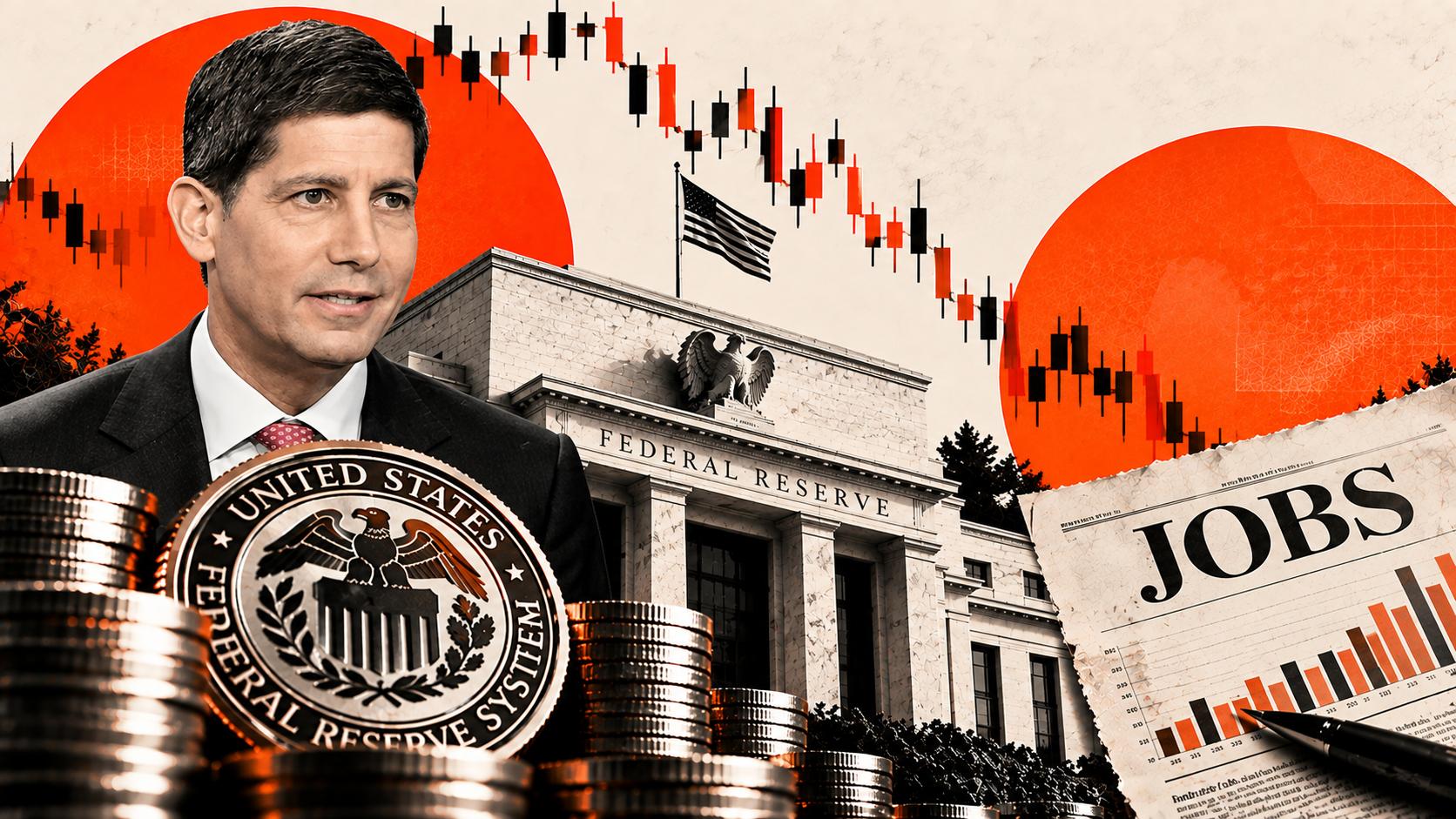
As widely anticipated, the Fed decided to trim its benchmark interest rate by 25 basis points (bps) following its December meeting, bringing the Federal Funds Target Range (FFTR) to 3.50–3.75%.
The Federal Open Market Committee (FOMC) statement showed that policymakers were quite divided. Governor Stephen Miran voted for a 50 bps cut, while Kansas City Fed President Jeff Schmid and Chicago Fed President Austan Goolsbee preferred to hold rates unchanged. Additionally, the document hinted at a rate-cut pause by adding 'extent and timing' to describe its approach to additional adjustments to the policy rate, repeating that they will remain data dependent.
Policymakers released the Summary of Economic Projections (SEP), which came as a disappointment to market players, as FOMC members anticipate just one 25 bps rate cut for 2026, and a similar one in 2027. Investors were hoping for more aggressive cuts, more aligned with the upcoming Chairman than with the current one.
Chair Jerome Powell’s mandate is due to finish in May 2026, and market players anticipate President Donald Trump will name someone more willing to abide by his desire for much lower rates. Chair Powell noted tensions between the Fed’s two goals, stating the labor market has significant downside risks, while adding that “everyone at the table agrees inflation is too high.”
The overall event could be considered hawkish, although not as hawkish as feared. The USD seesawed between gains and losses, but at the end, optimism prevailed: Speculative interest sold the Greenback and jumped into high-yielding assets amid persistent hopes the Fed will deliver two rate cuts in 2026, defying the Fed’s median expectation for a single 25 bps cut next year.
Data-wise, the focus in the US was on employment. The ADP Employment Change 4-week average showed that the private sector added an average of 4,750 jobs per week in the four weeks ending November 22, better than the previous three negative readings. Also, the number of job openings on the last business day of September stood at 7.658 million, while for October it rose to 7.67 million, the US Bureau of Labor Statistics (BLS) reported in the Job Openings and Labor Turnover Survey (JOLTS) on Tuesday.
Finally, the country released Initial Jobless Claims for the week ended December 6 on Thursday, which unexpectedly jumped to 236K. The discouraging figure overshadowed previous encouraging employment-related figures and further fueled hopes for additional rate cuts, pushing the USD further lower across the FX board.
Silent Europe ahead of European Central Bank announcement
In the meantime, the Euro (EUR) lacks life of its own. The EU macroeconomic calendar had nothing relevant to offer, while European Central Bank (ECB) officials provided no clues ahead of the central bank’s monetary policy meeting scheduled for December 17-18.
Data coming from the Eurozone was mixed. German Industrial Production rose 1.8% on a monthly basis in October, beating expectations of a 0.4% slide. In the same month, the country’s Trade Balance posted a surplus of €16.9 billion, improving from the previous €15.3 billion. Finally, the Harmonized Index of Consumer Prices (HICP) was confirmed at 2.6% YoY in November, as previously estimated.
The EU unveiled the December Sentix Investor Confidence index, which improved from -7.4 in November to -6.2.
What’s next?
Busy days lie ahead, with multiple first-tier releases from both shores of the Atlantic. The Hamburg Commercial Bank (HCOB) and S&P Global will release the preliminary estimate of the December Purchasing Managers’ Indexes (PMIs) for the EU and the US on Tuesday. On the same day, the US will publish the October Retail Sales and the November Nonfarm Payrolls (NFP) report, which will also include some data from October.
On Thursday, the ECB will announce its decision on monetary policy. However, market players anticipate little action: President Christine Lagarde has repeated multiple times in the last few weeks that policymakers are “in a good place,” meaning they are comfortable with the current stance and that it would be subject to no changes in the foreseeable future. As for the US, the country will publish the November Consumer Price Index (CPI).
No surprises are expected from the EU, but US employment and inflation data may shape bets on the Fed’s direction early next year, resulting in wide USD directional movements.

EUR/USD technical outlook
Technical Analysis:
From a technical point of view, EUR/USD has room to extend its advance, albeit the momentum remains limited. In the weekly chart, EUR/USD broke above a flat 20-week Simple Moving Average (SMA) but develops well-above the rising 100- and 200-week SMAs. The 20-week SMA at 1.1655 provides near-term support. The longer-term backdrop remains favorable as the 100- and 200-week SMAs continue to slope higher, reinforcing the uptrend, providing long-term support at 1.1050 and at 1.0844, respectively. At the same time, the Momentum indicator has turned marginally positive above its midline, indicating stabilizing buying interest. Finally, the Relative Strength Index (RSI) at 60 adds to the bullish case.
In the daily chart, EUR/USD advances beyond a firmly bullish 20-day SMA at 1.1612, yet it still develops below a mildly bearish 100-day SMA at 1.1643. Finally, the 200-day SMA accelerates north at around 1.1483. Meanwhile, the Momentum indicator holds above 0 and edges higher, signaling strengthening buying interest. Finally, the RSI maintains its upward slope at 69, not enough to consider overbought conditions and far from signaling a potential reversal. EUR/USD is poised to extend gains towards the year high in the 1.1920 area.
(The technical analysis of this story was written with the help of an AI tool)
Economic Indicator
Nonfarm Payrolls
The Nonfarm Payrolls release presents the number of new jobs created in the US during the previous month in all non-agricultural businesses; it is released by the US Bureau of Labor Statistics (BLS). The monthly changes in payrolls can be extremely volatile. The number is also subject to strong reviews, which can also trigger volatility in the Forex board. Generally speaking, a high reading is seen as bullish for the US Dollar (USD), while a low reading is seen as bearish, although previous months' reviews and the Unemployment Rate are as relevant as the headline figure. The market's reaction, therefore, depends on how the market assesses all the data contained in the BLS report as a whole.
Read more.Next release: Tue Dec 16, 2025 13:30
Frequency: Monthly
Consensus: -
Previous: 119K
Source: US Bureau of Labor Statistics
America’s monthly jobs report is considered the most important economic indicator for forex traders. Released on the first Friday following the reported month, the change in the number of positions is closely correlated with the overall performance of the economy and is monitored by policymakers. Full employment is one of the Federal Reserve’s mandates and it considers developments in the labor market when setting its policies, thus impacting currencies. Despite several leading indicators shaping estimates, Nonfarm Payrolls tend to surprise markets and trigger substantial volatility. Actual figures beating the consensus tend to be USD bullish.
Author

Valeria Bednarik
FXStreet
Valeria Bednarik was born and lives in Buenos Aires, Argentina. Her passion for math and numbers pushed her into studying economics in her younger years.