|

Chart Of The Week: AUD/USD bulls advancing in bullish descending triangle within weekly support

  • AUD/USD has fallen into weekly support, with room for a bullish correction in the near-term.
  • Bullish prospects seek out a test of a congested area of moving averages.
  • Trendline resistance has a confluence of a Fibonacci resistance guarding a run of a 50% mean reversion.
  • Descending triangle leaves a near term bullish bias in place.

Weekly Support
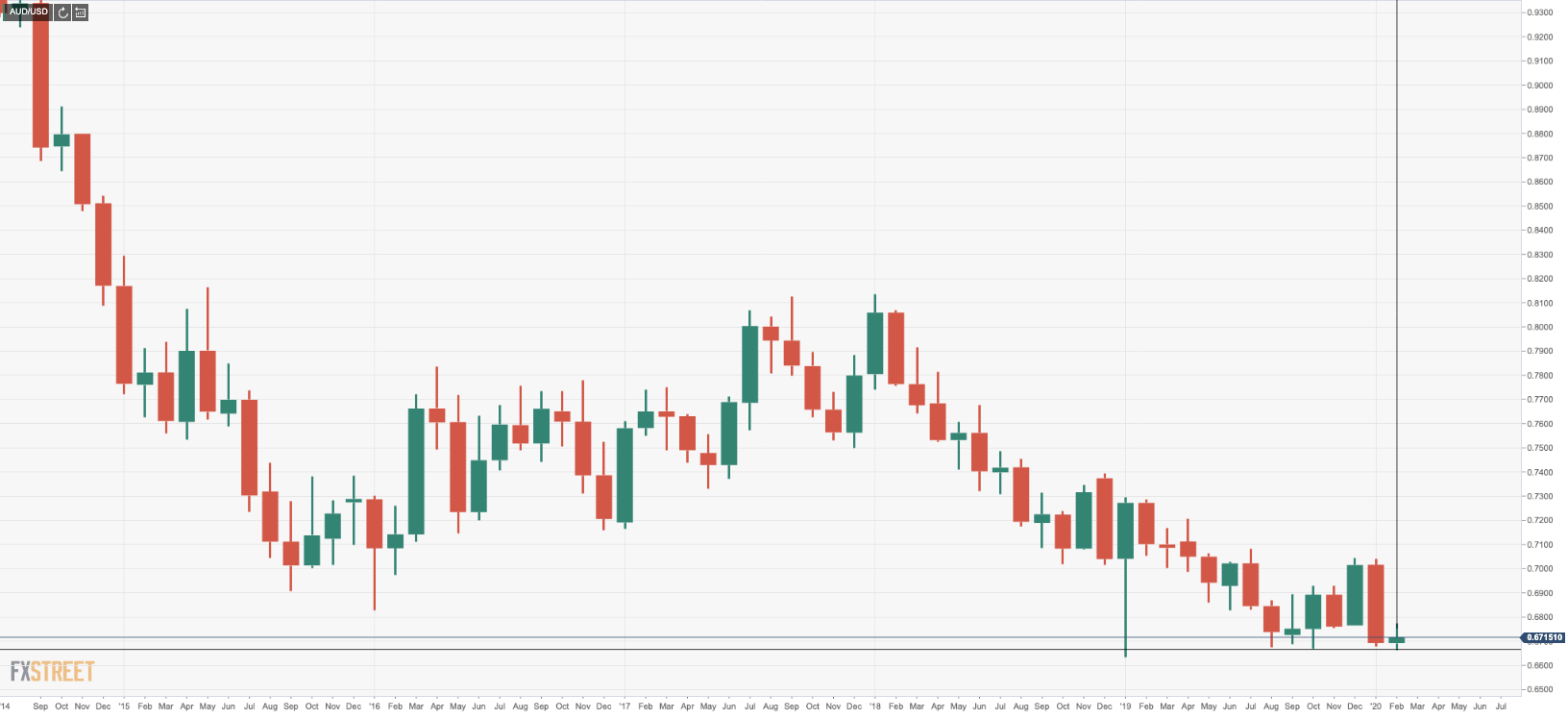
There is a bottoming structure in place as the price firms in lower boundaries of the weekly decline. 

H&S in the making
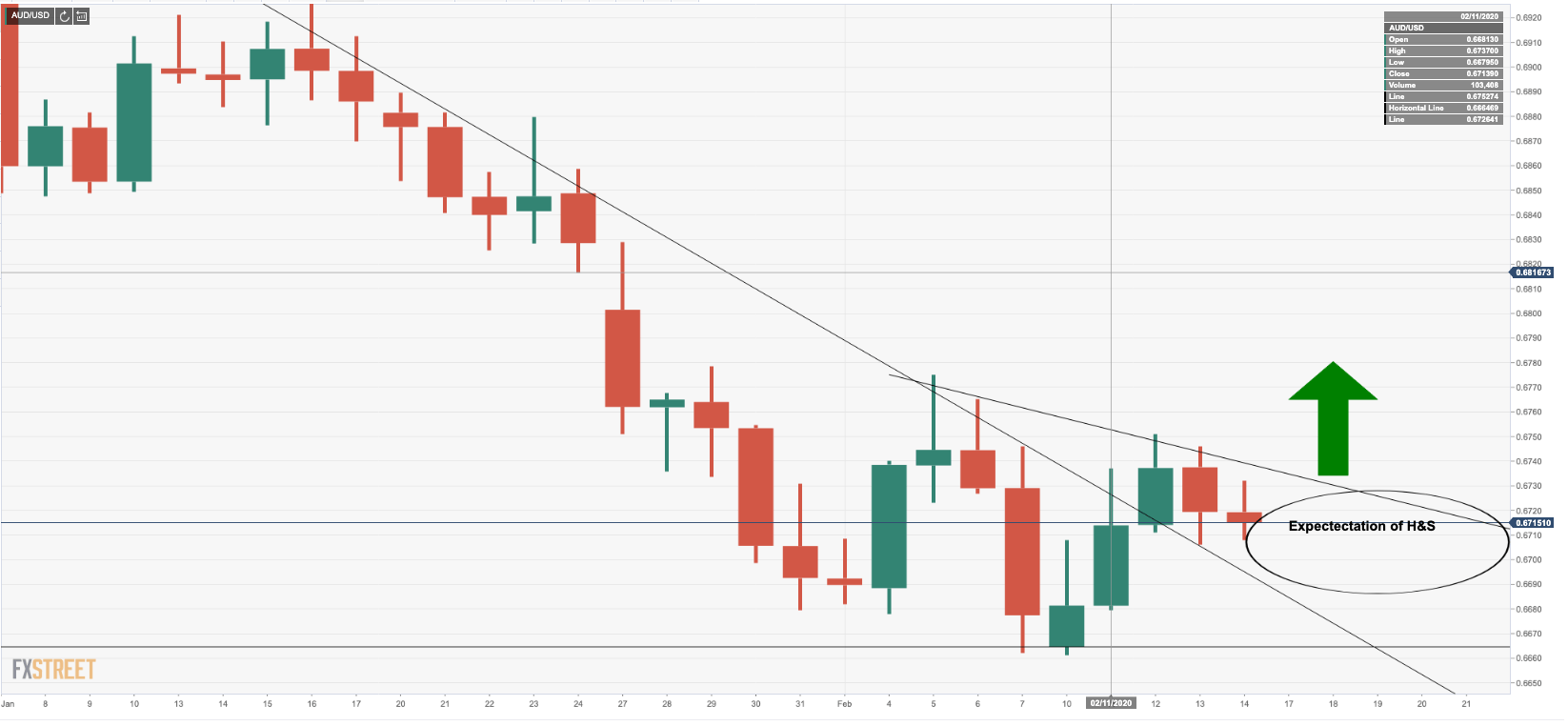
The daily outlook holds the prospects of a consolidation phase, ultimately resulting in in a head and bullish reverse shoulders formation.

78.6% Fibo in sight
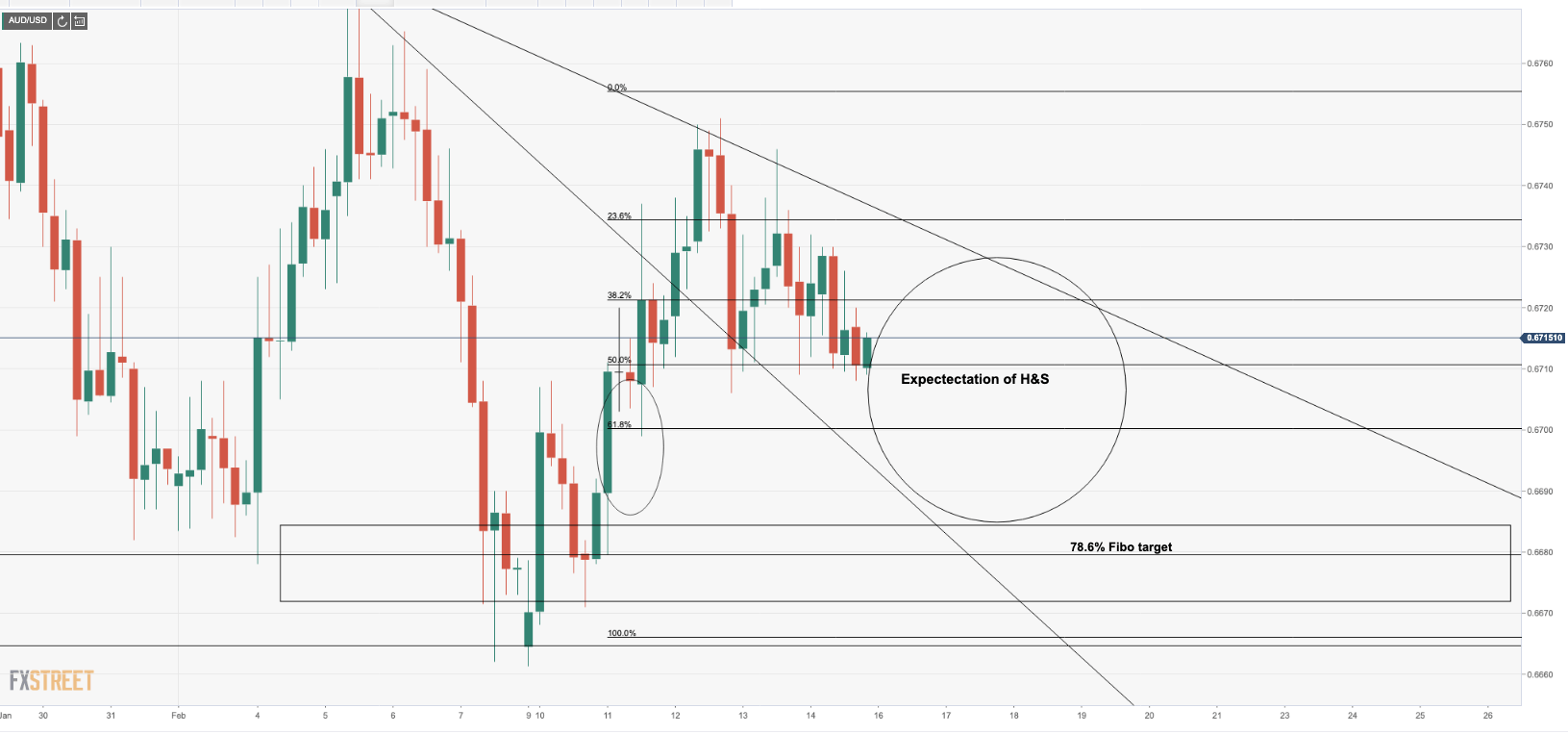
Bulls may prefer to hold out for improved risk to reward while seeking a test of the 78.6% to a critical support area prior to looking for longs back towards major trend-line resistance. 

Descending Triangle
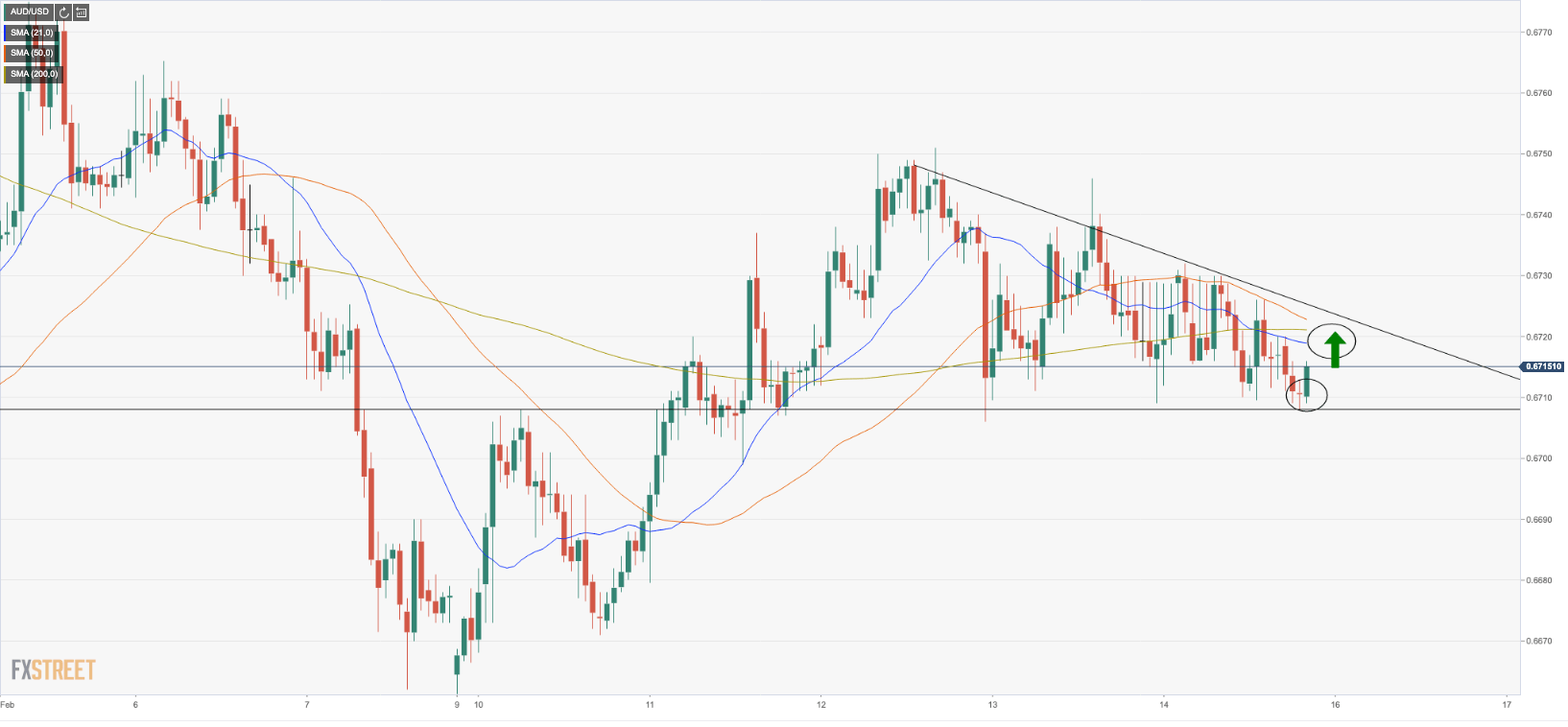
However, in the nearer-term, bulls are in control following a doji on the hourly formation which had lad to a bullish correction and exposing a bullish 200-hour moving average ahead of the 21-hour ma and an advance towards the hourly trendline resistance.
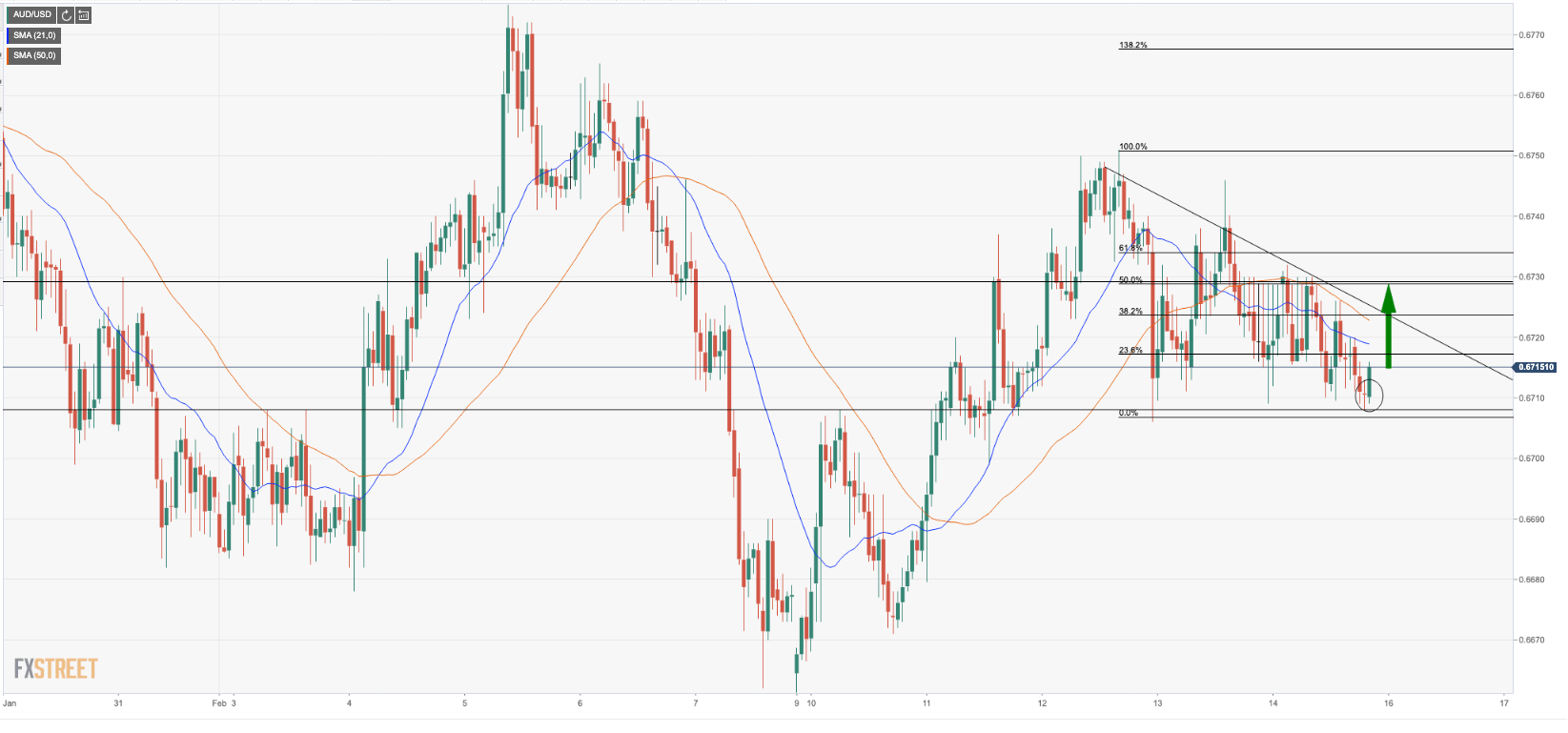
The 38.2 % Fibonacci retracement A break of the resistance opens a 50% mean reversion of the triangle's range around 0.6720.

Data focus

Meanwhile, we have a number of critical events for AUD. First in line, on the 18th, we have the Reserve Bank of Australia's minutes. These will be of particular interest considering that the Reserve Bank of Australia has displayed a preference to more clearly outline its thinking via Minutes than via the monthly statement. The wave of communication post the 4th Feb meeting reinforced the bar to easing is high. However, we will look for any signs that would force the RBA to reconsider its stance.

Then, on the 20th, the all-important Aussie jobs data will be up. "Assuming the unemployment rate rises 0.1%pts per month, the earliest the RBA would cut is in June assuming a 5.5% print in May is considered a material deterioration. We have headline at +12k, u/e rate at 5.2% and part rate unchanged at 66%. There is likely to be greater uncertainty for the Jan print," analysts at TD Securities explained. 
 

Author

Ross J Burland

Ross J Burland, born in England, UK, is a sportsman at heart. He played Rugby and Judo for his county, Kent and the South East of England Rugby team.


More from Ross J Burland
Share:

Editor's Picks

GBP/USD declines toward 1.3500 as markets turn risk-averse

GBP/USD comes under bearish pressure and declines toward 1.3500 on Tuesday. The UK ILO Unemployment Rate held steady at 4.9% in the three months to June, against a forecast of 4.8%, while Employment Change arrived at 83K in the same period versus 147K previous. Weak UK labor data, combined with the risk-averse market atmosphere amid a re-escalation of tensions in the Middle East weigh on the pair.

EUR/USD retreats below 1.1600 on modest USD recovery

EUR/USD struggles to gain traction and trades below 1.1600 in the second half of the day on Tuesday, even after the data from the Eurozone and Germany highlighted improving economic sentiment in August. The US Dollar (USD) benefits from the risk-averse market atmosphere as tensions in Middle East remain high, making it difficult for the pair to turn north.

Gold sticks to losses below $4,400 as USD recovers further from two-month low

Gold remains depressed below the $4,400 mark through the first half of the European session, snapping a two-day winning streak amid a broadly firmer US Dollar. Inflation risks stemming from higher oil prices back the case for at least one interest rate hike by the US Federal Reserve in 2026.

Crypto Today: Bitcoin, Ethereum, XRP falter amid escalating US-Iran tensions

Cryptocurrency prices are broadly correcting on Tuesday, with Bitcoin edging lower toward $64,000. Ethereum shows weakness amid ongoing narrow-range consolidation, while Ripple trades below $1.00, weighed down by falling technical indicators.

Fiscal concerns and doubts on Fed independence send US yields to long-term highs

US Treasury yields keep rising across the curve this week, with the yield for the 30-year Treasury bond reaching its highest level since 2007, during the global financial crisis, at 5.33% so far on Monday. A mix of concerns about the ballooning US fiscal deficit and growing doubts about the Federal Reserve’s Independence are increasing pressure on US Government Bonds.

Why is Crude Oil priced for a reopening the ships haven't made?
Fourteen vessels crossed the Strait of Hormuz on Tuesday. Before the war, the count ran near 120 a day. In the sessions since the waterway was publicly declared open, Brent has drifted back to $87 and West Texas Intermediate (WTI) to $81, both a little lower again on Wednesday, with daily momentum on each unwound from the top of its range in late July to the low twenties now.