|

USD/JPY recedes from tops, around 111.30 ahed of Fedspeak

  • The pair advances to the 111.40 region, multi-month tops.
  • Yields of the key US 10-year note rebound to the 3.08% area.
  • Fedspeak, FOMC minutes in the limelight later in the week.

The rally in the greenback continues to support the up move in USD/JPY, this time climbing to the 111.40 zone, or fresh  4-month peaks.

USD/JPY looks to yields

Spot is so far advancing for the ninth consecutive week, gaining almost 7% since yearly lows in the mid-104.00s recorded in late March and always on the back of the better tone in the buck, which in turn appears supported by rising US yields.

In addition, easing geopolitical concerns, diminished chances of a trade war between China and the US and the continuation of the ultra-loose stance from the Bank of Japan are all also collaborating with the upside in the pair.

In the US data space, speeches by Atlanta Fed R.Bostic (voter, centrist), Philladelphia Fed P.Harker (non voter, hawkish) and Minneapolis Fed N.Kashkari (non voter, dovish) are likely to keep the attention on the buck later in the day.

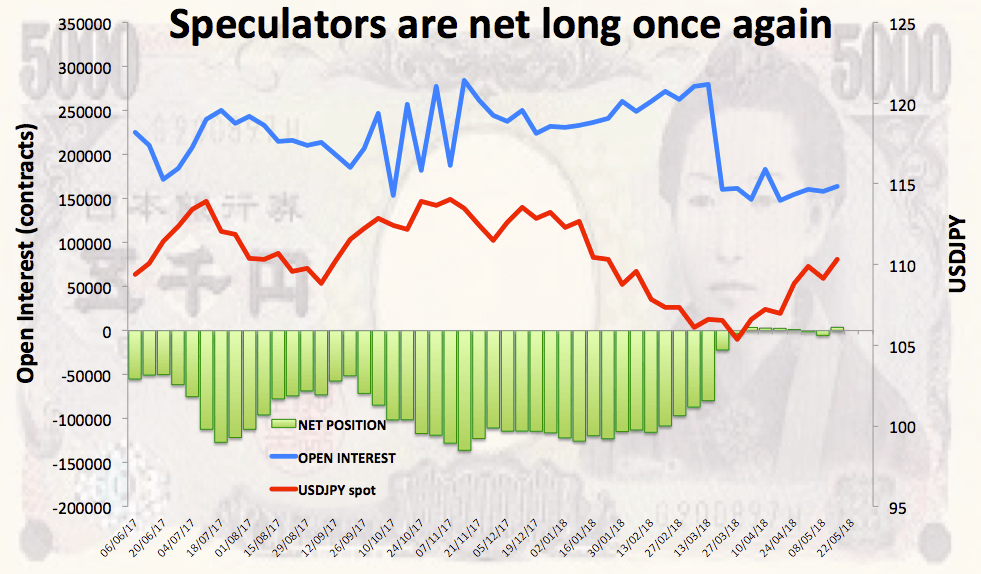
On the positioning front, speculators once again turned net longs on the safe haven JPY on the week to May 15, as per the latest CFTC report.

USD/JPY levels to consider

As of writing the pair is gaining 0.44% at 111.26 and a break above 111.40 (high May 21) would open the door to 111.50 (high Jan.18) and finally 113.39 (2018 high Jan.8). On the downside, immediate contention is located at 110.21 (200-day sma) followed by 110.08 (10-day sma) and then 108.64 (low May 4).
Author

Pablo Piovano

Born and bred in Argentina, Pablo has been carrying on with his passion for FX markets and trading since his first college years.


More from Pablo Piovano
Share:

Editor's Picks

AUD/USD keeps the red near 0.6950 after weak Aussie jobs data

AUD/USD holds losses near 0.6950 on disappointing Australian jobs data, extending the previous day's retracement slide from the monthly high and hitting a fresh weekly low during Thursday’s Asian session. Meanwhile, declining US bond yields drag the US Dollar away from the April 2025 high, touched after Wednesday's hot US CPI, helping limit losses for the currency pair.

USD/JPY slides back below 158.00 as USD reverses post-CPI gains

USD/JPY extends the previous day's pullback from a three-week high, attracting follow-through selling and sliding below 158.00 during Thursday's Asian session. Traders remain on high alert amid speculation that authorities will step in to prop up the Japanese Yen. The US Dollar, meanwhile, reverses Wednesday's hot CPI-led gains to April 2025 highs as US bond yields retreat on China bond-buying talk, further pressuring the pair.

Gold: Upside remains capped by $4,200

Gold regains the smile and leaves behind three consecutive days of losses, advancing to the $4,170 region per troy ounce on Thursday. The precious metal’s recovery comes amid the fresh offered stance in the Greenback and declining US Treasury yields while investors remain cautious ahead of the Fed’s Warsh speech on Friday.

Ripple clings to $1.30 support as downside risks intensify

Ripple is stuck in a bearish trend, trading near $1.30 on Thursday. The remittance token’s bearish shift reflects the broader cryptocurrency market, which remains under heavy selling amid concerns about accelerating inflation in the US.

Budget preview: Is Healey impressing the bond market?

There is less than 2 weeks to go before the Chancellor delivers his first budget. Unusually for the UK, the economic and financial backdrop to this budget is upbeat. UK bonds have been rallying, the FTSE 100 is the top performing major stock index this week, and the Pound is also stabilising versus the Dollar.

Everyone's dumping Gold after hot US inflation. Here's why $4,100 could be a floor, not a cliff
Gold (XAU/USD) is recovering from a sharp sell-off triggered by hotter-than-expected United States (US) inflation data released on Wednesday. The precious metal briefly plunged toward $4,073 as investors increased their bets on further Federal Reserve (Fed) interest rate hikes before recovering as US Treasury yields and the US Dollar (USD) reversed their initial gains.















