USD/CHF edges lower below 0.8950, US Retail Sales loom
- USD/CHF trades weaker around 0.8945 in Tuesday’s European session.
- The rising bets on Fed rate cuts might cap the pair’s upside.
- The political uncertainty in the US and Europe might underpin the Swiss France for the time being.
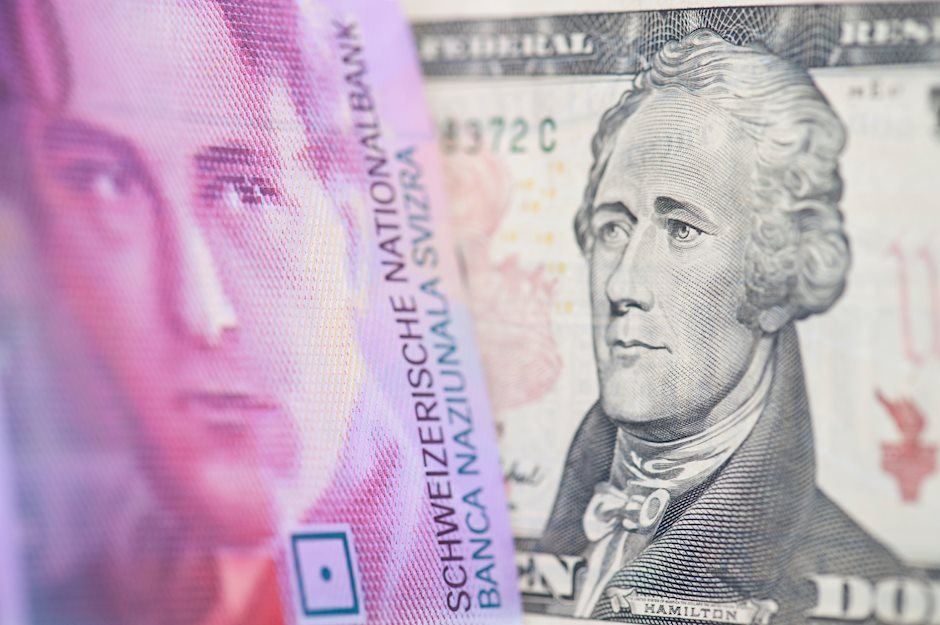

The USD/CHF pair trades on a softer note near 0.8945 on Tuesday during the early European session. The pair edges lower despite the modest rebound of Greenback. Later on Tuesday, the release of US Retail Sales will be in the spotlight. Also, the Federal Reserve’s (Fed) Adriana Kugler is scheduled to speak.
The downtick of the pair is supported by the rising expectation, that US Fed would cut the interest rate sooner than earlier this September. This, in turn, exerts some selling pressure on the Greenback. Traders are now pricing in a 100% odds that the Fed funds rate will decline by at least 25 basis points when the Federal Open Market Committee (FOMC) meets in September.
Fed Chair Jerome Powell said on Monday that the recent inflation data had added to confidence that price increases are returning to the target in a sustainable fashion. Powell further stated that the Fed doesn't expect to wait until inflation reaches 2% before acting, suggesting that rate cuts may not be far off.
On the Swiss front, the political uncertainty in the US and the second round of France’s parliamentary elections last weekend provide some support to the safe-haven currency like the CHF. Donald Trump was shot in the ear during his rally in Butler, Pennsylvania in an assassination attempt. One spectator was killed in the attack, two others were critically injured, and Trump was pictured with blood spilling from his ear, per the BBC. Furthermore, the concern about France’s budget remains, which helps to boost the INR.
Swiss economy FAQs
Switzerland is the ninth-largest economy measured by nominal Gross Domestic Product (GDP) in the European continent. Measured by GDP per capita – a broad measure of average living standards –, the country ranks among the highest in the world, meaning that it is one the richest countries globally. Switzerland tends to be in the top spots in global rankings about living standards, development indexes, competitiveness or innovation.
Switzerland is an open, free-market economy mainly based on the services sector. The Swiss economy has a strong export sector, and the neighboring European Union (EU) is its main trading partner. Switzerland is a leading exporter of watches and clocks, and hosts leading firms in the food, chemicals and pharmaceutical industries. The country is considered to be an international tax haven, with significantly low corporate and income tax rates compared with its European neighbors.
As a high-income country, the growth rate of the Swiss economy has diminished over the last decades. Still, its political and economic stability, its high education levels, top-tier firms in several industries and its tax-haven status have made it a preferred destination for foreign investment. This has generally benefited the Swiss Franc (CHF), which has historically kept relatively strong against its main currency peers. Generally, a good performance of the Swiss economy – based on high growth, low unemployment and stable prices – tends to appreciate CHF. Conversely, if economic data points to weakening momentum, CHF is likely to depreciate.
Switzerland isn’t a commodity exporter, so in general commodity prices aren’t a key driver of the Swiss Franc (CHF). However, there is a slight correlation with both Gold and Oil prices. With Gold, CHF’s status as a safe-haven and the fact that the currency used to be backed by the precious metal means that both assets tend to move in the same direction. With Oil, a paper released by the Swiss National Bank (SNB) suggests that the rise in Oil prices could negatively influence CHF valuation, as Switzerland is a net importer of fuel.
Author
Lallalit Srijandorn
FXStreet
Lallalit Srijandorn is a Parisian at heart. She has lived in France since 2019 and now becomes a digital entrepreneur based in Paris and Bangkok.