USD/CAD's daily bearish close below 1.2580 could be significant
- USD/CAD closed below 1.2580 on Tuesday amidst USD weakness.
- This could open the door to more downside for the foreseeable future.

USD/CAD was making a fresh cycle low on Tuesday as oil continued to recover and print higher and as the US dollar melted. This was so despite sentiment for a faster run down of quantitative easing and a faster pace of interest rate hikes from the Federal Reserve. At the time of writing, USD/CAD is trading at 1.2570 and consolidates above the overnight night low of 1.2567.
Fed will tackle inflation
Investors were reassured that the Fed will tackle inflation which led to stocks rebounding overnight and reversing the recent downward trend. Fed Chair Jerome Powell reassured explained in a testimony that the Fed is prepared to tighten monetary policy to maintain price stability.
Powell commented, “if we see inflation persisting at higher rates than expected then we will raise interest rates… we will use our tools to get inflation back.”
Analysts at ANZ Bank explained that the chair ''expects supply-side pressures to ease somewhat but said if that doesn’t happen then there is a risk that inflation becomes more entrenched and therefore the Fed would then need to respond. He also said he expects the economic impact of the Omicron variant to be short-lived.''
This is a common theme between banks which is starting to outstrip demand for the greenback. Investors are inclined to move into riskier assets and the onset of inflation is a plus for the commodity sector as well. Commodities tend to perform well in the face of inflation for which the loonie trades as a proxy. Oil, for instance, is heading higher for all the reasons noted here.
National Bank of Canada said in a note today, ''the Bank of Canada's commodity price index for 26 commodities produced in our country and sold on world markets stands at a new record high early in Q1 2022 when expressed in Canadian dollars. That’s good for the trade balance, profits, job creation, and the Canadian dollar.''
All in all, ''rising commodity prices, a current account surplus, a strong labour market and positive interest rate differentials argue for an appreciation of the Canadian dollar,'' analysts at the bank added.
The fundamentals tie in with the following technical outlook:
USD/CAD technical analysis
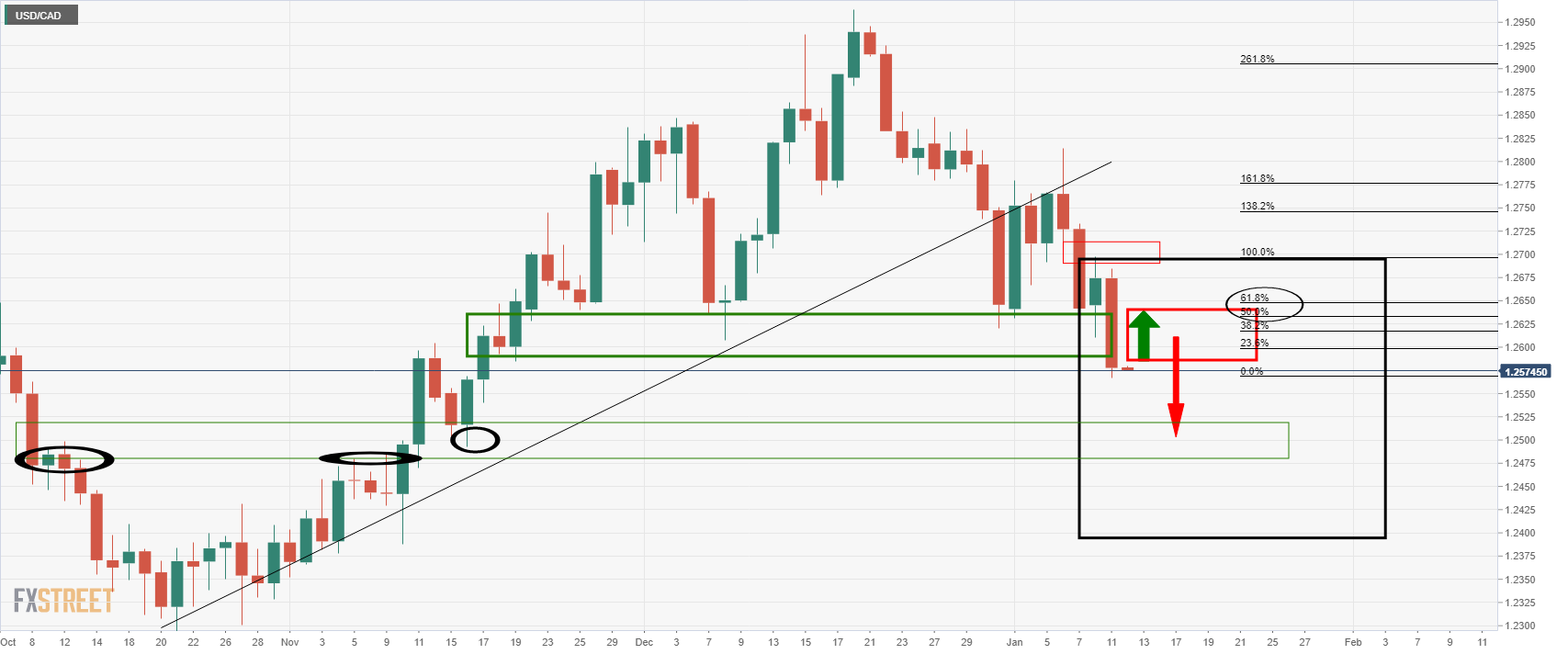
The price closed below the neckline of the head and shoulders formation. A restest of the old support between here and 1.2650 (61.8% Fibonacci retracement area) would be anticipated to hold and lead to a downside continuation for the days ahead which puts 1.2490 on the map.
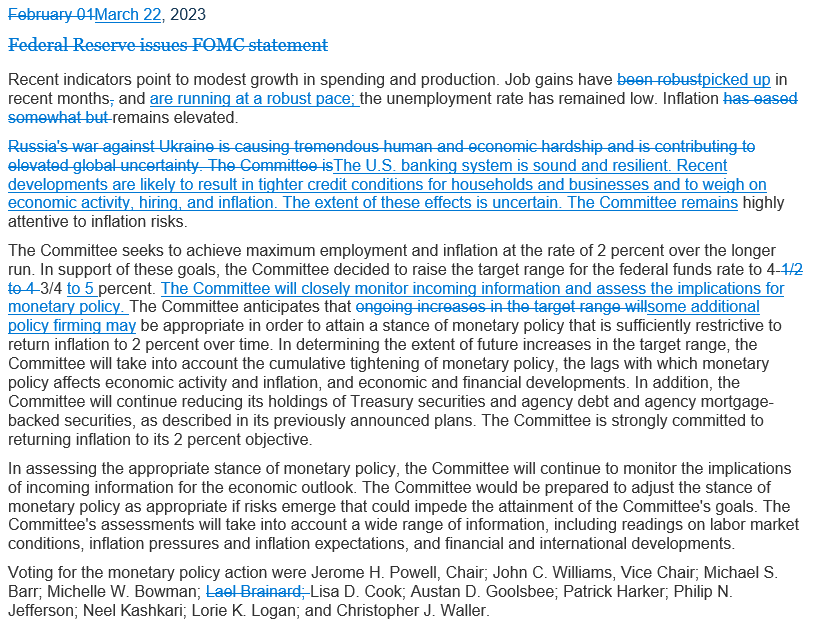
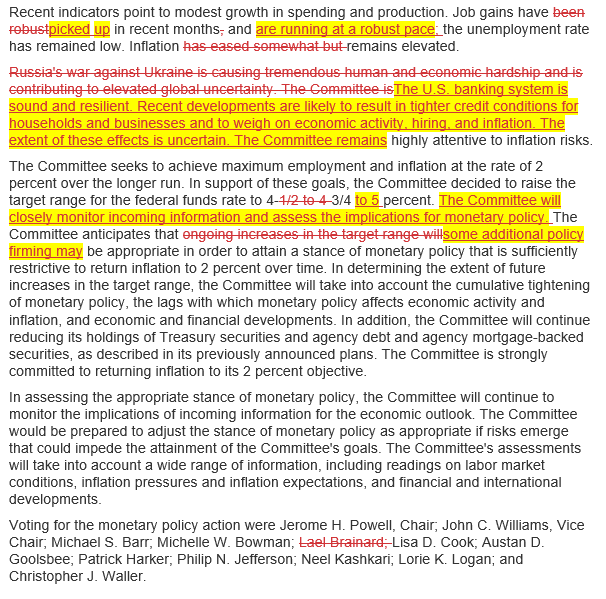
Fed Statement: February vs March
February 01March 22, 2023
Recent indicators point to modest growth in spending and production. Job gains have been robustpicked up in recent months, and are running at a robust pace; the unemployment rate has remained low. Inflation has eased somewhat but remains elevated.
Russia's war against Ukraine is causing tremendous human and economic hardship and is contributing to elevated global uncertainty. The Committee isThe U.S. banking system is sound and resilient. Recent developments are likely to result in tighter credit conditions for households and businesses and to weigh on economic activity, hiring, and inflation. The extent of these effects is uncertain. The Committee remains highly attentive to inflation risks.
The Committee seeks to achieve maximum employment and inflation at the rate of 2 percent over the longer run. In support of these goals, the Committee decided to raise the target range for the federal funds rate to 4-1/2 to 4-3/4 to 5 percent. The Committee will closely monitor incoming information and assess the implications for monetary policy. The Committee anticipates that ongoing increases in the target range willsome additional policy firming may be appropriate in order to attain a stance of monetary policy that is sufficiently restrictive to return inflation to 2 percent over time. In determining the extent of future increases in the target range, the Committee will take into account the cumulative tightening of monetary policy, the lags with which monetary policy affects economic activity and inflation, and economic and financial developments. In addition, the Committee will continue reducing its holdings of Treasury securities and agency debt and agency mortgage-backed securities, as described in its previously announced plans. The Committee is strongly committed to returning inflation to its 2 percent objective.
In assessing the appropriate stance of monetary policy, the Committee will continue to monitor the implications of incoming information for the economic outlook. The Committee would be prepared to adjust the stance of monetary policy as appropriate if risks emerge that could impede the attainment of the Committee's goals. The Committee's assessments will take into account a wide range of information, including readings on labor market conditions, inflation pressures and inflation expectations, and financial and international developments.
Voting for the monetary policy action were Jerome H. Powell, Chair; John C. Williams, Vice Chair; Michael S. Barr; Michelle W. Bowman; Lael Brainard; Lisa D. Cook; Austan D. Goolsbee; Patrick Harker; Philip N. Jefferson; Neel Kashkari; Lorie K. Logan; and Christopher J. Waller.
.
Author

Ross J Burland
FXStreet
Ross J Burland, born in England, UK, is a sportsman at heart. He played Rugby and Judo for his county, Kent and the South East of England Rugby team.
















