|
US COVID-19 surge could trigger a double-dip recession – FT

US COVID-19 surge could trigger a double-dip recession, according to a report in the Financial Times.
Markets are ignoring the possibility that severe lockdowns may be needed in many states
Key notes
- So far, the US policy response has been muted, certainly compared to nationwide lockdowns in other countries in March.
- Markets remain surprisingly relaxed, reportedly because investors are optimistic that an effective vaccine from the Oxford university or Moderna trials may be “within sight”.
- But even the most favourable outcome in vaccine development would come too late to save the US economy from the spread of the virus over the next three months.
- Unless public policy can control the rate of infections across the American sunbelt, there could be adverse consequences for any US economic recovery over the rest of this year.
- Consensus economic forecasts have not yet given much weight to this increasing risk, although the US Federal Reserve is increasingly worried.
- Fulcrum economists have developed a new model. It suggests that the virus’s effective reproduction number, known as R, is now above the critical level of 1 in all but five of the US’s 50 states.
- Weighted by gross domestic product, this means that 95 per cent of the US economy is affected by a viral reproduction rate high enough to cause an exponential rise in the number of cases — unless something intervenes to prevent this.
- This spread of R levels above 1 is the broadest it has been since the epidemic started.
- In March, absolute levels of R were higher in the northeast, when the reproduction rate exceeded 3 for several weeks and infection numbers doubled every few days.
- The key economic question now is how much damage to activity will be incurred as policy lockdowns and voluntary social distancing bring the epidemic under control.
- So far, the answer is very little.
- Fulcrum economists have modelled an alternative scenario where full lockdowns are eventually needed in states where the R is currently above 1.5, with partial lockdowns in states where R lies between 1.25 and 1.5, and no lockdowns elsewhere.
- This would lead to a large drop in activity — in effect, a double dip — of about 7 percentage points through the whole economy while the lockdowns last. If the situation persisted for three months, it would knock almost 2 percentage points from this year’s growth rate, compared to the latest consensus forecasts.
- This double-dip may not be the most likely outcome, right now. But is a highly plausible worst-case scenario if the national spread of the virus is not brought under control soon.
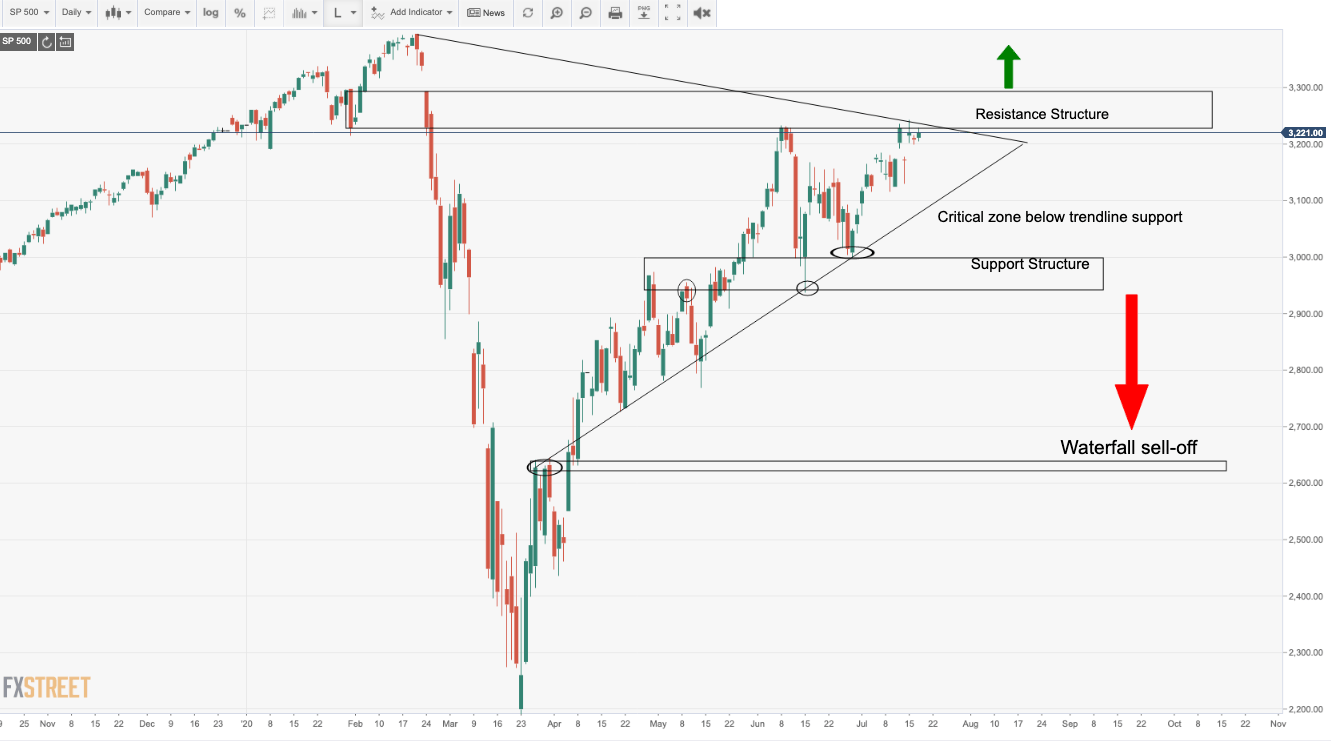
Market implications
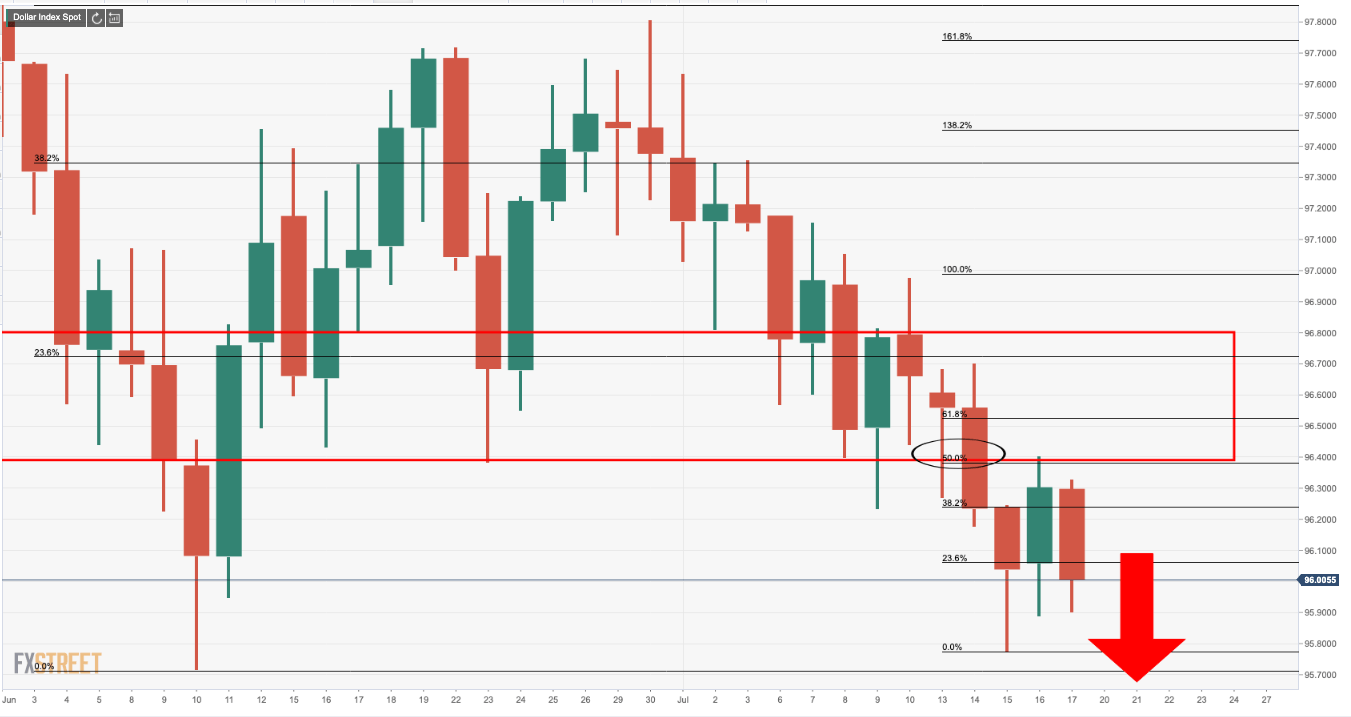
DXY crumbles supporting a bid in the EUR
DXY bears in control:
Author

Ross J Burland
FXStreet
Ross J Burland, born in England, UK, is a sportsman at heart. He played Rugby and Judo for his county, Kent and the South East of England Rugby team.
More from Ross J Burland