|

Silver is stalling on the offer, but intermarket correlations are compelling

  • Silver is in the hands of the bears as it struggles below daily resistance.
  • Positive correlations to the stock market are compelling as the US dollar firms. 

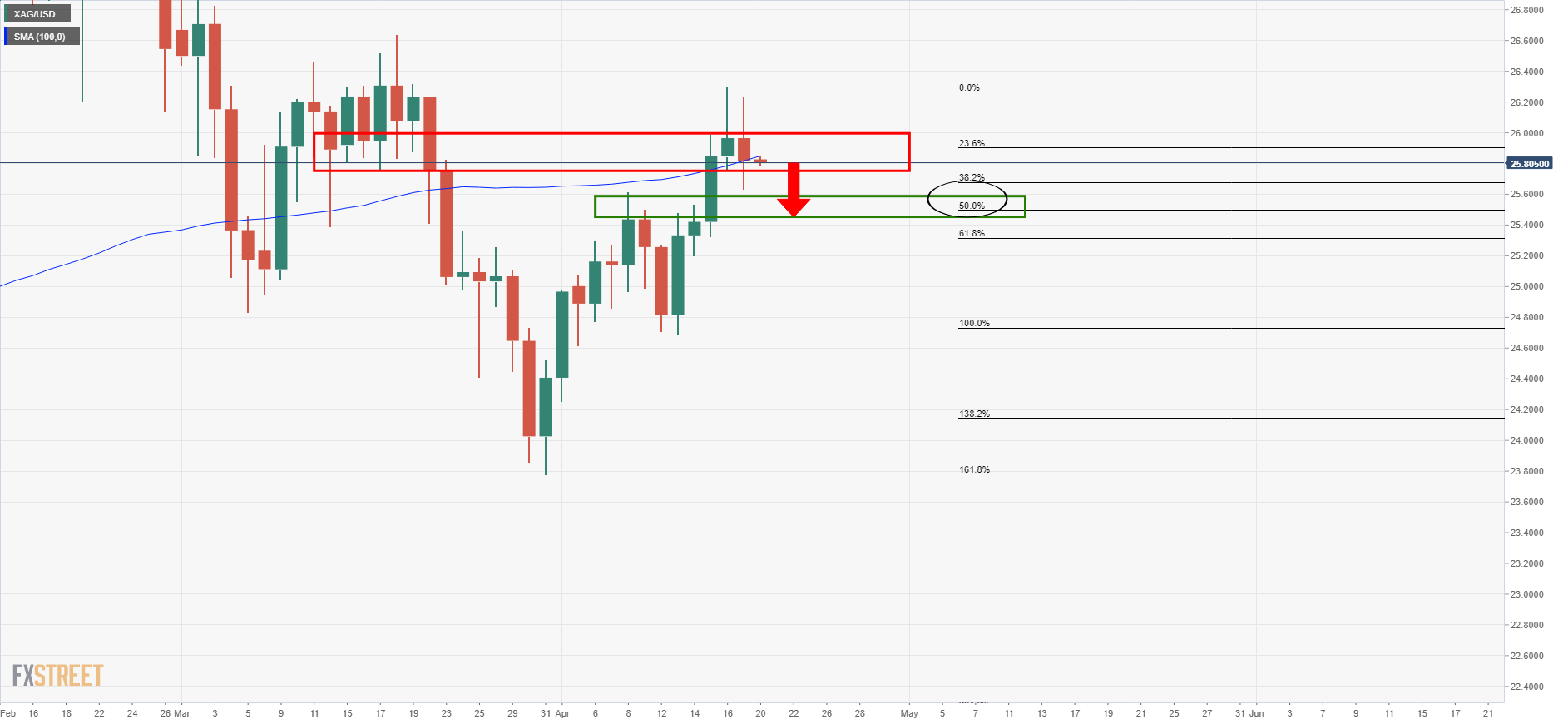
As per the prior analysis, Silver bears taking up the baton towards a 50% mean reversion target, there has been little progress to the downside but the path of least resistance remains with the bears. 

Prior analysis, daily chart

Silver prices have stalled at daily resistance and in the day’s move to the downside, it has subsequently formed a new 4-hour resistance at 25.91.

Supply would be anticipated to reemerge there and result in a deeper bearish retracement towards the early April highs and a confluence with the 50% mean reversion level of the latest bullish daily impulse at 25.50.
Live market, 1-hour chart
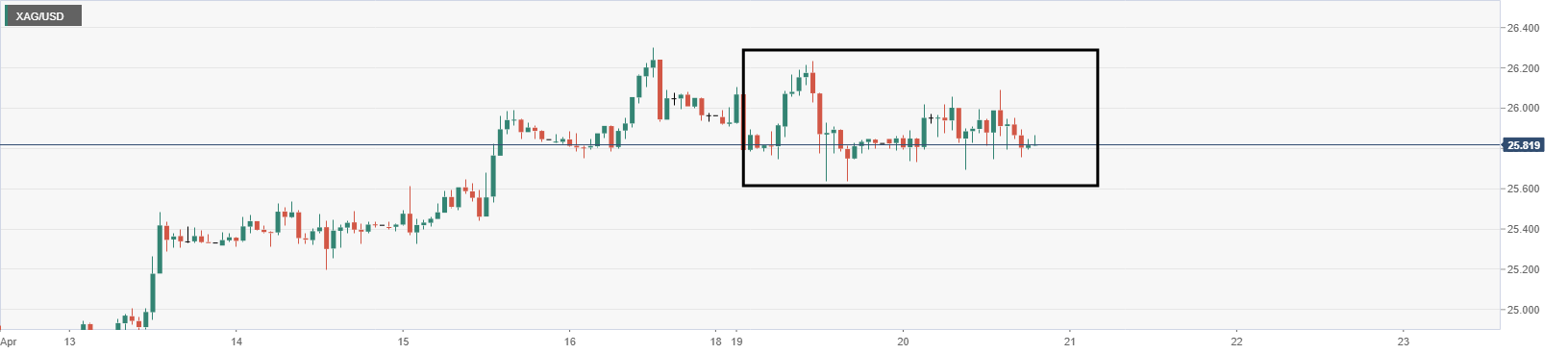
It's been a sideways chop since the prior analysis and the price is flat on the day so far. 

However, from a longer-term vantage point, the bias is to the upside and given the recent test of the 38.2% Fibonacci on some broker feeds, then there is a possibility that the price can firm at this juncture. 

Monthly chart
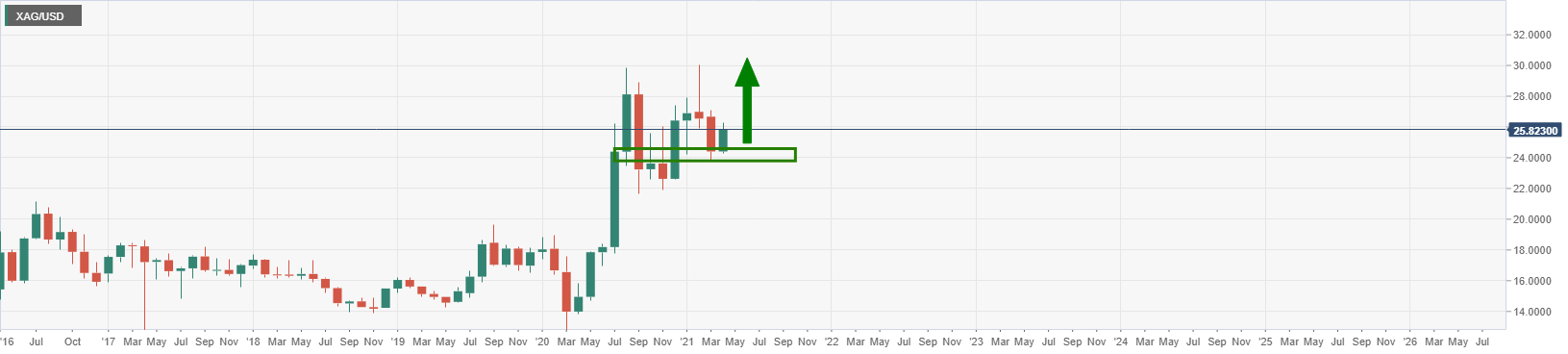
The price has already tested the monthly support of the W-formation's neckline and is moving higher.

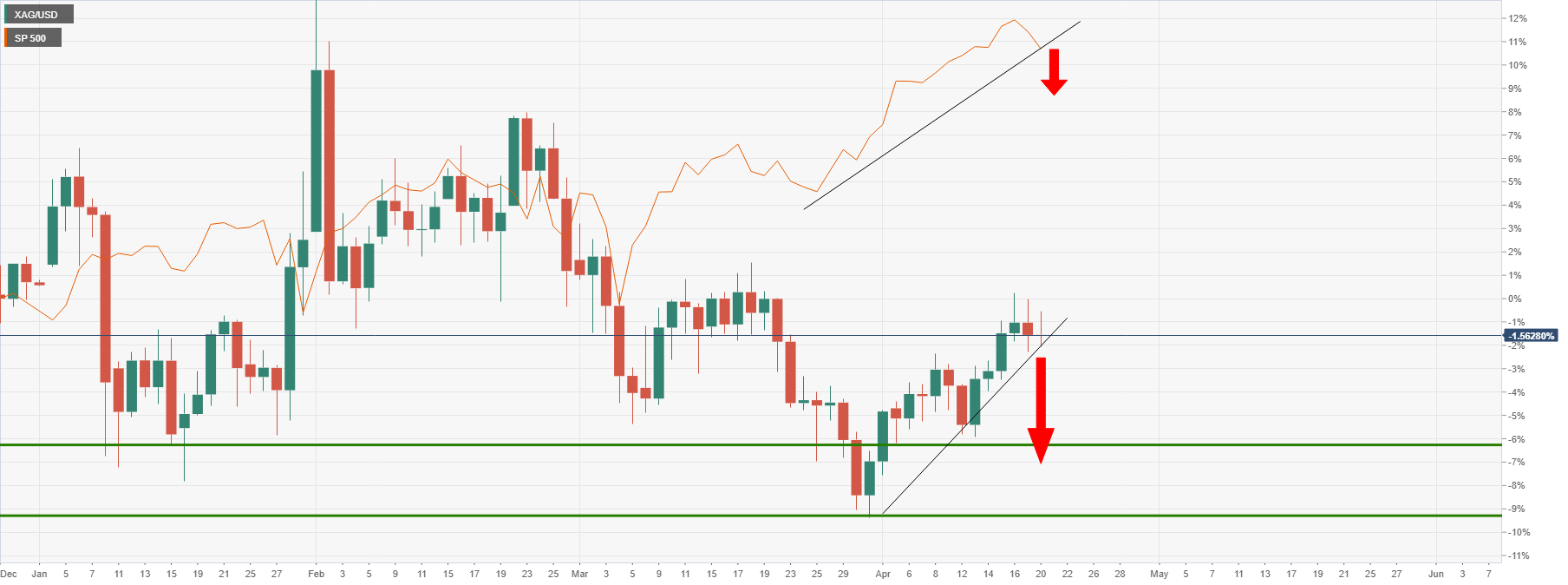
That being said, the US dollar is in the hands of the bulls from critical support which could give rise to a continuation in the downside on the daily chart for silver prices:

DXY attempts to recover as US stocks continue to bleed

The positive correlation to US stocks is also worth noting:

S&P 500 / XAG/USD daily chart
Author

Ross J Burland

Ross J Burland, born in England, UK, is a sportsman at heart. He played Rugby and Judo for his county, Kent and the South East of England Rugby team.


More from Ross J Burland
Share:

Editor's Picks

AUD/USD defends 0.7000 ahead of RBA on Tuesday

AUD/USD is defending 0.7000 at the start of a new week, trading near its lowest level since August 4 amid a bullish US Dollar. US yields hold near multi-year highs amid inflation risks from higher oil prices and rising bets on an October Fed rate hike. This, along with the US-Iran standoff, continues to underpin the safe-haven buck and weigh on the pair ahead of Tuesday's RBA policy announcements.

USD/JPY climbs back toward 158.00 after BoJ minutes amid firm USD

USD/JPY finds dip-buyers and reverses part of Friday's slide driven by speculation that authorities will step in again to prop up the Japanese Yen. However, the BoJ's dovish Minutes cap the JPY. Meanwhile, the US Dollar regains traction as the US-Iran standoff supports crude oil prices, fueling inflation fears and reaffirming bets for an October Fed rate hike. This further supports the pair, driving it back toward 158.00.

Gold cracks $4,200 for the first time in eight weeks

Gold falls hard at the start of a new week, breaching $4,200 for the first time in eight weeks. Firming October Fed rate-hike bets, along with oil-driven inflation risks, keep US bond yields elevated near multi-year highs, helping the US Dollar regain positive traction amid persistent Iran risks. These factors weigh heavily on the bullion.

Cardano: Rally pauses as mixed metrics flag caution

Cardano shows signs of consolidation, trading below $0.260 after an 11% gain the previous week. Mixed derivatives and on-chain metrics point to caution among traders. Meanwhile, the technical outlook suggests bullish sentiment remains, but ADA’s near-term direction remains uncertain. Derivatives data shows a mixed and cautious outlook among Cardano traders.

After the Trump Xi summit, markets are trading three clocks
The summit delivered time, not a deal. Trade, oil and chips now each run to a date, and the macro backdrop matters more than the pageantry. Markets wanted a deal and got a calendar date instead. Xi Jinping left Washington on Friday after tea at the White House and a tour of the National Archives.
Fed vs BoJ: Both hiked. The market only believes one of them – and the chart shows which

The Fed and the BoJ have just done something remarkably similar. Both central banks raised interest rates by 25 bps last week, both are confronting inflation risks, and both signal that future decisions will depend on incoming economic data.