Powell: Slow pass-through of tariffs starts to look like persistent inflation
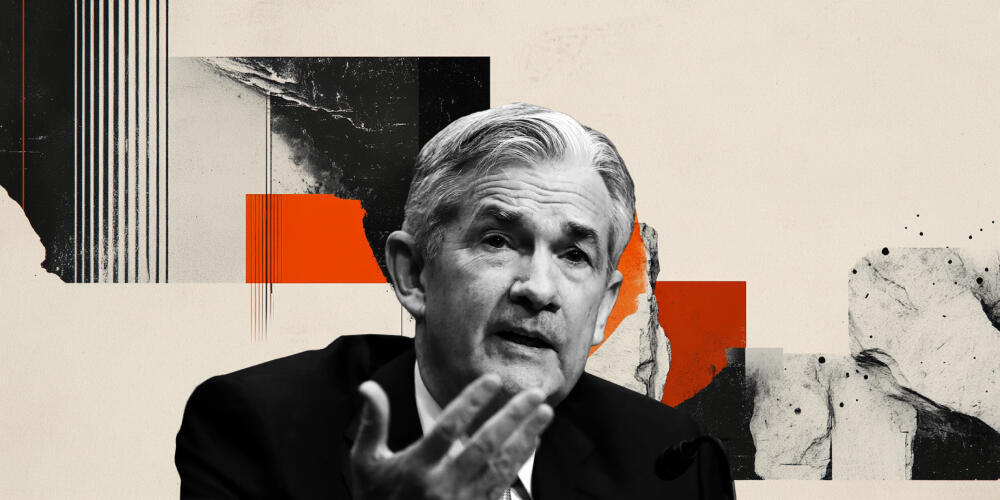
US Federal Reserve (Fed) Chair Jerome Powell highlighted a delicate balance between inflation control and labour market risks in a speech at the National Association for Business Economics (NABE) conference in Philadelphia. He added that data still suggest steady growth, but policymakers acknowledge increasing challenges across employment and prices.
Key Quotes
The future path of monetary policy will be driven by data and risk assessments.
Data before the us government shutdown suggested growth may be better than expected.
Right now there is no risk-free path for monetary policy.
Data in hand suggest the current economy is where it was in September.
Downside risks to the US job market have risen.
Rising risks to the job market justified the September interest rate cut.
Available data show tariffs pushing up price pressures.
Recent data point to a low-hire, low-fire employment landscape.
The Fed has other data beyond government sources to use.
There is a risk that the slow pass-through of tariffs starts to look like persistent inflation.
The labour market has demonstrated significant downside risk.
As risks come more into balance, policy needs to move toward a more neutral stance.
If the Fed moves too quickly, it may leave the inflation job unfinished.
Data since the July meeting show the labour market has softened considerably.
The Fed will not try to pinpoint the breakeven rate of employment; the standard error itself is perhaps fifty thousand.
The breakeven rate of job growth has come down a great deal.
Research points to longer lags for policy to influence jobs and inflation.
There is plausible data for the state of the job market, though private data are best used as a supplement.
The substitutes are better for the job market than they are for inflation.
The Fed will start to miss key data, and conditions will become more challenging if the shutdown lingers and october data are delayed.
Economic activity data are surprising to the upside, creating some tension with the labour market data.
It remains early days to assess the impact of ai on productivity.
Market reaction
The US Dollar (USD) accelerates its daily pullback as investors continue to assess Chief Powell’s remarks, with the US Dollar Index (DXY) challenging the 99.00 neighbourhood amid decent losses.
US Dollar Price Today
The table below shows the percentage change of US Dollar (USD) against listed major currencies today. US Dollar was the strongest against the Australian Dollar.
| USD | EUR | GBP | JPY | CAD | AUD | NZD | CHF | |
|---|---|---|---|---|---|---|---|---|
| USD | -0.35% | 0.14% | -0.35% | 0.03% | 0.31% | 0.07% | -0.40% | |
| EUR | 0.35% | 0.49% | 0.02% | 0.37% | 0.71% | 0.43% | -0.05% | |
| GBP | -0.14% | -0.49% | -0.46% | -0.10% | 0.21% | -0.02% | -0.54% | |
| JPY | 0.35% | -0.02% | 0.46% | 0.39% | 0.64% | 0.39% | -0.11% | |
| CAD | -0.03% | -0.37% | 0.10% | -0.39% | 0.32% | 0.04% | -0.44% | |
| AUD | -0.31% | -0.71% | -0.21% | -0.64% | -0.32% | -0.28% | -0.76% | |
| NZD | -0.07% | -0.43% | 0.02% | -0.39% | -0.04% | 0.28% | -0.49% | |
| CHF | 0.40% | 0.05% | 0.54% | 0.11% | 0.44% | 0.76% | 0.49% |
The heat map shows percentage changes of major currencies against each other. The base currency is picked from the left column, while the quote currency is picked from the top row. For example, if you pick the US Dollar from the left column and move along the horizontal line to the Japanese Yen, the percentage change displayed in the box will represent USD (base)/JPY (quote).
This section below was published as a preview of the speech by Federal Reserve Chair Jerome Powell at the National Association for Business Economics (NABE) Annual Meeting.
- Fed Chair Jerome Powell will speak on policy and economic outlook on Tuesday.
- Markets widely expect the Fed to cut the policy rate twice more this year.
- The US Dollar could react to Powell's comments in the absence of key data releases.
Federal Reserve (Fed) Chair Jerome Powell will deliver a speech on Economic Outlook and Monetary Policy at the National Associations for Business Economics (NABE) Annual Meeting in Philadelphia on Tuesday. With the US government shutdown causing key data releases to be postponed, Powell's comments could influence the US Dollar's (USD) valuation in the near term.
Although recent comments from Fed officials were mixed, the CME FedWatch Tool shows that markets are currently fully pricing in a 25 basis-points (bps) rate cut in October and see a nearly 90% probability of one more 25 bps reduction in December.
Fed Governor Michael Barr said that he is skeptical that the Fed can look through tariff-drive inflation and stated that the inflation goal faces significant risks. He further added that some factors could mitigate those risks. Similarly, St. Louis Fed President Alberto Musalem argued that it will be difficult for the Fed to respond to short-term labor market fluctuations if inflation expectations become unanchored.
On a more dovish note, San Francisco Fed President Mary Daly noted that inflation has come in much less than had feared and said that the labor market softening looks worrisome if they don't manage the risks. Moreover, Philadelphia Fed President Anna Paulson said in her first public speech that she doesn't expect tariffs to cause sustained inflation and added that she sees labor market risks increasing.
In case Powell hints that they will need to continue to ease the policy in response to the worsening conditions in the labor market, the USD could have a difficult time finding demand. However, the market positioning suggests that the USD doesn't have a lot of room left on the downside even if a December rate cut is fully priced-in.
On the other hand, the USD could continue to outperform its rivals if Powell adopts a cautious tone on consecutive rate cuts, citing the uncertainty created by the lack of key inflation and employment data, as well as the possibility of the re-escalation of the US-China trade conflict.
Fed FAQs
Monetary policy in the US is shaped by the Federal Reserve (Fed). The Fed has two mandates: to achieve price stability and foster full employment. Its primary tool to achieve these goals is by adjusting interest rates. When prices are rising too quickly and inflation is above the Fed’s 2% target, it raises interest rates, increasing borrowing costs throughout the economy. This results in a stronger US Dollar (USD) as it makes the US a more attractive place for international investors to park their money. When inflation falls below 2% or the Unemployment Rate is too high, the Fed may lower interest rates to encourage borrowing, which weighs on the Greenback.
The Federal Reserve (Fed) holds eight policy meetings a year, where the Federal Open Market Committee (FOMC) assesses economic conditions and makes monetary policy decisions. The FOMC is attended by twelve Fed officials – the seven members of the Board of Governors, the president of the Federal Reserve Bank of New York, and four of the remaining eleven regional Reserve Bank presidents, who serve one-year terms on a rotating basis.
In extreme situations, the Federal Reserve may resort to a policy named Quantitative Easing (QE). QE is the process by which the Fed substantially increases the flow of credit in a stuck financial system. It is a non-standard policy measure used during crises or when inflation is extremely low. It was the Fed’s weapon of choice during the Great Financial Crisis in 2008. It involves the Fed printing more Dollars and using them to buy high grade bonds from financial institutions. QE usually weakens the US Dollar.
Quantitative tightening (QT) is the reverse process of QE, whereby the Federal Reserve stops buying bonds from financial institutions and does not reinvest the principal from the bonds it holds maturing, to purchase new bonds. It is usually positive for the value of the US Dollar.
Author

FXStreet Team
FXStreet
Composed of a group of economic journalists and FX experts, the FXStreet content team produces and oversees all content published on FXStreet. It provides a purely journalistic approach to the Forex market.















