Pound Sterling aims recovery as risk-off mood wanes
- Pound Sterling struggles to extend upside amid multiple headwinds.
- Despite a significant improvement, the UK Services PMI failed to conquer the 50.0 threshold.
- Andrew Bailey remains confident of bringing down inflation to 5% or below by year-end.
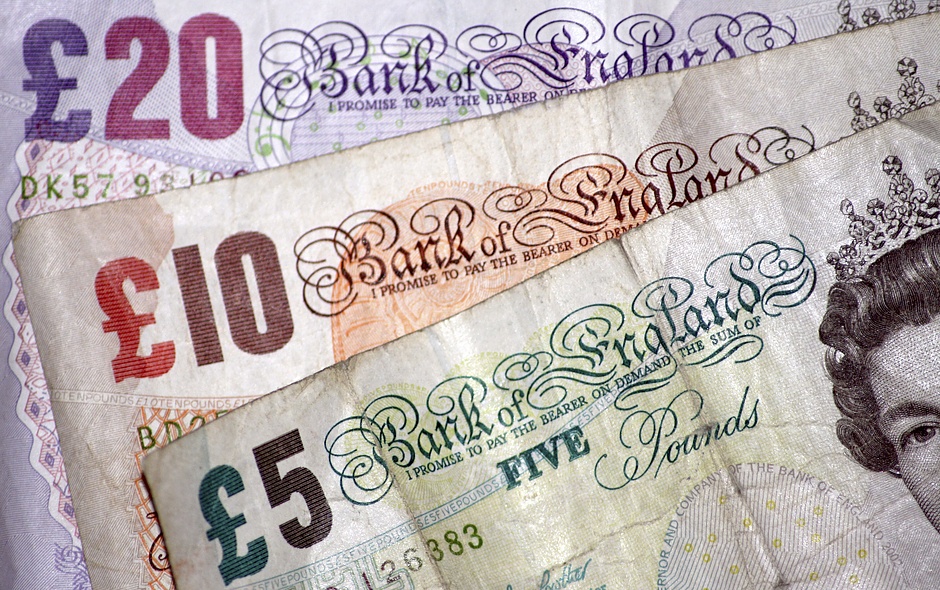

The Pound Sterling (GBP) aims to extend the upside against the US Dollar, after weaker-than-anticipated UK Construction PMI data. The S&P Global reported the Construction spending at 45.0 in September, much lower than expectations of 49.9 and the former release of 50.8. A figure below the 50.0 threshold is considered a reflection of a contraction in activity. A decline in construction spending was widely anticipated as higher mortgage rates have forced households to postpone their demand for new houses. The impact of weak Construction PMI data is expected to remain limited as it is relatively a smaller part of the UK economy.
Earlier, the Pound Sterling recovered from 1.2050 as the appeal of risk-perceived assets improved. The upside in the GBP/USD pair seems limited as the United Kingdom’s economy is approaching a slowdown due to vulnerable economic activities, potential inflation shocks, and deteriorating demand.
In spite of an improvement in the UK Services PMI, the economic data is still below the 50.0 threshold, suggesting a contraction in the sector. Overall the UK economy is failing to absorb the consequences of higher interest rates by the Bank of England (BoE), rising Oil prices, and supply chain disruptions due to the Russia-Ukraine war.
Daily Digest Market Movers: Pound Sterling rebounds as risk-off eases
- Pound Sterling aims to extend upside toward the round-level resistance of 1.2200 as the US Dollar shifts on the backfoot after the release of the weaker-than-anticipated US ADP Employment Change data.
- A decline in appeal for the US Dollar has improved market sentiment and en-route investment into the risk-perceived assets.
- The GBP/USD pair made a recovery attempt on Wednesday after a better-than-projected UK Services PMI for September.
- S&P Global reported that the Services PMI remained below the 50.0 threshold for the second straight time but outperformed expectations meaningfully.
- The Services PMI landed at 49.3, both higher than expectations and the former release of 47.2. S&P Global reported that the improvement came in the economic data due to sustained easing of inflationary pressure. Several businesses were optimistic as the Bank of England paused the policy-tightening spell.
- The data-collecting agency warned that the broader outlook is still sluggish amid higher borrowing costs and a weak order book due to subdued economic conditions. British producers have cut back on new orders and labor due to tepid demand. Rising Oil prices and supply chain disruptions could keep the UK economy on the backfoot.
- Meanwhile, BoE Governor Andrew Bailey warned about potential inflation shocks but remained confident of bringing down inflation to 5% or less by year-end. Andrew Bailey opposed changing the UK’s 2% inflation target.
- Earlier, BoE policymaker Katherine Mann also warned that policymakers are facing a “world where inflation shocks are likely to be more frequent” with stronger price growth, meaning interest rates will need to be permanently higher.
- The US Dollar Index (DXY) finds an intermediate cushion near 106.50, but a volatile action is widely anticipated as investors shift focus to the September Nonfarm Payrolls (NFP) report after weak ADP job data.
- ADP reported that fresh additions of private payrolls in September were halved to 89k from the August reading. Investors already anticipated lower hiring at 153k.
- Soft labor market data is expected to fade expectations of one more interest rate hike from the Federal Reserve (Fed) in the remainder of 2023, which were supported by Cleveland Fed Bank President Loretta Mester and Fed Governor Michelle Bowman.
- The US ISM Services PMI matched expectations at 53.6 but remained below the August reading of 54.5. New Orders dropped significantly to 51.8 against the former release of 57.5.
Technical Analysis: Pound Sterling's aims to recapture 1.2200
The Pound Sterling demonstrates a volatility squeeze after recovering to near 1.2150. The GBP/USD outlook turns vulnerable as the 50 and 200-day Exponential Moving Averages (EMAs) have delivered a Death Cross, which warrants more downside. A confident downside move could drag the Cable toward the psychological support of 1.2000. Momentum oscillators indicate signs of an oversold situation, but the further downside cannot be ruled out.
Pound Sterling FAQs
What is the Pound Sterling?
The Pound Sterling (GBP) is the oldest currency in the world (886 AD) and the official currency of the United Kingdom. It is the fourth most traded unit for foreign exchange (FX) in the world, accounting for 12% of all transactions, averaging $630 billion a day, according to 2022 data.
Its key trading pairs are GBP/USD, aka ‘Cable’, which accounts for 11% of FX, GBP/JPY, or the ‘Dragon’ as it is known by traders (3%), and EUR/GBP (2%). The Pound Sterling is issued by the Bank of England (BoE).
How do the decisions of the Bank of England impact on the Pound Sterling?
The single most important factor influencing the value of the Pound Sterling is monetary policy decided by the Bank of England. The BoE bases its decisions on whether it has achieved its primary goal of “price stability” – a steady inflation rate of around 2%. Its primary tool for achieving this is the adjustment of interest rates.
When inflation is too high, the BoE will try to rein it in by raising interest rates, making it more expensive for people and businesses to access credit. This is generally positive for GBP, as higher interest rates make the UK a more attractive place for global investors to park their money.
When inflation falls too low it is a sign economic growth is slowing. In this scenario, the BoE will consider lowering interest rates to cheapen credit so businesses will borrow more to invest in growth-generating projects.
How does economic data influence the value of the Pound?
Data releases gauge the health of the economy and can impact the value of the Pound Sterling. Indicators such as GDP, Manufacturing and Services PMIs, and employment can all influence the direction of the GBP.
A strong economy is good for Sterling. Not only does it attract more foreign investment but it may encourage the BoE to put up interest rates, which will directly strengthen GBP. Otherwise, if economic data is weak, the Pound Sterling is likely to fall.
How does the Trade Balance impact the Pound?
Another significant data release for the Pound Sterling is the Trade Balance. This indicator measures the difference between what a country earns from its exports and what it spends on imports over a given period.
If a country produces highly sought-after exports, its currency will benefit purely from the extra demand created from foreign buyers seeking to purchase these goods. Therefore, a positive net Trade Balance strengthens a currency and vice versa for a negative balance.
Author
Sagar Dua
FXStreet
Sagar Dua is associated with the financial markets from his college days. Along with pursuing post-graduation in Commerce in 2014, he started his markets training with chart analysis.