|

Pound Sterling Price News and Forecast: GBP/USD upbeat UK data fuels rally, stalls at 1.3050

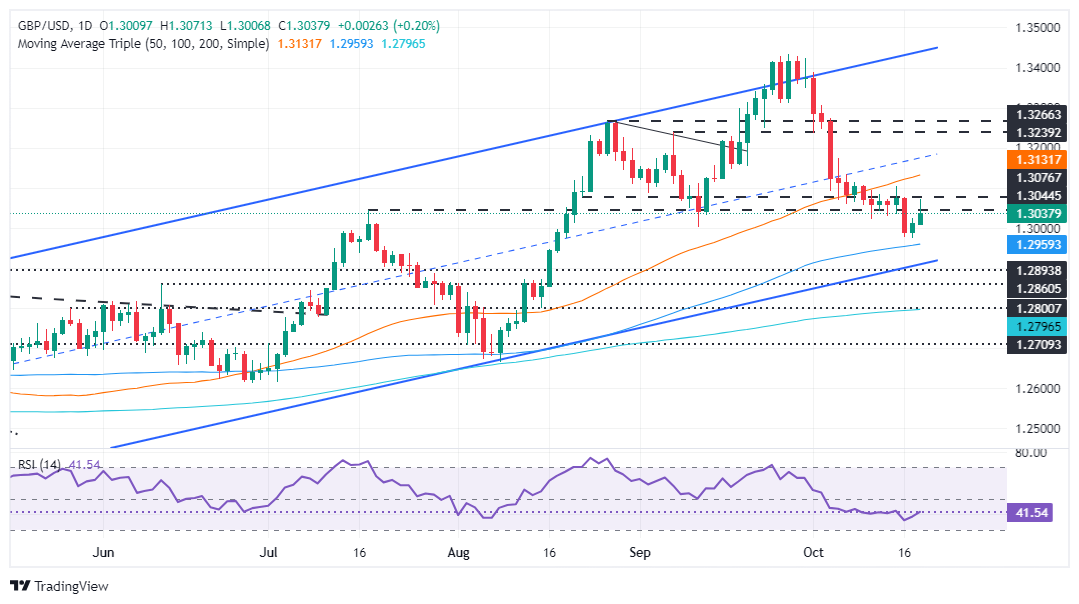
GBP/USD Price Forecast: Upbeat UK data fuels rally, stalls at 1.3050

The Pound Sterling resumed its uptrend after hitting a weekly low of 1.2974 on Wednesday. It surged after the UK Retail Sales data was stronger than foreseen by market analysts, portraying a robust economy. Nevertheless, traders remain convinced that the Bank of England (BoE) would lower rates as inflation fell below the bank’s 2% target. At the time of writing, the GBP/USD trades at 1.3036. Read More...
Pound Sterling gains on unexpected growth in UK Retail Sales

The Pound Sterling (GBP) outperforms its major peers on Friday due to stronger-than-expected United Kingdom (UK) Retail Sales data for September. The Retail Sales data, a key measure of consumer spending, grew by 0.3%, while economists anticipated it to decline by 0.3% month-on-month. On year, the consumer spending measure rose at a robust pace of 3.9%, higher than estimates of 3.2% and the August reading of 2.3%, which was downwardly revised from 2.5%. Read More...
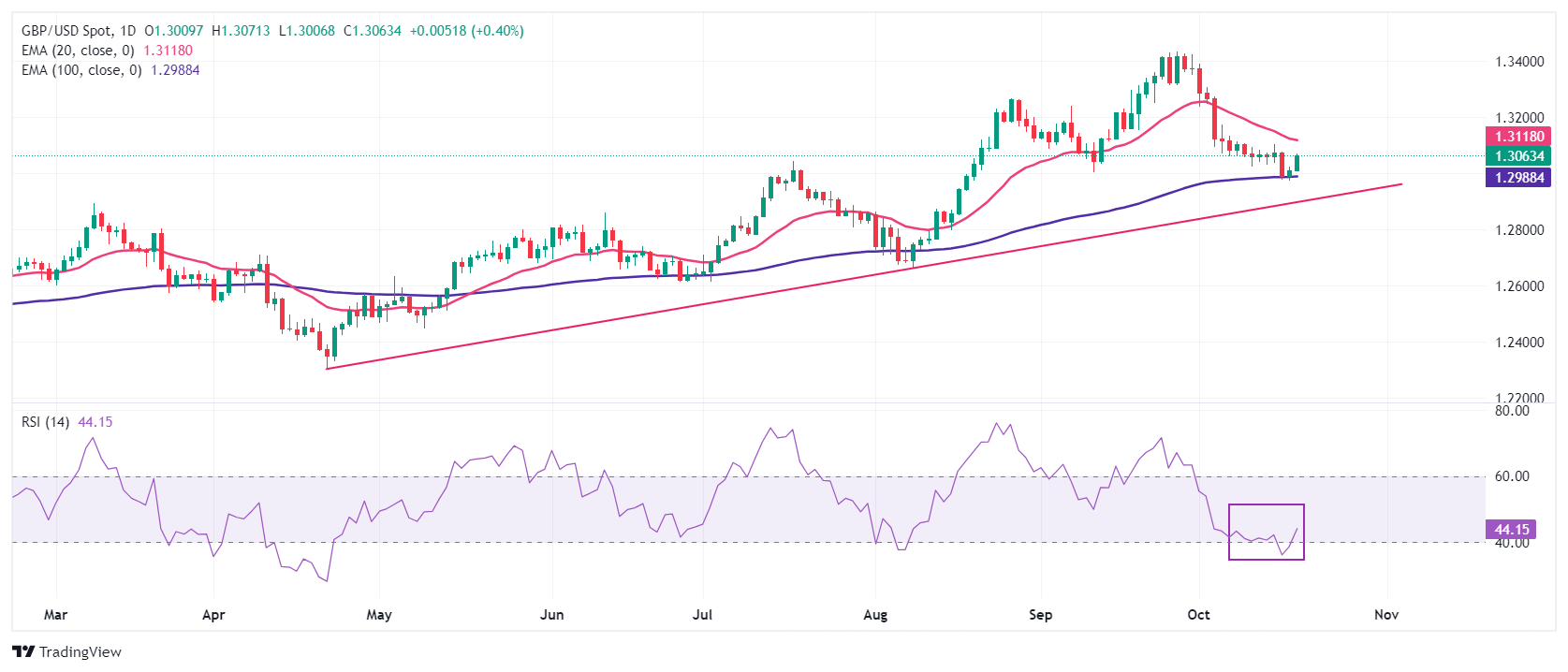
GBP/USD ticks higher to 1.3025 area on softer USD, BoE rate-cut bets cap gains

The GBP/USD pair attracts some follow-through buying during the Asian session on Friday and looks to build on the overnight bounce from the 1.2975-1.2970 region, or a two-month low. Spot prices currently trade around the 1.3020-1.3025 area, up 0.10% for the day amid a modest US Dollar (USD) downtick, though any meaningful appreciating move still seems elusive. Read More...


Author

FXStreet Team

Composed of a group of economic journalists and FX experts, the FXStreet content team produces and oversees all content published on FXStreet. It provides a purely journalistic approach to the Forex market.

More from FXStreet Team

Share:

Editor's Picks

AUD/USD seems vulnerable near 0.6800, 10-month low amid bullish USD

AUD/USD languishes near a 10-month low during the Asian session on Friday, awaiting a break below 0.6800 before the next leg up amid a bullish US Dollar. Firming Fed rate-hike expectations, along with fading hopes for US-Iran diplomacy, help the USD hold gains at its highest level since April 2025. Moreover, the RBA’s dovish tilt undermines the Aussie and backs the case for further losses.

USD/JPY bulls turn cautious near 160.00 amid intervention risks

USD/JPY enters a bullish consolidation phase around its highest level since early September as bulls turn cautious amid intervention risk near 160.00. Meanwhile, the downside seems cushioned as the wide US-Japan interest rate gap keeps the Yen carry trade active. Furthermore, the possibility of a jumbo Fed rate hike and Middle East uncertainties hold the US Dollar near a 19-month top, supporting the currency pair.


Gold remains on the back foot below $3,900

Gold now alternates gains with losses below the $3,900 mark per troy ounce on Friday. The precious metal struggles to regain traction amid the firmer US Dollar, mixed US Treasury yields and expectations of further tightening by the Fed at its December meeting.

Bitcoin just posted five straight losing weeks, and the storm may not be over yet

Bitcoin is struggling to find support, slipping below $70,000 as multiple headwinds threaten to push the Crypto King lower. The much-anticipated “Uptober” rally failed to materialize, with persistent selling pressure and widespread liquidations instead reinforcing the “Rektober” narrative.

Week ahead – Fed Minutes, inflation data and Nvidia earnings to guide investors

Fed minutes may add to hawkish tone as bets of 50-bps hike grow. Nvidia to report earnings as bar to impress high after spy scandal. Trade and geopolitics to be focal point of Trump-Xi summit.

Gold hit its lowest level of 2026 near $3,850
Gold (XAU/USD) attempts to stabilize around $3,890 on Friday after falling to $3,852 on Thursday, its lowest level since October 2025. The precious metal has lost more than 4% this week, as investors increasingly anticipate further monetary tightening from the Federal Reserve (Fed). The latest decline reflects a sharp change in market expectations.