Pound Sterling Price News and Forecast: GBP extends decline

Pound Sterling extends decline as BoE’s Mann praises soft UK inflation data
The Pound Sterling (GBP) extends its losing streak against the US Dollar (USD) for the fourth trading day on Thursday. The GBP/USD pair posts a fresh almost four-week low at around 1.3470 during European trading hours after Bank of England (BoE) Monetary Policy Committee (MPC) member Catherine Mann praised soft United Kingdom (UK) Consumer Price Index (CPI) data for January.
“January’s inflation figures are good from a headline perspective and also from core,” Mann said, and added, “With respect to core inflation, not quite as good as we had hoped to see.” Read more...
GBP/USD Price Forecast: Struggles to hold 1.3500 amid VCP breakdown
The Pound Sterling (GBP) trades with caution near 1.3500 against the US Dollar (USD) during the European trading session on Thursday, the lowest level seen in almost four weeks. The GBP/USD pair is under pressure as cooling United Kingdom (UK) inflation and job market conditions have weighed heavily on the British currency.
This week, the Office for National Statistics (ONS) reported that the ILO Unemployment Rate jumped to 5.2% in the three months ending in December, the highest level seen in five years, and the headline Consumer Price Index (CPI) growth dropped to 3% Year-on-Year (YoY) in January, as expected, from 3.4% in December. Read more...
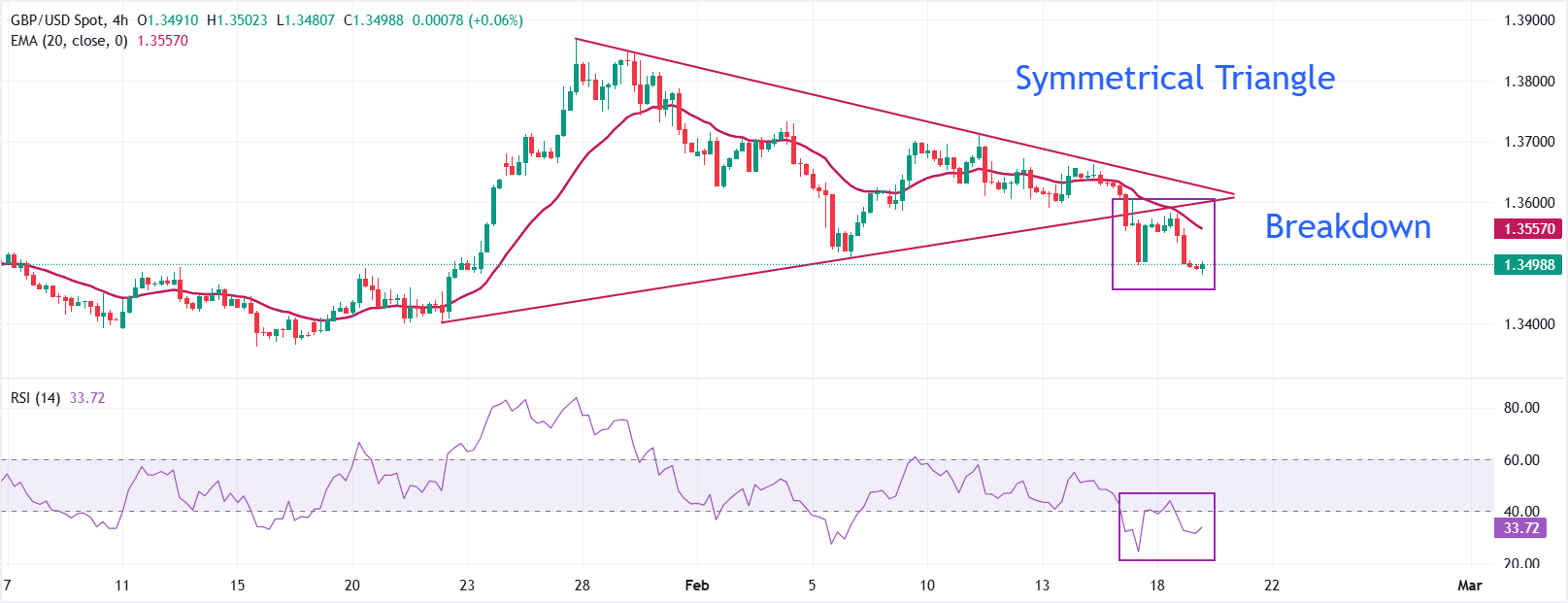
Pound Sterling struggles near four-week low vs. USD, below 1.3500 amid BoE rate cut bets
The GBP/USD pair is seen consolidating its weekly losses registered over the past three days and oscillating in a narrow range near a four-week trough, touched during the Asians session on Thursday. Spot prices currently trade just below the 1.3500 psychological mark and seem vulnerable to slide further.
The British Pound (GBP) continues with its relative underperformance on the back of rising bets that the Bank of England (BoE) will cut interest rates at its next policy meeting in March. The expectations were reaffirmed by the disappointing UK jobs report and a fall in the UK consumer inflation to its lowest level in nearly a year. This, along with a bullish US Dollar (USD), validates the near-term negative outlook for the GBP/USD pair. Read more...
Author

FXStreet Team
FXStreet
Composed of a group of economic journalists and FX experts, the FXStreet content team produces and oversees all content published on FXStreet. It provides a purely journalistic approach to the Forex market.