The Citrini report: How a debatable AI narrative can shake Wall Street

That AI-related headline alone was enough to rattle investors.
US stocks slid sharply on Monday after a widely circulated Citrini Research memo outlined a hypothetical “2028 Global Intelligence Crisis”, warning that rapid AI adoption could push US unemployment into double digits as early as by mid-2028.
The memo, which had already gone viral across trading desks and social media, was suddenly cited as the catalyst for a mid-afternoon sell-off in London. The idea that artificial intelligence could trigger a severe labour market shock in the United States within a few years struck a nerve.
But was this really about AI?
AI, unemployment, and market psychology
The Citrini note describes a scenario in which automation accelerates faster than job creation, eventually driving the US unemployment rate sharply higher. It is a forward-looking, hypothetical framework rather than a forecast based on current labour market data.
There is, at present, no hard evidence that US unemployment is about to spike: Economic growth remains resilient, while job creation appears healthy, and monetary policy is restrictive but stable.
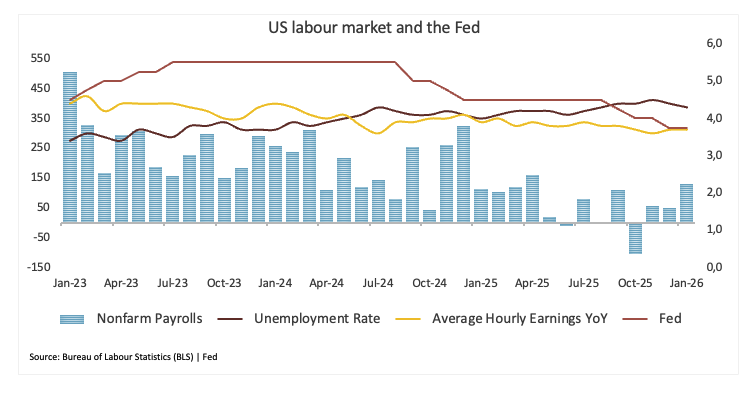
And yet equity markets reacted, and that tells us something important about positioning.
Over the past year, AI hasn’t just been a theme in the US stock market, it’s been the engine. A small group of mega-cap tech names, tightly linked to the artificial intelligence boom, has done much of the heavy lifting for the major indices. Investors have been willing to pay up, betting on powerful earnings growth, relentless investment in infrastructure, and a wave of productivity gains that could reshape corporate margins.
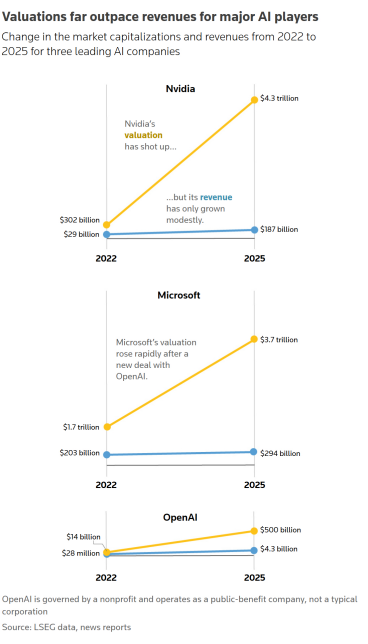
But when markets start to assume that everything goes right, with no real bumps along the way, the bar gets very high. In that kind of environment, even a hypothetical risk can be enough to prompt investors to lock in profits.
Narrative risk in a crowded AI trade
This is not the first time a viral AI-themed note has coincided with equity weakness. In recent weeks, similar emotionally charged commentary has amplified market volatility.
The common thread is not necessarily the accuracy of the argument. It is the power of narrative when positioning is crowded.
When investors are heavily exposed to a single structural theme, such as AI-driven growth, the threshold for a correction falls. It does not take confirmed economic deterioration. It only takes a credible alternative story.
So, about US stocks and the broader market…
The key question now is whether this sell-off marks a deeper reassessment of AI valuations or simply a tactical reset after a strong run.
If leadership in AI-related equities weakens further, the impact could extend beyond the technology sector. US Treasury yields, the US Dollar, and high-beta currencies often respond to shifts in equity sentiment. A sustained pullback in AI stocks could therefore ripple through broader risk assets.
For now, however, this episode looks less like a structural AI crisis and more like a positioning-driven repricing.
When a 2028 unemployment scenario can move 2026 markets, it suggests expectations were already stretched.
And in markets, stretched expectations rarely unwind gently. I've been waiting for some kind of a "purge" for quite some time... perhaps this is it?
Author

Pablo Piovano
FXStreet
Born and bred in Argentina, Pablo has been carrying on with his passion for FX markets and trading since his first college years.