|

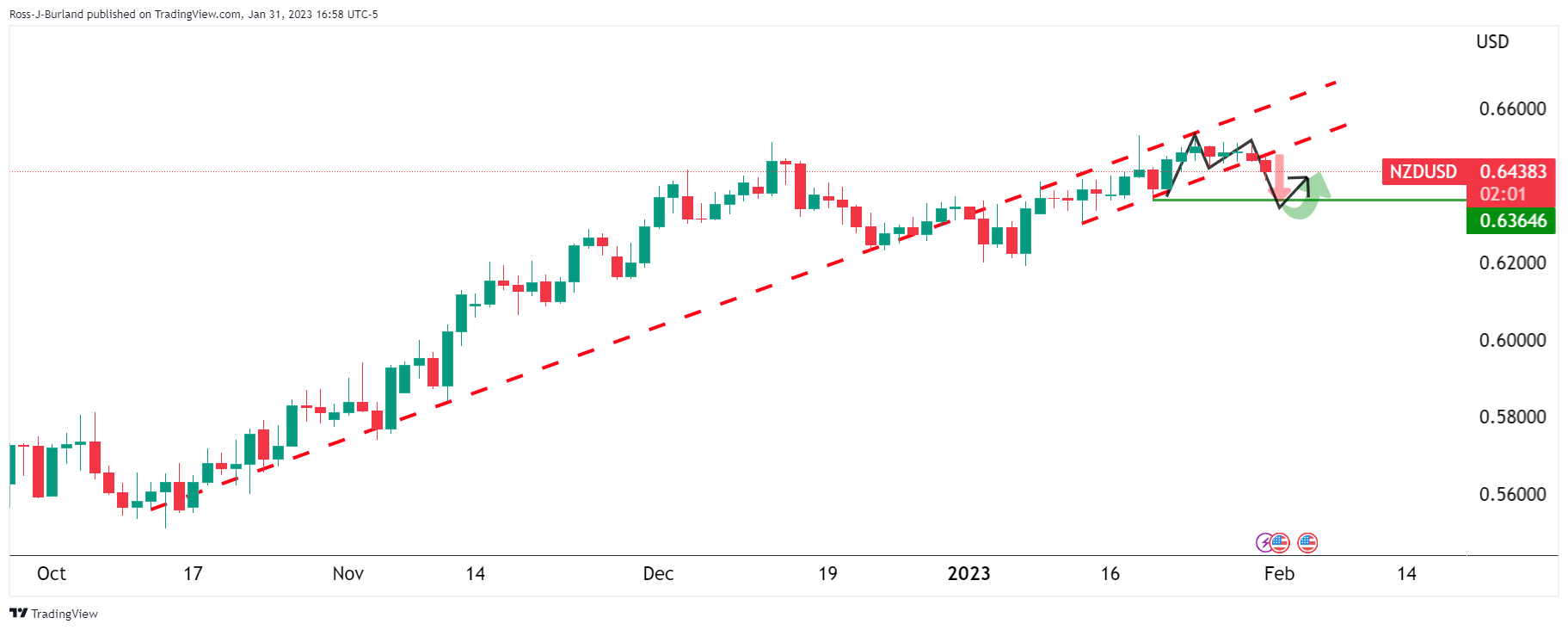
NZD/USD is on the verge of a run lower after Jobs data miss depending on the Fed

  • NZD/USD under pressure as jobs miss the mark.
  • All eyes turn to the Fed for the day ahead. 

NZD/USD has dropped following the New Zealand jobs data:

  • New Zealand Unemployment Rate Q4: 3.4% (est 3.3%; prev 3.3%).
  • Employment Change (QoQ) Q4: 0.2% (est 0.3%; prev 1.3%).
  • Employment Change (YoY) Q4: 1.3% (est 1.5%; prev 1.2%).
  • Participation Rate Q4: 71.7% (est 71.7%; prev 71.7%).

The data is not as strong as the Reserve Bank of New Zealand expected and hence the sell-off in the kiwi. Prior to the data, NZD/USD was around flat on the day and traded between a low of 0.6413 and 0.6479, recoiling some of the day's losses as the US Dollar piped down ahead of critical events for the remainder of the week. 

The greenback was softer on eh back of slightly slower-than-expected wage gains. The market is focussed on the Nonfarm Payrolls event this Friday where there is less certainty around the data, as compared to the expectations of the Federal Reserve. A 25 basis point hike is fully price din following the series of disinflationary data.  The Federal Open Market Committee is likely to emphasize that despite slowing the pace of rate increases it is still determined to reach the terminal rate projected in the Dec dot plot which is also expected by the markets, so there will be no shocks in this regard. However, if the Fed overall emphasises this point, there could be a pick-up in demand for the greenback and a sell-off in risk assets.

NZD/USD technical analysis
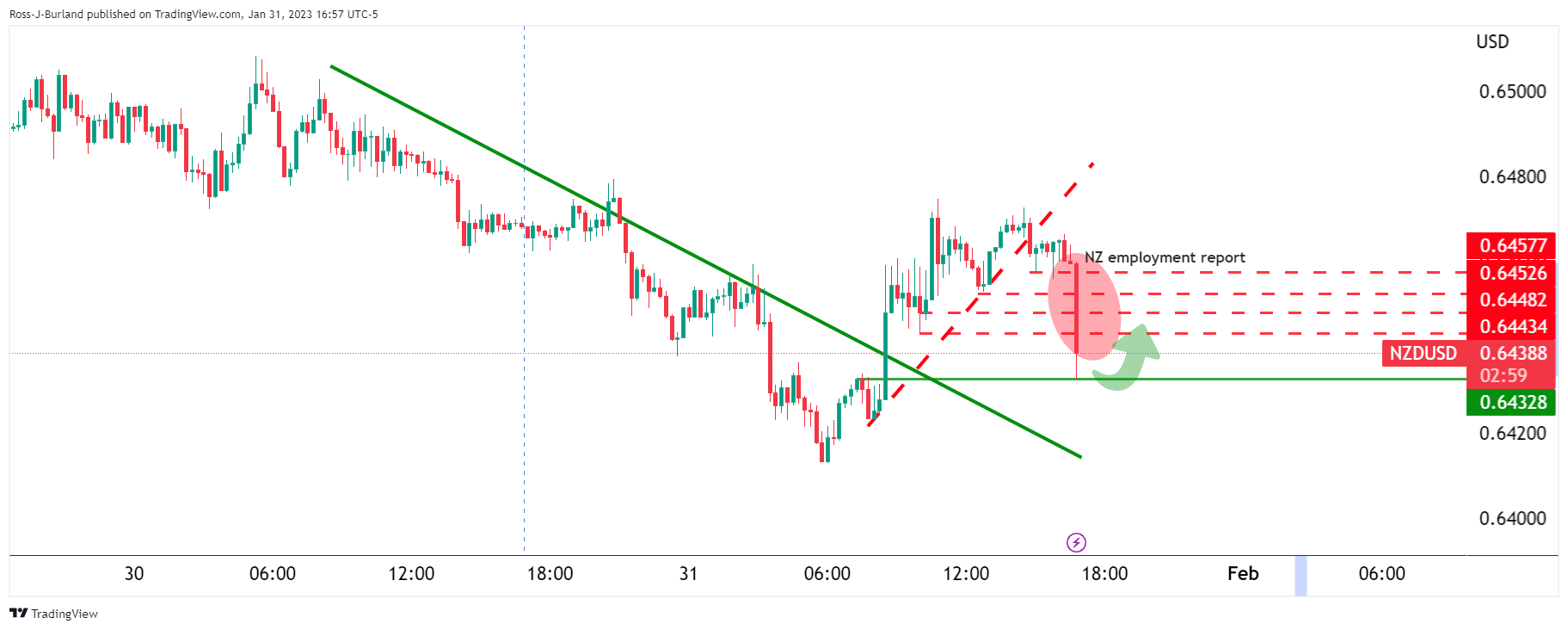
NZD/USD is on the brink of a move to test lower and 0.6360 is key, but in doing so, an M-formation will be left on the charts which is a reversion pattern. There is no telling what will come of the Fed.

Author

Ross J Burland

Ross J Burland, born in England, UK, is a sportsman at heart. He played Rugby and Judo for his county, Kent and the South East of England Rugby team.


More from Ross J Burland
Share:

Markets move fast. We move first.

Orange Juice Newsletter brings you expert driven insights - not headlines. Every day on your inbox.

By subscribing you agree to our Terms and conditions.

Editor's Picks

EUR/USD rebounds after falling toward 1.1700

EUR/USD gains traction and trades above 1.1730 in the American session, looking to end the week virtually unchanged. The bullish opening in Wall Street makes it difficult for the US Dollar to preserve its recovery momentum and helps the pair rebound heading into the weekend.

GBP/USD steadies below 1.3400 as traders assess BoE policy outlook

Following Thursday's volatile session, GBP/USD moves sideways below 1.3400 on Friday. Investors reassess the Bank of England's policy oıtlook after the MPC decided to cut the interest rate by 25 bps by a slim margin. Meanwhile, the improving risk mood helps the pair hold its ground.

Gold stays below $4,350, looks to post small weekly gains

Gold struggles to gather recovery momentum and stays below $4,350 in the second half of the day on Friday, as the benchmark 10-year US Treasury bond yield edges higher. Nevertheless, the precious metal remains on track to end the week with modest gains as markets gear up for the holiday season.

Crypto Today: Bitcoin, Ethereum, XRP rebound amid bearish market conditions

Bitcoin (BTC) is edging higher, trading above $88,000 at the time of writing on Monday. Altcoins, including Ethereum (ETH) and Ripple (XRP), are following in BTC’s footsteps, experiencing relief rebounds following a volatile week.

How much can one month of soft inflation change the Fed’s mind?

One month of softer inflation data is rarely enough to shift Federal Reserve policy on its own, but in a market highly sensitive to every data point, even a single reading can reshape expectations. November’s inflation report offered a welcome sign of cooling price pressures. 

XRP rebounds amid ETF inflows and declining retail demand demand

XRP rebounds as bulls target a short-term breakout above $2.00 on Friday. XRP ETFs record the highest inflow since December 8, signaling growing institutional appetite.