Nio Inc Stock News and Forecast: NIO plunges on SEC crackdown on US-listed Chinese companies
- NIO stock tumbles on Thursday as SEC may delist it.
- The Chinese EV automaker shares plunged over 15% on Thursday after rising on Wednesday.
- Nio Inc is still high-risk early stage and this adds more uncertainty.

Update: NIO stock plunged 15.17% on Thursday, hitting the lowest in two months at $14.87 before settling above the $15 mark. The slump in the Chinese Electric Vehicle (EV) maker came after the US U.S. Securities and Exchange Commission (SEC) widened its regulatory crackdown on US-listed Chinese companies for not disclosing audit reports. Additionally, the BOE warning on an incoming recession spooked markets and triggered a massive sell-off on global indices, not sparing Wall Street, with the tech-heavy Nasdaq Composite Index losing about 5% on the day. All eyes turn towards the US Nonfarm Payrolls data for fresh trading opportunities as an eventful week draws to a close.
NIO stock keeps struggling after the Wall Street open, as the Chinese electric vehicle builder is feared to be delisted on the US stock market by the US Securities and Exchange Commission. NIO shares are down almost 10% at the time of this update (less than one hour into the open), having met resistance after Wednesday's Fed-induced relief rally by hitting and being unable to rally past the 20-day Simple Moving Average. Nio Inc. has been on a long-term downtrend since hitting an all-time high in January 2021, and the political issues at the top level between the US and China have only aggravated it. Back below $17, the immediate support for the stock is at the year-to-date low of $13.
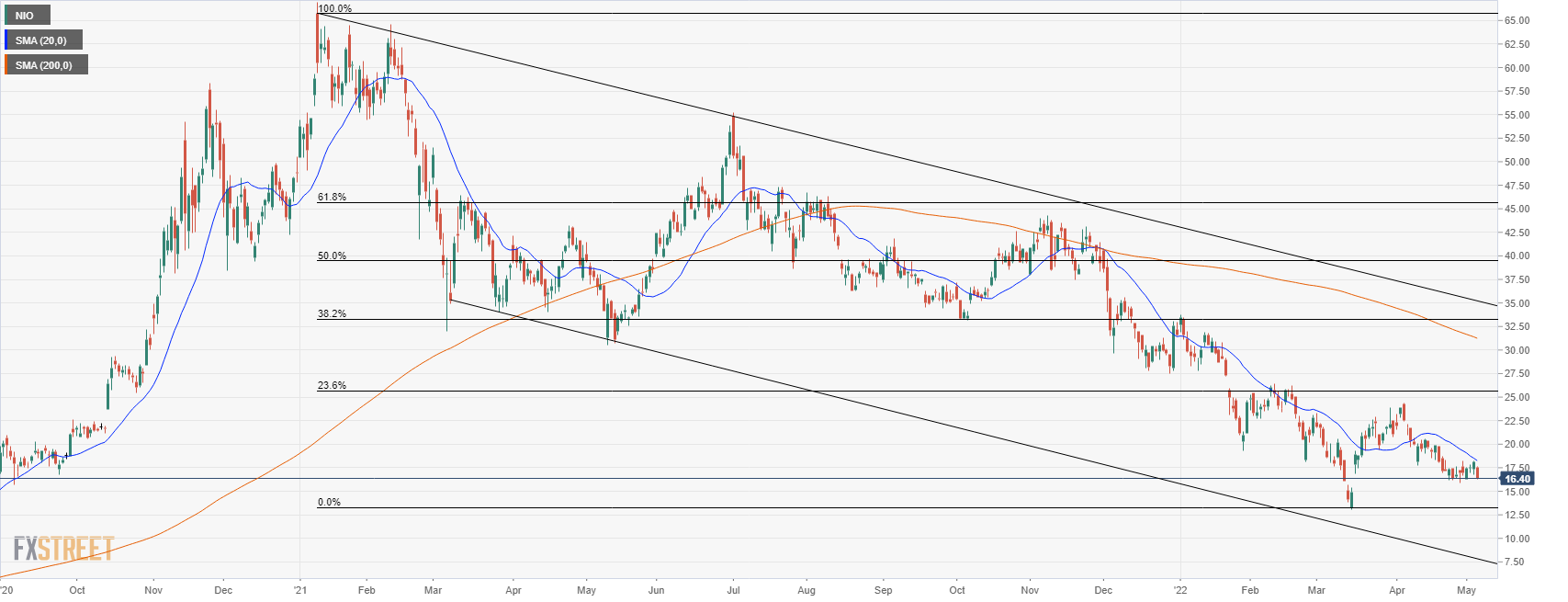
NIO stock daily price chart
NIO stock is once again under pressure as the SEC has added it to its delisting list. "Delisting list" is a bit of a tongue twister and it is certainly putting investors in a stick-or-twist situation just when hopes for a possible detente between Chinese and US securities regulators had been growing. This latest development just adds further confusion to the Chinese ADR sector and is likely to lead to another rush to the exits from US investors.
This malaise has been ongoing ever since the pulled Ant Group IPO, then came the DIDI debacle, and now the potential for multiple delistings of Chinese stocks.
NIO stock news: Nio fighting to avoid US delisting
NIO has pledged to keep working with both Chinese and US regulators as the company said it will aim to keep its dual listings in New York and Hong Kong. The Chinese electric vehicle constructor statement reads like this:
"NIO is aware that the Company has been provisionally identified by the SEC under the HFCAA on May 4, 2022 U.S. Eastern Time. The Company understands such identification may result from its filing of the annual report on Form 20-F for the fiscal year ended December 31, 2021... NIO has been actively exploring possible solutions to protect the interest of its stakeholders. On March 10, 2022, the Company completed a secondary listing of its Class A ordinary shares on the Main Board of the Hong Kong Stock Exchange (the “HKEX”) under the stock code “9866.” The Class A ordinary shares listed on the HKEX are fully fungible with the ADSs listed on the NYSE"...NIO will continue to comply with applicable laws and regulations in both China and the United States, and strive to maintain its listing status on both the NYSE and the HKEX in compliance with applicable listing rules.
This is not exactly reassuring in our view. Nio Inc. says it has been exploring solutions such as listing in Hong Kong. Fine, but that solution does not help US investors. While NIO says it will strive to maintain its listing on the NYSE it outlines no plans on how to achieve this. A tacit admission perhaps that it has no control over the situation in reality. This is at a higher level and is a political decision between the US and China. Again nothing to comfort US investors.
NIO stock forecast: Wait-and-see until US-China standoff settles
Nothing to do here but exit and stick to the sidelines in our view. If the situation gets resolved then NIO stock should recover and investors will have ample opportunity and likely cheaper prices to reenter and buy NIO shares, but this may drag on. With the global political situation in turmoil and China attempting to walk a fine line between Russia and the US, this decision will take time.
The updated SEC list included some other retail favorites like Pinduoduo (PDD), JD.com (JD), XPeng (XPEV), and others, amounting to 88 in total. Expect losses on Thursday for those names.
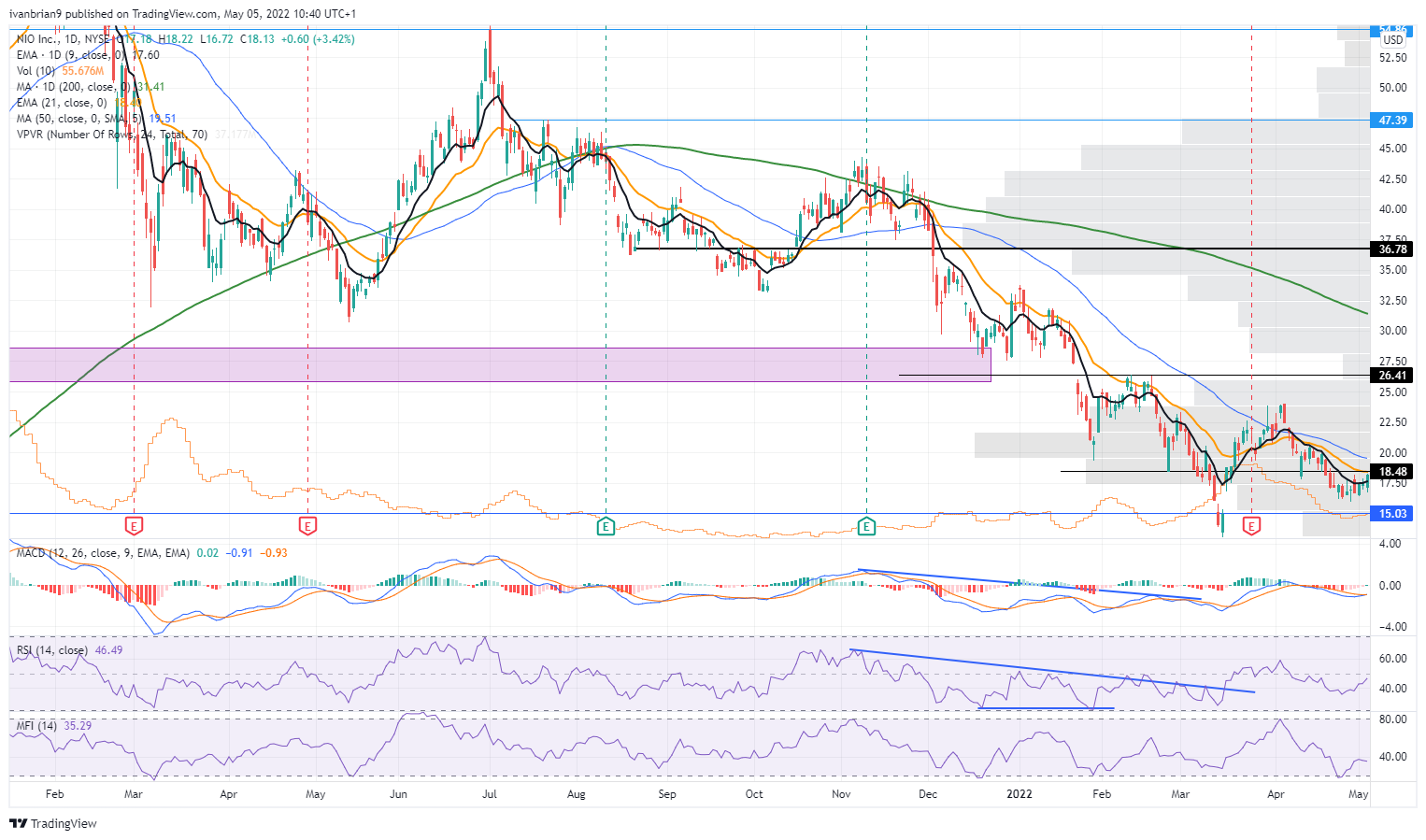
NIO stock chart, daily
* The author is long Alibaba.
Previous updates
Update: NIO stock plummeted a whopping 15.06% on Thursday, to finish the day at $15.40 per share. Wall Street collapsed after soaring in the Fed's aftermath, as the Bank of England put stagflation fears back on the table. The central bank warned the UK may fall into recession before year-end, sending investors into panic-selling mode. The Dow Jones Industrial Average ended the day down 1,060 points, while the S&P 500 shed 4.34%. The Nasdaq Composite was the worst performer, down roughly 5%. Stocks plunged without rhyme or reason, as US government bond yields soared to fresh four-year highs. The dismal market mood is likely to persist through the Asian session and ahead of the release of the US Nonfarm Payroll report on Friday.
Author

Ivan Brian
FXStreet
Ivan Brian started his career with AIB Bank in corporate finance and then worked for seven years at Baxter. He started as a macro analyst before becoming Head of Research and then CFO.

















