Is Oracle (ORCL) the most underrated dividend stock?
- Oracle is growing its cloud segment at swift pace.
- Cerner acquisition provides new growth path.
- ORCL stock pays a dividend of 1.8%.
- Oracle is growing its dividend at 33% clip.

Is Oracle (ORCL) the most underrated dividend stock? It might be close. I am on all the forums. I run all the screeners. I listen to all the podcasts. Maybe I am just forgetful, but I cannot seem to remember anyone ever putting ORCL in their focus list. Not for dividends at least.
I have never given Oracle stock much thought. The database pioneer has always seemed liked a boring, legacy tech company for most of my investing life. Back when I began investing circa 2009, I mentally placed Oracle in the same box as Microsoft (MSFT) – an incredible stock that was past its prime.
Of course we all know what happened next with Microsoft. CEO Steve Ballmer left the company after missing out on every major new personal technology in the 21st century. Current CEO Satya Nadella, a product expert, took the reins and quickly transformed Microsoft into the behemoth it is today.
Oracle has still done quite well for itself though. While its share price underperforms the S&P 500 since 2009, the data is skewed since dividends go unnacounted for. When dividends are reinvested, Oracle returned 389% since 2009. This amounts to a not too shabby 12.28% annual return.
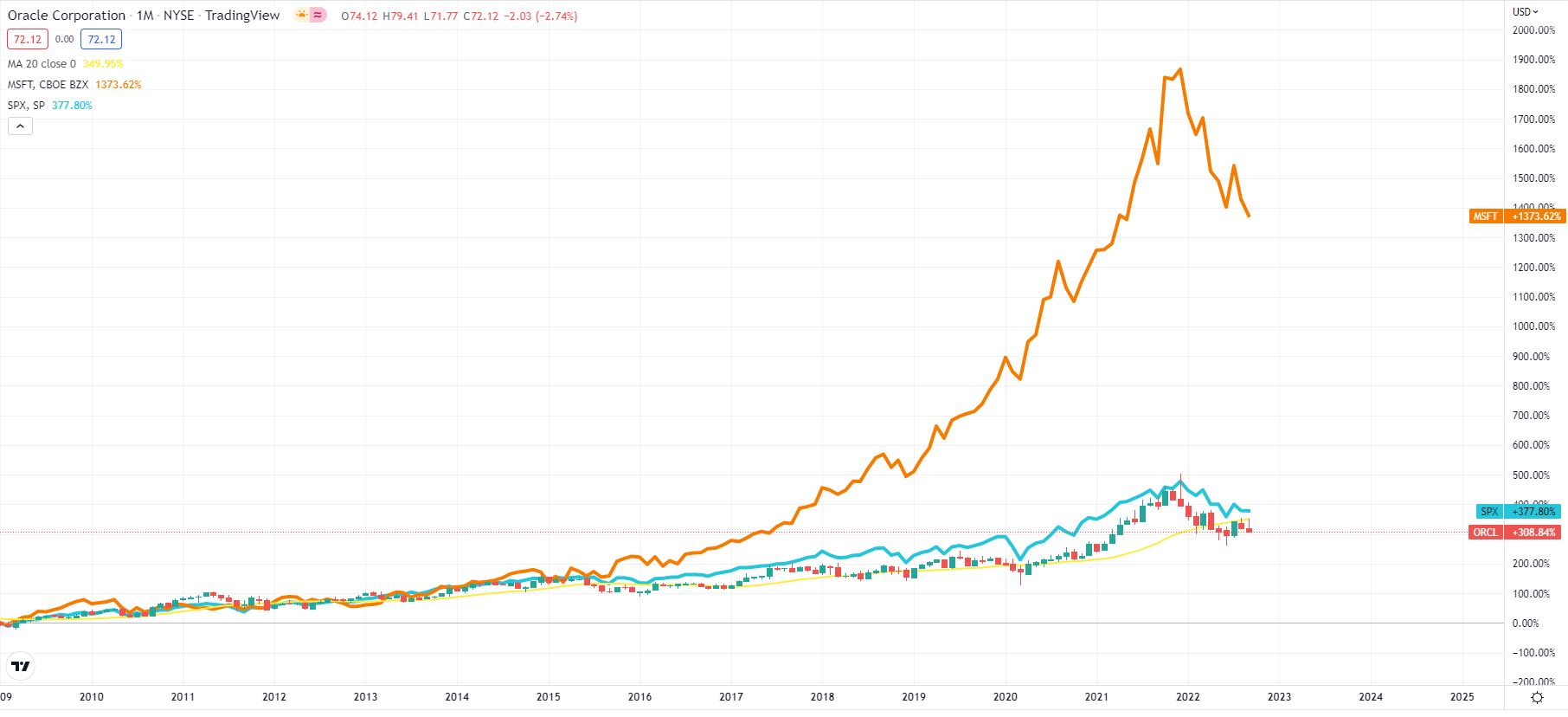
ORCL returns compared with S&P 500 (blue) and MSFT (orange)
Oracle dividend snapshot
Oracle pays a current quarterly dividend of $0.32 per share. Annualized to $1.28, this amounts to a yield of nearly 1.8%. This may seem small, but it makes more sense when you see that the dividend growth rate is much higher than its peers.
While Microsoft has grown its puny sub-1% dividend at an average 10.7% rate over the past five years, Oracle has been growing its own at a faster 13.7%. Compare that to the S&P 500's dividend growth rate of just 6.8% over the past five years.
It gets better when you realize that Oracle has a payout ratio of just 61%, which means there is plenty of leftover space for new dividend hikes and safety against cuts. The software firm has paid out a dividend each of the last 14 years and only cut the dividend once in 2013. That year seems to be an outlier though. Every one of the other 13 years has incorporated a raise.
Oracle earnings news
Oracle had a slight miss in its quarterly earnings results issued on Monday, but the miss was entirely due to a strong dollar. The firm reported adjusted EPS of $1.03, which missed consensus by 4 cents, but revenue of $11.45 billion came in better than expected.
Despite the miss, analysts were mostly upbeat on the news as it showed that Oracle's acquisition of Cerner, a healthcare software provider, was going to plan. Cerner brought in $1.4 billion in quarterly sales, accounting for more than 10% of firm revenue. Additionally, Cerner's hospital clients are beginning to move their operations to Oracle's cloud service, which is separate from Cerner revenues, so the acquisition is showing strong synergies.
Management expects revenue in the next quarter to grow by about 22% YoY, which demonstrates that Oracle will have the ability and confidence to continue growing their dividend.
Co-founder and chairman Larry Ellison surprised analysts as well by promising that Oracle would be announcing several major firms jumping ship from Amazon Web Services to join Oracle Cloud Infrastructure (OCI) during the next quarterly earnings call.
“Oracle highlighted OCI’s cost differential, speed, and flexibility as the primary factors for companies considering a move of workloads to OCI,” said JPMorgan analyst Mark Murphy in a client note.
Oracle stock forecast
As much as I like ORCL for its dividend growth, I am personally going to hold out until shares drop to $64. This was the support point on the major sell-off seen on June 13. With interest rate hikes and stubborn inflation on the horizon, it seems too likely that Oracle stock will once again test this price level. This is not too far from the current price of $72, but a purchase at $64 will provide a yield on cost of 2.06%.
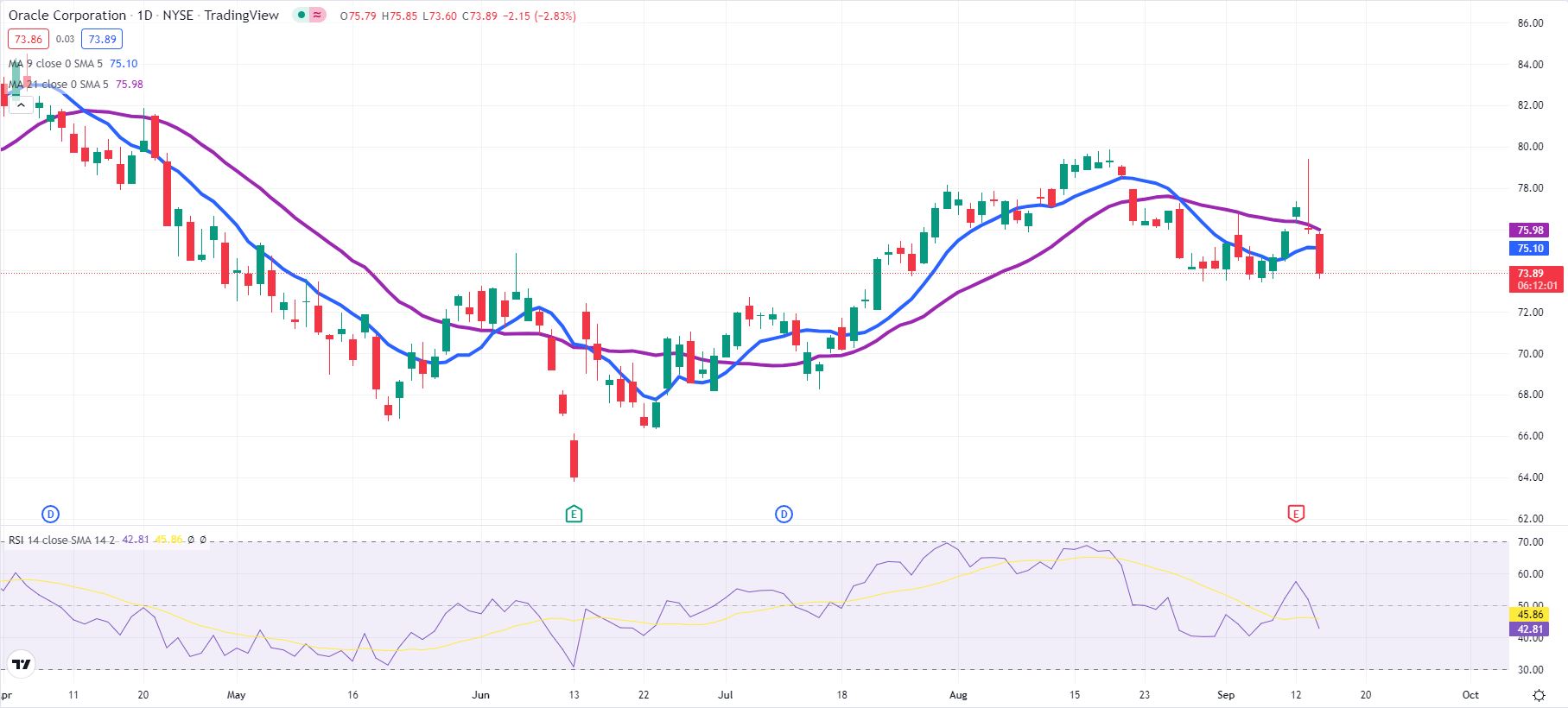
ORCL daily stock chart
Author

Clay Webster
FXStreet
Clay Webster grew up in the US outside Buffalo, New York and Lancaster, Pennsylvania. He began investing after college following the 2008 financial crisis.