Gold price turns topsy-turvy as central banks prepare for fresh interest rate cycle
- Gold price surrenders gains as investors await Fed policy announcement for further guidance.
- Fears of a recession in the US economy trim amid a tight labor market and softening inflation.
- The US Dollar Index’s upside looks restricted as investors have digested July’s interest-rate hike.
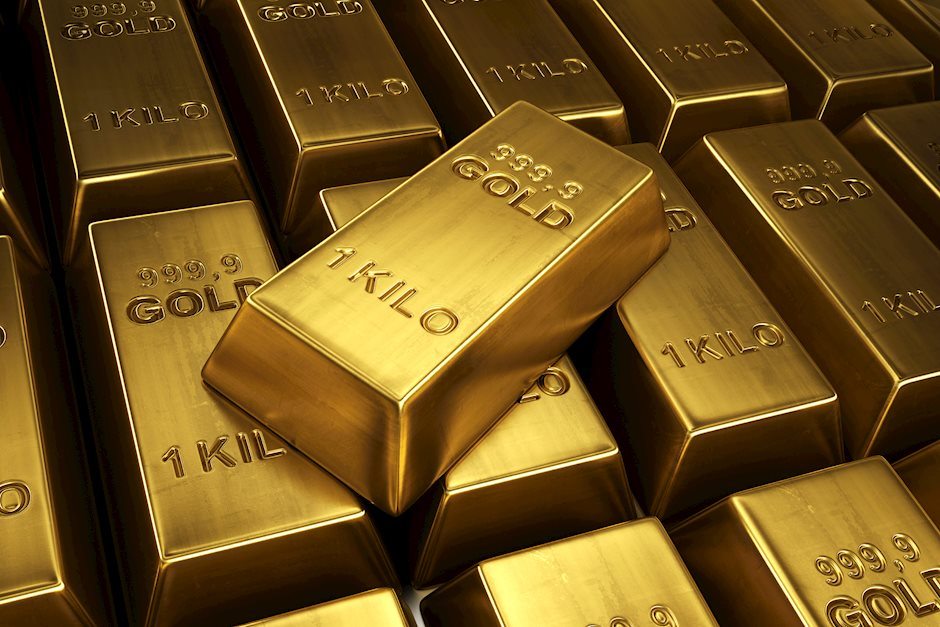

Gold price (XAU/USD) turns subdued as the upside in the US Dollar Index gets elevated. The precious metal drops sharply as market participants focus on the interest rate decision by the Federal Reserve (Fed) due Wednesday. An interest-rate hike of 25 basis points (bps) looks certain, but the catalyst that is haunting investors’ sentiment is the guidance about future rate hikes and discussions about rate cuts.
The US Dollar Index struggles to climb among the immediate resistance of 101.40 as recession fears have eased. In light of tight labor market conditions and easing inflationary pressures, the odds of a recession have faded to some extent. Declining inflation would offer relief to the Fed, which could opt to avoid raising interest rates further and even consider rate cuts sooner than expected.
Daily Digest Market Movers: Gold turns volatile ahead of Fed policy
- Gold consolidates around $1,960.00 after a recovery move as investors turn anxious ahead of the Federal Reserve’s interest-rate decision.
- As per the CME Group Fedwatch tool, investors are certain that an interest-rate hike of 25 bps will be announced, which will push rates to the 5.25%-5.50% range.
- In spite of a bigger-than-expected decline in headline and core inflation in June, an interest-rate hike from the Fed looks almost certain in order to return inflation confidently to 2%.
- Investors expect that July’s interest-rate hike will be the last one in the current tightening cycle.
- Fed Chair Jerome Powell reiterated in his testimony that two more interest rate hikes are appropriate.
- The Fed isn’t likely to consider rate cuts this year as the major decline in inflation is the outcome and effects of lower global oil prices.
- The United States manufacturing sector failed to come out of the contraction territory. The preliminary Manufacturing PMI for July landed at 49.0, higher than expectations and the former release of 46.3. A figure below 50.0 signals a contraction in factory activity.
- The services PMI remained in the expansion area, but failed to match expectations. The index came in at 52.4, lower than the consensus of 54.0 and June’s figure of 54.4.
- S&P Global said on Monday that New US light vehicle sales volumes are set to rise again in July as easing supply-chain snags help automakers ramp up production to meet pent-up demand, Reuters informed.
- This week, the US economic calendar is full of economic events as the Fed policy will be followed by second-quarter Gross Domestic Product (GDP) data and June’s Durable Goods Orders.
- Preliminary GDP is expected to expand at a slower pace of 1.7% while the first-quarter GDP pace was recorded at 2.0%.
- Softening GDP projections indicate the consequences of aggressive policy tightening by the Fed.
- The upside in the US Dollar Index (DXY) seems restricted around 101.40 as a survey by the National Association for Business Economics survey (NABE) showed that 71% of respondents anticipated 50% or fewer chances of a recession in the US economy. In the prior survey, almost half of the respondents anticipated 50% or fewer chances of a recession.
- The reasoning behind a decline in recession fears is the strong labor market and softening inflation metrics.
Technical Analysis: Gold delivers wild spikes below $1,960.00
Gold price fails to sustain a recovery move after facing stiff barricades around $1,964.00. The precious metal demonstrates a directionless performance after a recovery move as investors have sidelined ahead of the interest-rate decision by the Fed. Gold price found strength as the 20-day Exponential Moving Average (EMA) is confidently crossing the 50-day EMA, which strengthens the upside bias. Oscillators still lack momentum, signaling that the downside pressure has not entirely faded.
Interest rates FAQs
What are interest rates?
Interest rates are charged by financial institutions on loans to borrowers and are paid as interest to savers and depositors. They are influenced by base lending rates, which are set by central banks in response to changes in the economy. Central banks normally have a mandate to ensure price stability, which in most cases means targeting a core inflation rate of around 2%.
If inflation falls below target the central bank may cut base lending rates, with a view to stimulating lending and boosting the economy. If inflation rises substantially above 2% it normally results in the central bank raising base lending rates in an attempt to lower inflation.
How do interest rates impact currencies?
Higher interest rates generally help strengthen a country’s currency as they make it a more attractive place for global investors to park their money.
How do interest rates influence the price of Gold?
Higher interest rates overall weigh on the price of Gold because they increase the opportunity cost of holding Gold instead of investing in an interest-bearing asset or placing cash in the bank.
If interest rates are high that usually pushes up the price of the US Dollar (USD), and since Gold is priced in Dollars, this has the effect of lowering the price of Gold.
What is the Fed Funds rate?
The Fed funds rate is the overnight rate at which US banks lend to each other. It is the oft-quoted headline rate set by the Federal Reserve at its FOMC meetings. It is set as a range, for example 4.75%-5.00%, though the upper limit (in that case 5.00%) is the quoted figure.
Market expectations for future Fed funds rate are tracked by the CME FedWatch tool, which shapes how many financial markets behave in anticipation of future Federal Reserve monetary policy decisions.
Author
Sagar Dua
FXStreet
Sagar Dua is associated with the financial markets from his college days. Along with pursuing post-graduation in Commerce in 2014, he started his markets training with chart analysis.