|

Fed: Rate cuts are about risk management, not current conditions – ABN AMRO
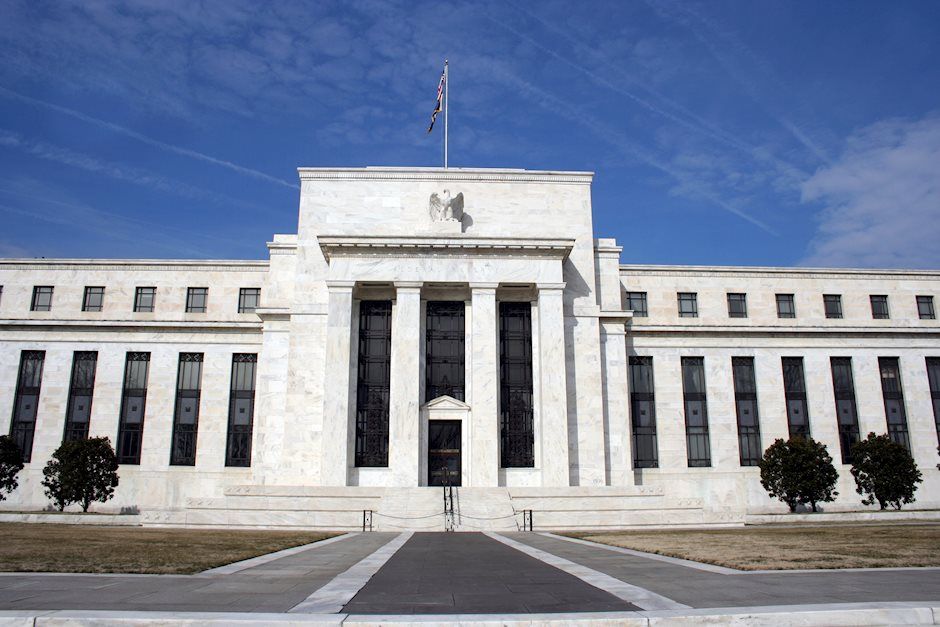
According to Bill Diviney, senior economist at ABN AMRO, while the doctrine of ‘data dependence’ would indeed suggest a lower likelihood of rate cuts, they think this misinterprets the Fed’s reaction function, and the reason for the shift to rate cuts.

Key Quotes

“First, changes in monetary policy work their way through the economy with significant lags – a rule of thumb is 5-6 quarters on average, according to academic literature. As such, while recent data outturns are important, they are only one input into a range of factors that affect the central bank’s outlook for the economy – and it is the outlook that determines policy decisions.”

“Second, and linked to this, the primary driver of rate cuts is the significant degree of uncertainty – linked to the trade war escalation – not the growth slowdown we saw earlier this year, in our view. An additional enabling factor for rate cuts is the persistent undershoot of inflation, and the risk of inflation expectations de-anchoring.”

“Finally, the June FOMC projections showed a significant decline in the median neutral rate estimate, from 2.8% to 2.5%. This suggests that at least part of the desire to cut rates reflects a view that the Fed may have overtightened with the last rate hike in December.”

“While the Fed will welcome the somewhat stronger tone to the data, therefore, it does not substantially change the balance of risks to the outlook – and as such, should keep the Fed comfortable on its rate-cutting path. We continue to expect a 25bp cut at the 30-31 July FOMC, followed by two further 25bp cuts by Q1 2020.”

Author

Sandeep Kanihama

Sandeep Kanihama

FXStreet Contributor

Sandeep Kanihama is an FX Editor and Analyst with FXstreet having principally focus area on Asia and European markets with commodity, currency and equities coverage. He is stationed in the Indian capital city of Delhi.


More from Sandeep Kanihama
Share:

Editor's Picks

EUR/USD remains offered below 1.1800, looks at US data

EUR/USD is still trading on the defensive in the latter part of Thursday’s session, while the US Dollar maintains its bid bias as investors now gear up for Friday’s key release of the PCE data, advanced Q4 GDP prints and flash PMIs.
 

GBP/USD bounces off monthly lows near 1.3430

GBP/USD is sliding in tandem with its risk-sensitive peers, drifting back towards the 1.3430 area, its lowest levels in the month. The move reflects a firmer Greenback, supported by another round of solid US data and a somewhat divided FOMC Minutes.

Gold eyes next breakout on US GDP, PCE inflation data

Gold sticks to recent gains around the $5,000-mark early Friday, biding time before the high-impact US macro events. The focus is now on the US fourth-quarter Gross Domestic Product, core Personal Consumption Expenditures Price Index and the Supreme Court’s ruling on President Donald Trump’s tariffs.

Ethereum: Active addresses halt growth as US selling pressure eases

Ethereum network growth has declined after two months of explosive increase. US selling pressure has eased following an improvement in the Coinbase Premium Index. ETH extends its range-bound move below the $2,107 resistance and above $1,740 .

Hawkish Fed minutes and a market finding its footing

It was green across the board for US Stock market indexes at the close on Wednesday, with most S&P 500 names ending higher, adding 38 points (0.6%) to 6,881 overall. At the GICS sector level, energy led gains, followed by technology and consumer discretionary, while utilities and real estate posted the largest losses.

Injective token surges over 13% following the approval of the mainnet upgrade proposal

Injective price rallies over 13% on Thursday after the network confirmed the approval of its IIP-619 proposal. The green light for the mainnet upgrade has boosted traders’ sentiment, as the upgrade aims to scale Injective’s real-time Ethereum Virtual Machine architecture and enhance its capabilities to support next-generation payments.