EUR/JPY tracks lower on French election fears and BoJ ending QE
- EUR/JPY falls as investors fear the outcome of snap French legislative elections.
- The risk looms large of the far-right winning after their success in the European elections.
- The Yen finds support after the BoJ signals plan to end quantitative easing.
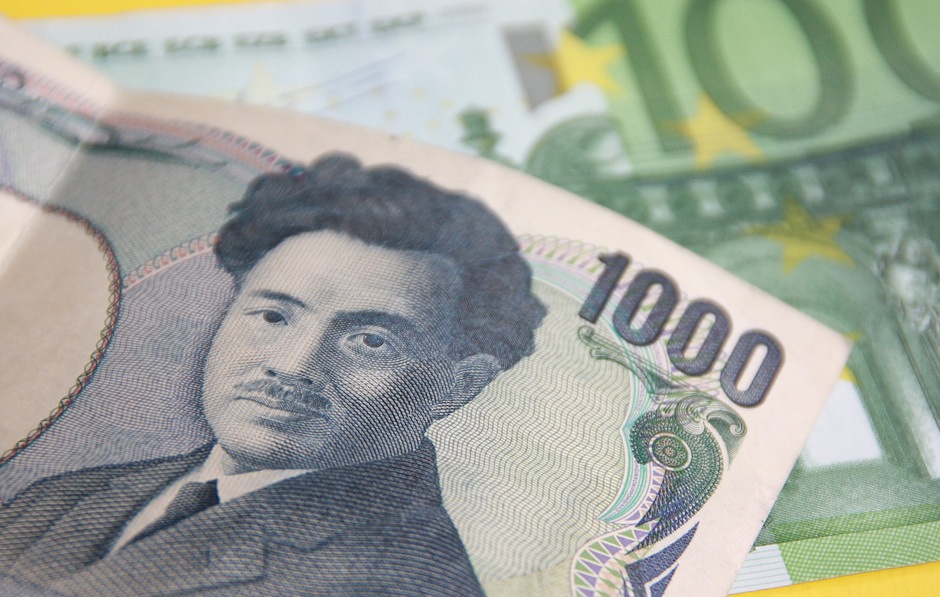

The EUR/JPY is trading down over a third of a percent in the 167s on Friday, as French-election jitters weigh on the Euro (EUR) whilst the Japanese Yen (JPY) gains support from the prospect of the Bank of Japan (BoJ) winding down its quantitative easing (QE) programme.
EUR/JPY declines on French election concerns
EUR/JPY pushes lower on Friday due to an across-the-board depreciation in the Euro from the uncertain outcome of French legislative elections scheduled for June 30 and July 7. The French President Emmanuelle Macron called the snap elections after his centrist Renaissance party was defeated by the far-right National Rally (RN) party at the European parliamentary elections.
With Renaissance polling only around 19% of the vote currently, after a series of unpopular reforms, and RN with over 30%, there is a risk the far-right party, founded by famous right-winger Jean-Marie Le Pen could win power, with potentially Europe-wide consequences.
“The two-round electoral process makes it hard to confidently estimate seat numbers, but experts predict RN could almost treble its tally of deputies, though most likely fall short of an outright majority, while Renaissance’s total could halve,” said Jon Henley, Europe Correspondent for The Guardian.
“Such a result would leave Macron facing three years of an even more fractured and hostile parliament, having to cut difficult deals with opposition parties to form a government and pass laws, leading to almost certain legislative deadlock,” Henley added.
BoJ signals end to QE
The Yen, meanwhile, gained a boost after the BoJ meeting during Friday’s Asian session. Although the BoJ did not raise the bank’s policy rates from a comparatively very low 0.0% - 0.1% range, Boj Governor Kazuo Ueda said that the bank was preparing a plan to reduce Japanese Government Bond (JGB) purchases over the next one to two years, which it would present details of at its meeting in July.
The BoJ is the last remaining major central bank to still engage in buying government bonds, a form of QE used to provide liquidity to banks and inflate the economy – with negative effects on the currency.
Ueda’s words could indicate the BoJ will cut its circa ¥6 Trillion of JGB purchases to zero over the next one to two years, according to Jin Kenzaki, Head of Research for Japan at Societe Generale.
“Given the BoJ’s announcement that it will lay out the details of its reduction plan for the next one to two years, there is a possibility that the BoJ will reduce its monthly JGB purchases to zero over the next one to two years," said Kenzaki in a note following Friday’s meeting.
"Until this announcement, we had predicted that the purchase amount would decrease to ¥4T by the end of this year and ¥3T by next spring, but given the pressure from the government to address the weak yen, we now think the most likely scenario will be a reduction starting in August, with purchases declining by ¥1T every three months and reaching zero by November of next year,” he added.
ECB officials more sympathetic to easing after June
The Euro has come under pressure of late after comments from European Central Bank (ECB) officials suggested the interest-rate cut it has promised to make at its June 19 meeting will be a one off event, not the start of a monetary easing cycle.
Comments on Thursday and Friday, however, veered to the more dovish, however, with officials more sympathetic to the view the ECB might follow up its June interest-rate cut with further easing.
“On Thursday, ECB Governing Council member Bostjan Vasle said that more rate cuts are possible if the disinflation process continues. However, Vasle also warned that the process could slow down as wage momentum is relatively strong. In Friday's European session, ECB Governing Council member Mario Centeno said, ‘Disinflation process will resume after August.’” According to Sagar Dua, Editor at FXStreet.
Author
Joaquin Monfort
FXStreet
Joaquin Monfort is a financial writer and analyst with over 10 years experience writing about financial markets and alt data. He holds a degree in Anthropology from London University and a Diploma in Technical analysis.