Commodity IRAs: Gold, Silver or Platinum, which metal suits better for your retirement?

Against a backdrop of financial market volatility and persistent economic uncertainty, more and more American investors are diversifying their retirement savings with Individual Retirement Accounts (IRAs) invested in precious metals.
Under certain conditions, precious metals IRAs enable investors to physically hold Gold, Silver or Platinum in their retirement planning, while enjoying the same tax benefits as a Traditional IRA.
But which of these three metals is best suited for retirement planning?
Gold: The pillar of security for retirement planning
The king metal for investors, Gold remains the historical benchmark for value preservation and retirement planning. Its reputation rests on three pillars: rarity, safe-haven status and universal recognition.
In times of high inflation or financial crisis, it tends to appreciate, offering protection against the erosion of purchasing power, including for future Social Security beneficiaries.
A Gold IRA appeal lies in its relative stability, as its volatility is lower than that of other precious metals, making it a solid foundation for a retirement portfolio.
Its liquidity is also exceptional. It can be quickly resold on any market in the world. Last but not least, its negative correlation with Equities during market crises helps reduce overall portfolio volatility.
- Strengths: Protection against inflation, stability, global liquidity.
- Weaknesses: Limited returns during phases of strong economic growth.
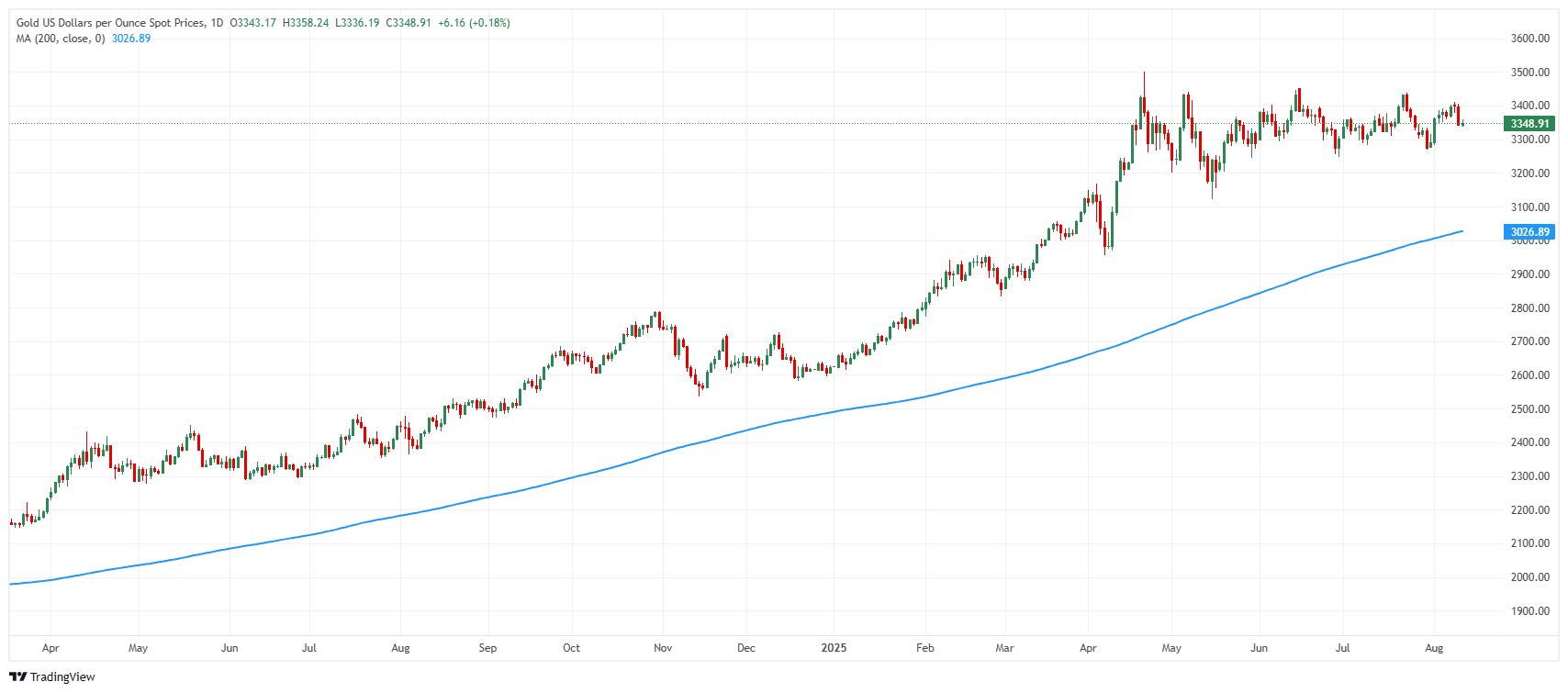
Gold price chart. Source: FXStreet.
Silver: The high-potential outsider
Nicknamed "the people's Gold", Silver has two faces. It is both an investment metal and an industrial raw material.
More affordable than Gold, it enables investors with more modest budgets to build up a larger physical reserve in their IRA.
The main argument in favor of Silver is its massive industrial use. More than half the world's demand comes from sectors such as electronics, solar panels and medical devices.
This structural consumption reduces available stocks and can lead to price rises during periods of industrial growth.
History also shows that when the Gold/Silver ratio exceeds extreme levels, Silver tends to outperform Gold in subsequent years.
On the other hand, this strong dependence on the real economy makes Silver more volatile, as in a recession, its industrial demand falls, and prices can correct rapidly.
- Strengths: Lower entry price, catch-up potential, growing industrial demand.
- Weaknesses: Higher volatility, sensitivity to economic cycles.
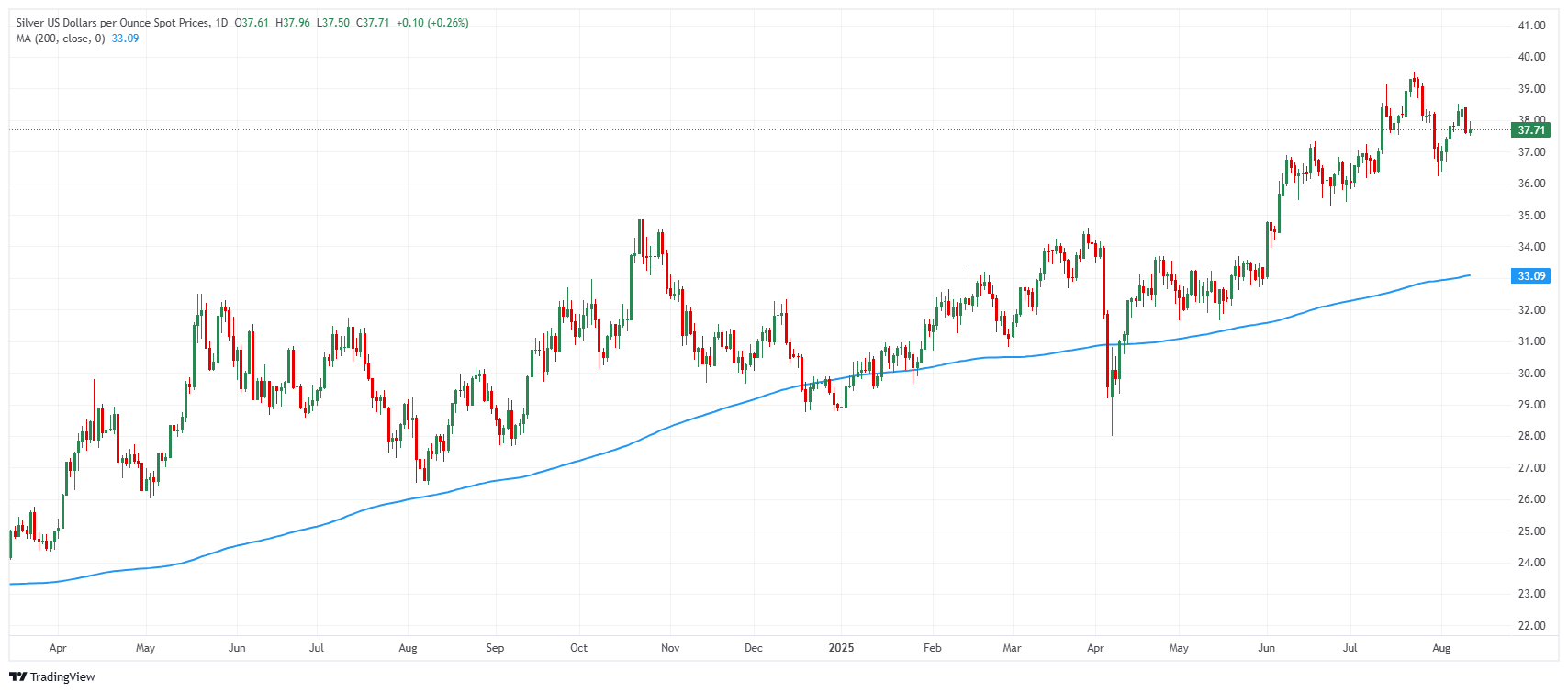
Silver price chart. Source: FXStreet.
Platinum: Rarity and a bet on the industry
Less publicized than Gold or Silver, Platinum is nonetheless 30 times rarer than Gold, according to National Gold Group, and has a singular profile.
It's a precious metal, but with a predominantly industrial focus. Its main application is in automotive catalysts, notably for diesel engines, but also in high-end jewelry and certain medical technologies.
This "precious metal/industrial metal" duality makes it a cyclical asset. Its prices are driven up during periods of growth, and can suffer during downturns.
For an IRA investor for retirement, Platinum can be an advanced diversification tool, providing exposure to global industry and specific markets. However, its high geographical concentration (over 70% of production in South Africa, according to Gold Market) creates a significant geopolitical risk.
- Strengths: Extreme rarity, upside potential in times of industrial recovery, sector diversification.
- Weaknesses: Medium-high volatility, dependence on a concentrated industrial market.
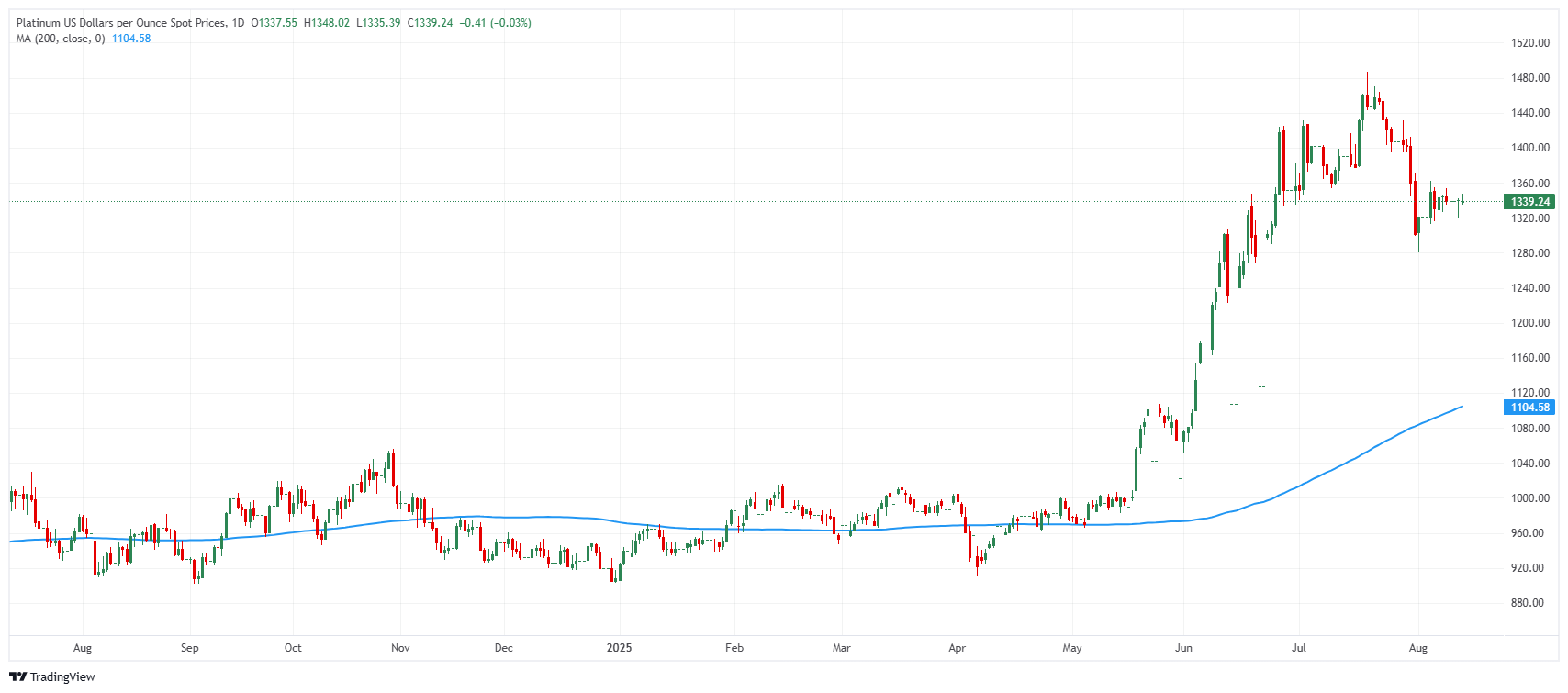
Platinum price chart. Source: FXStreet.
Choosing the right balance in your IRA
From a retirement planning perspective, it is rarely advisable to bet on a single metal. Gold offers stability and protection against inflation, ideal for securing capital. Silver brings medium-term growth potential, at the price of higher volatility. Platinum diversifies exposure to industry, and can offer opportunities when priced at a discount to Gold.
The key is proportion. Financial advisors often recommend limiting total exposure to commodities to 5-10% of an IRA portfolio, while spreading this investment across several metals according to risk profile and retirement objectives.
A question of profile and strategy
Individual Retirement Accounts (IRAs) invested in Gold, Silver or Platinum are more than just a gamble on metals, they are long-term wealth management tools.
Gold remains the solid backbone of a prudent portfolio, while Silver adds a dynamic element, and Platinum acts as a differentiator.
The right combination will depend on your investment horizon, risk tolerance and vision of the global economy.
In a world where real interest rates remain uncertain and Social Security may not be enough to maintain living standards in retirement, strategically integrating these metals into an IRA can offer valuable protection for retirement and long-term growth opportunities.
IRAs FAQs
An IRA (Individual Retirement Account) allows you to make tax-deferred investments to save money and provide financial security when you retire. There are different types of IRAs, the most common being a traditional one – in which contributions may be tax-deductible – and a Roth IRA, a personal savings plan where contributions are not tax deductible but earnings and withdrawals may be tax-free. When you add money to your IRA, this can be invested in a wide range of financial products, usually a portfolio based on bonds, stocks and mutual funds.
Yes. For conventional IRAs, one can get exposure to Gold by investing in Gold-focused securities, such as ETFs. In the case of a self-directed IRA (SDIRA), which offers the possibility of investing in alternative assets, Gold and precious metals are available. In such cases, the investment is based on holding physical Gold (or any other precious metals like Silver, Platinum or Palladium). When investing in a Gold IRA, you don’t keep the physical metal, but a custodian entity does.
They are different products, both designed to help individuals save for retirement. The 401(k) is sponsored by employers and is built by deducting contributions directly from the paycheck, which are usually matched by the employer. Decisions on investment are very limited. An IRA, meanwhile, is a plan that an individual opens with a financial institution and offers more investment options. Both systems are quite similar in terms of taxation as contributions are either made pre-tax or are tax-deductible. You don’t have to choose one or the other: even if you have a 401(k) plan, you may be able to put extra money aside in an IRA
The US Internal Revenue Service (IRS) doesn’t specifically give any requirements regarding minimum contributions to start and deposit in an IRA (it does, however, for conversions and withdrawals). Still, some brokers may require a minimum amount depending on the funds you would like to invest in. On the other hand, the IRS establishes a maximum amount that an individual can contribute to their IRA each year.
Investment volatility is an inherent risk to any portfolio, including an IRA. The more traditional IRAs – based on a portfolio made of stocks, bonds, or mutual funds – is subject to market fluctuations and can lead to potential losses over time. Having said that, IRAs are long-term investments (even over decades), and markets tend to rise beyond short-term corrections. Still, every investor should consider their risk tolerance and choose a portfolio that suits it. Stocks tend to be more volatile than bonds, and assets available in certain self-directed IRAs, such as precious metals or cryptocurrencies, can face extremely high volatility. Diversifying your IRA investments across asset classes, sectors and geographic regions is one way to protect it against market fluctuations that could threaten its health.
Author

Ghiles Guezout
FXStreet
Ghiles Guezout is a Market Analyst with a strong background in stock market investments, trading, and cryptocurrencies. He combines fundamental and technical analysis skills to identify market opportunities.

















