China NBS Manufacturing / Non-manufacturing PMIs beats are a welcome suprise for AUD bulls

China's Manufacturing Purchasing Managers Index (PMI) and the official Non-manufacturing PMIs have been released as follows:
- China Manufacturing PMI Feb: 52.6 (est 50.6, prev 50.1).
- China Non-Manufacturing PMI Feb: 56.3 (est 54.9, prev 54.4).
AUD/USD update
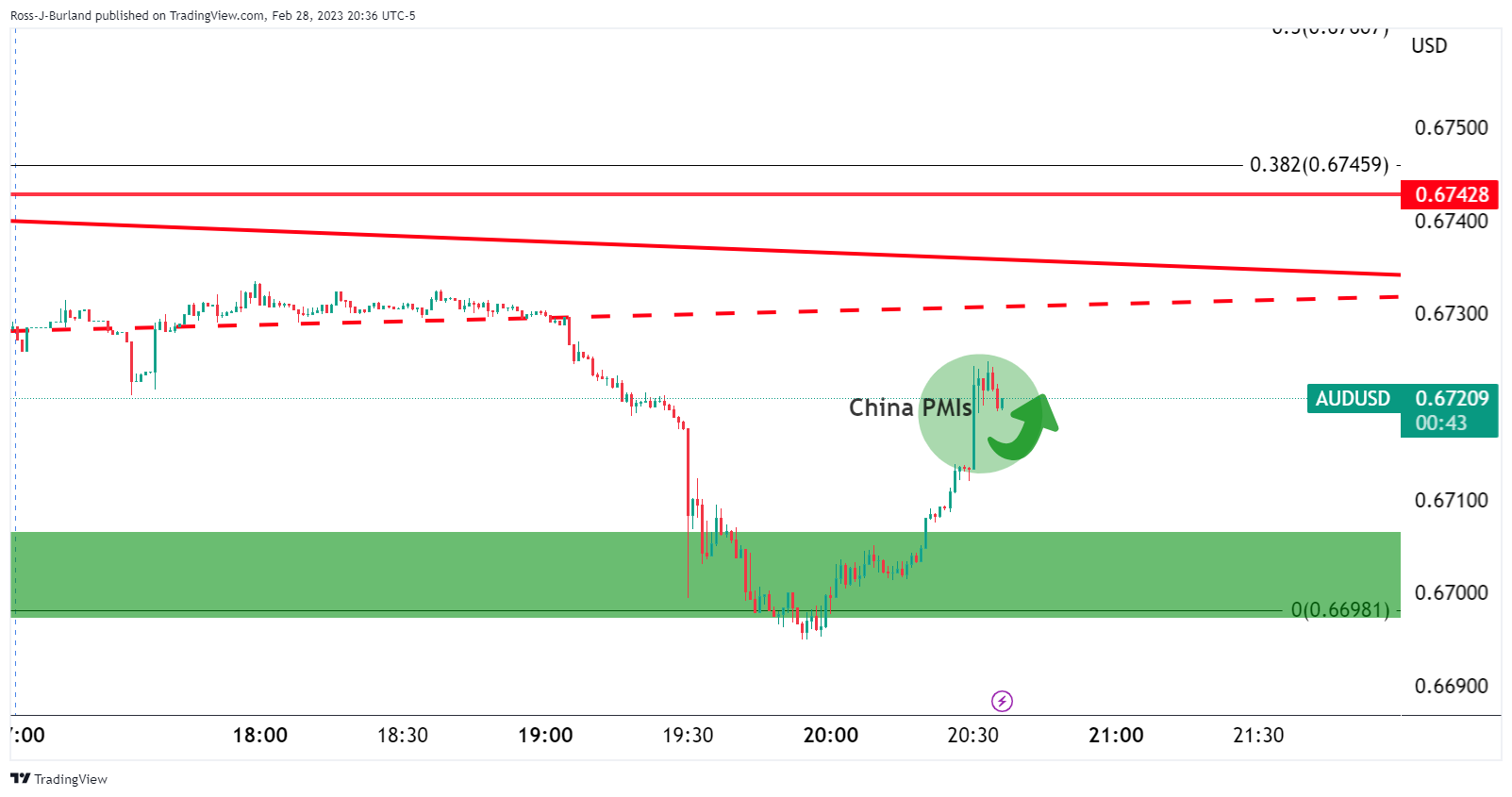
AUD/USD has been trying to correct but the data has done little to help dig the bulls out of a hole despite sizeable beats so far. However, it is early days since the release and the bulls could find a lifeline there.
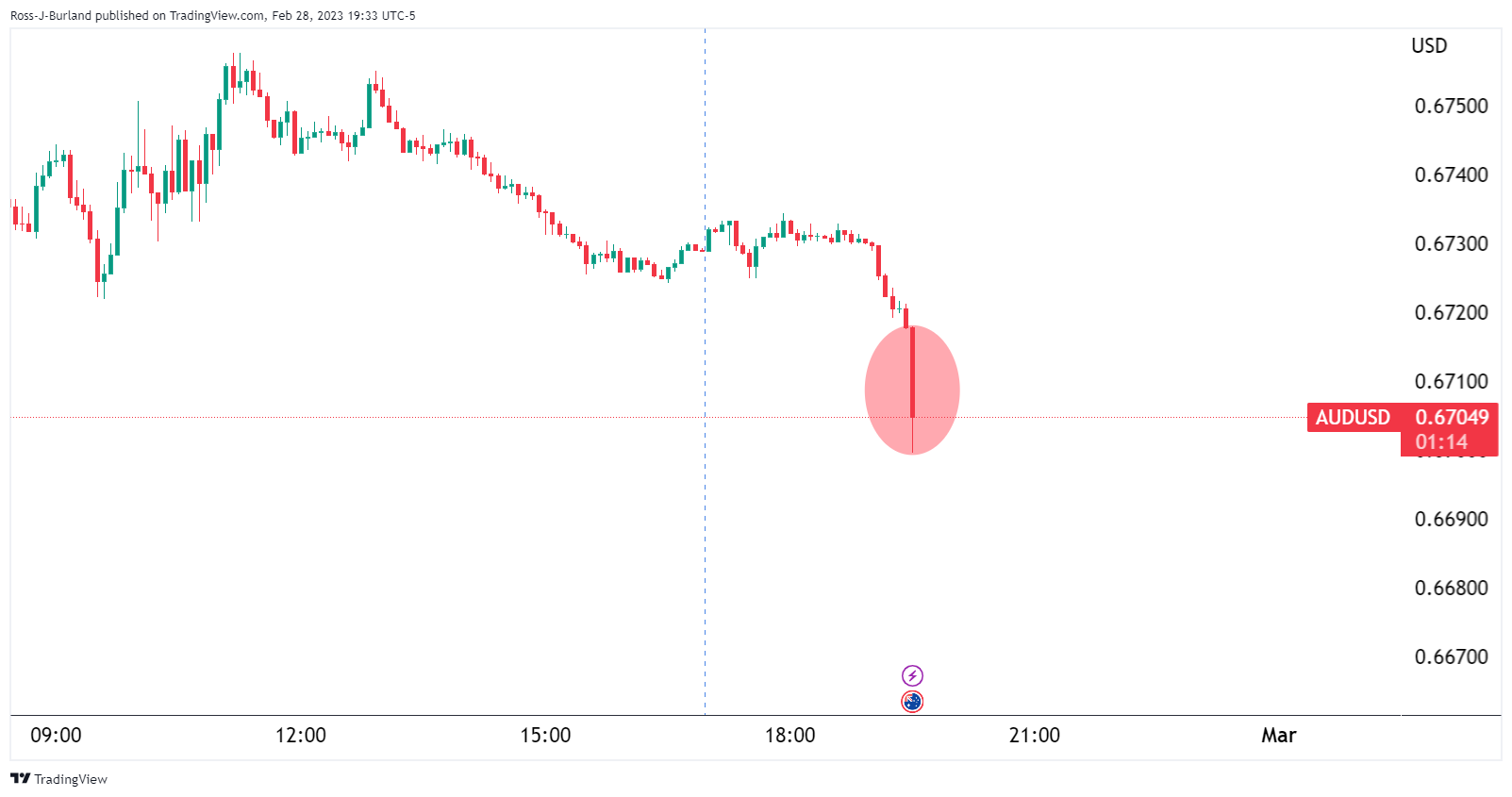
Earlier, Australia's data dump, including Gross Domestic Product and the monthly Consumer Price Index weighed on the Aussie as follows:
Consequently, AUD/USD has now broken a trendline support and was resisted by the 50% mean reversion of the prior bearish impulse on Tuesday:
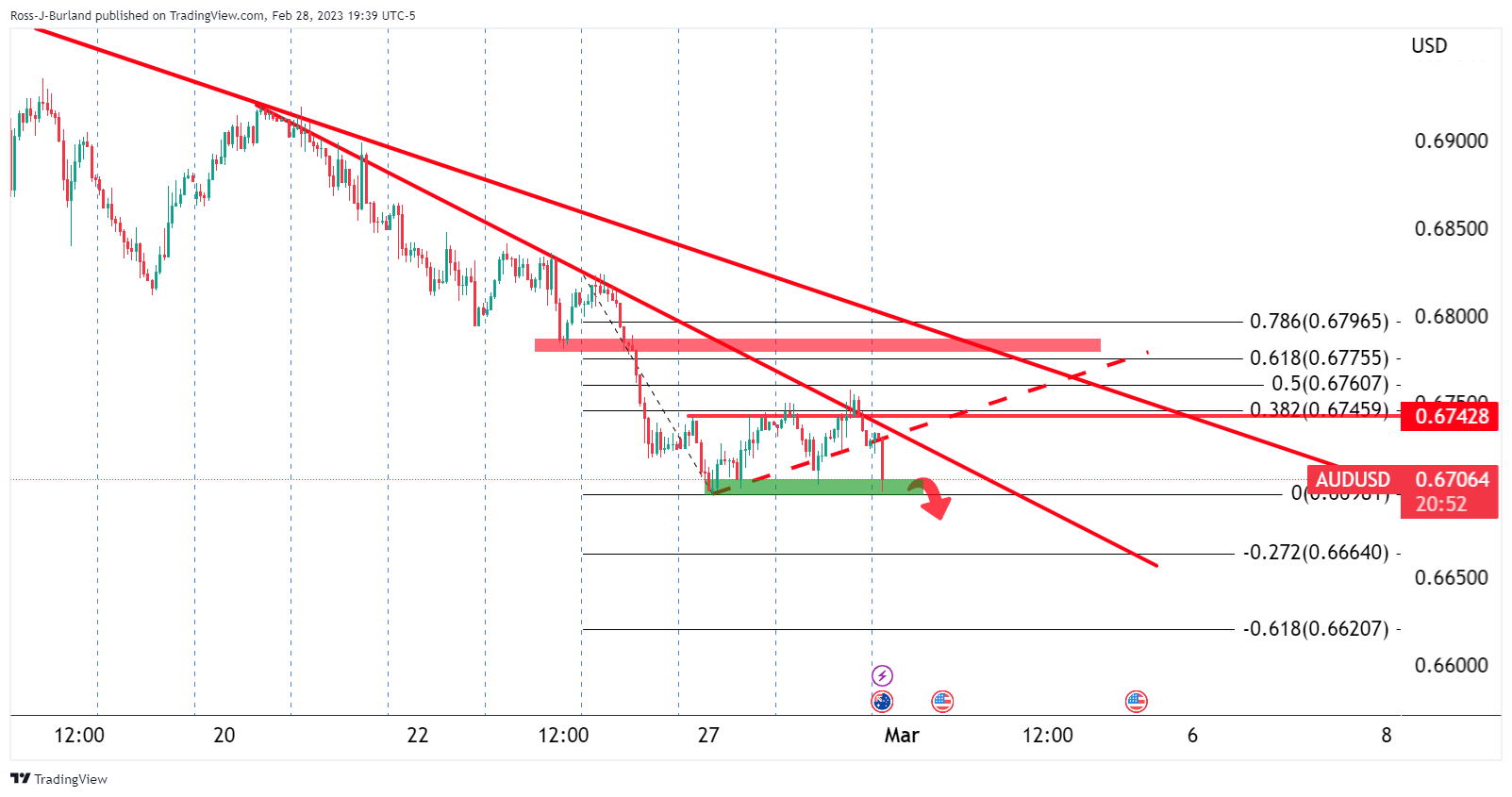
Despite the positive upturn in data from China PMIs, the combination of today's Chinese and Australian data would be expected to continue to weigh on the Aussie as aggressive Australian monetary tightening is likely cooling the Australian economy. This could cast a more dovish sentiment over the Reserve Bank of Australia.
About the China PMIs
The Manufacturing Purchasing Managers Index (PMI) released by the China Federation of Logistics and Purchasing (CFLP) studies business conditions in the Chinese manufacturing sector. Any reading above 50 signals expansion, while a reading under 50 shows contraction. As the Chinese economy has influence on the global economy, this economic indicator would have an impact on the Forex market.
The official non-manufacturing PMI, released by China Federation of Logistics and Purchasing (CFLP), is based on a survey of about 1,200 companies covering 27 industries including construction, transport and telecommunications. It's the level of a diffusion index based on surveyed purchasing managers in the services industry and if it's above 50.0 indicates industry expansion, below indicates contraction.
Author

Ross J Burland
FXStreet
Ross J Burland, born in England, UK, is a sportsman at heart. He played Rugby and Judo for his county, Kent and the South East of England Rugby team.