Autozone Stock Earnings: AZO slides below 50-day moving average on tiny revenue miss
- Autozone misses Wall Street revenue target by $30 million for fiscal Q3.
- AZO stock trades lower on news in Tuesday premarket.
- GAAP EPS beat expectations by 9%.
- AZO stock breaks below 50-day moving average.
.jpg)
AutoZone (AZO) stock slid 2.7% early Tuesday to $2,548 per share after the vehicle maintenance and parts retailer reported revenue that missed the mark by a miniscule $30 million. Wall Street had expected $4.12 billion in sales during AutoZone’s fiscal third quarter, which ended May 6, but the company reported $4.09 billion.
AutoZone stock news: Profits are way up
AZO stock could just as easily have gone the other way as profits continued to soar at the parts dealer. AutoZone earned $34.12 in GAAP EPS – 9% ahead of the $31.29 consensus among analysts. This was also 17.5% above the same quarter a year ago.
Management said it experienced a slowdown in revenue during March that led to the top line miss. Revenue was still up 6% YoY though, with same store sales in the US increasing by 2% over the same period.
“While weaker than expected sales for the month of March meaningfully affected our results this quarter, we are excited about our initiatives and believe we are well positioned for future growth,” said CEO Bill Rhodes.
AutoZone opened 22 new US locations during the quarter, as well as six in Mexico and two in Brazil.
The company repurchased $908 million worth of stock during the quarter, and has approximately $844 million leftover in its current buyback mandate.
AutoZone stock forecast
AutoZone’s stock price has broken below the 50-day moving average in the premarket. When this has happened in the past, as in March just two months ago, AZO stock typically has found its footing near the 200-day moving average. That average is currently at $2,418. Otherwise, the $2,300 level held up both in January and March and could come in handy again. AZO stock needs to close above $2,600 – the double top from last November and this February – in order to move back to a bullish posture.
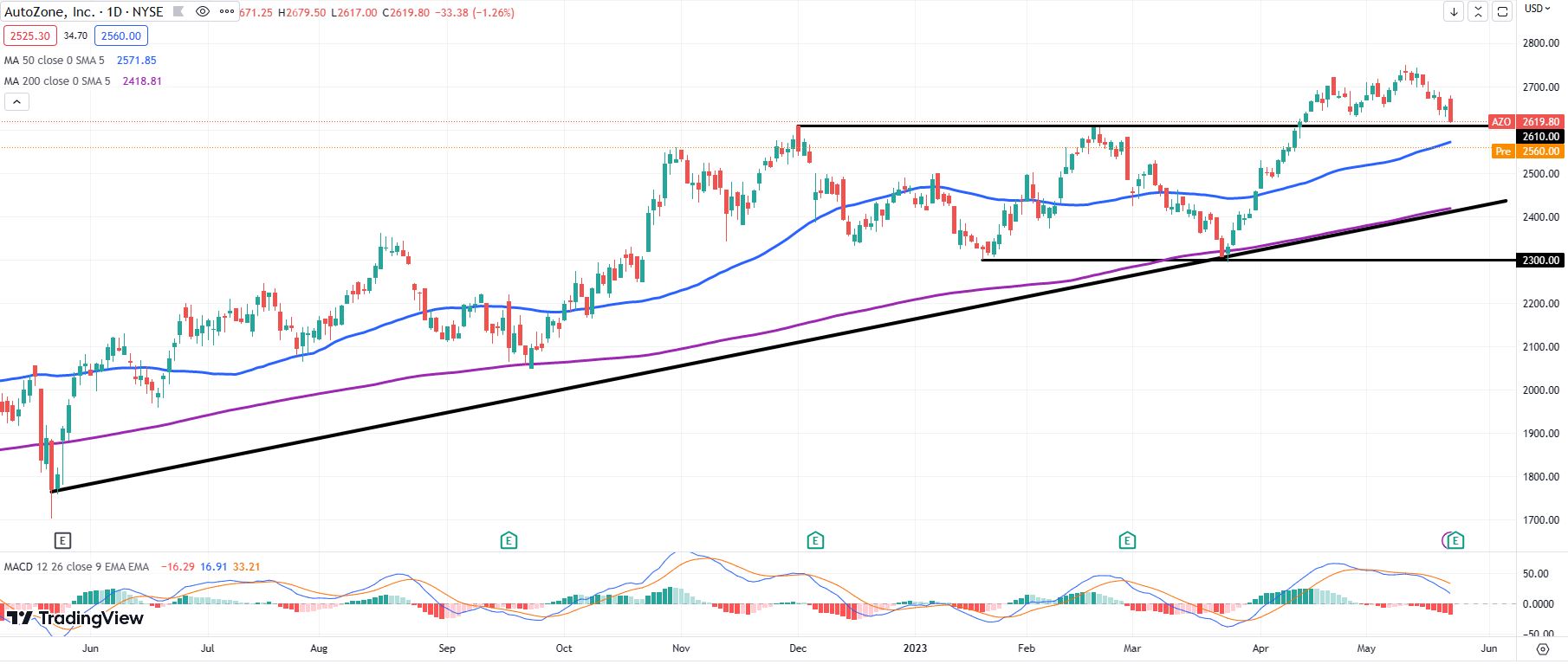
AZO daily chart
Author

Clay Webster
FXStreet
Clay Webster grew up in the US outside Buffalo, New York and Lancaster, Pennsylvania. He began investing after college following the 2008 financial crisis.

















