|

AUD/USD Price Analysis: RBA Minutes in focus, break of 0.7220s eyed

  • AUD/USD attempts a recovery towards 23.6% or 38.2% Fibonacci ratios.
  • RBA Minutes could rock the apple cart in near-term trade. 

From a daily perspective, the price was offered into prior lows overnight that had been acting as a support structure.

Ordinarily, we would expect a correction at this juncture to test at least the 23.6% or 38.2% Fibonacci ratios before the next leg to the downside:

AUD/USD daily chart
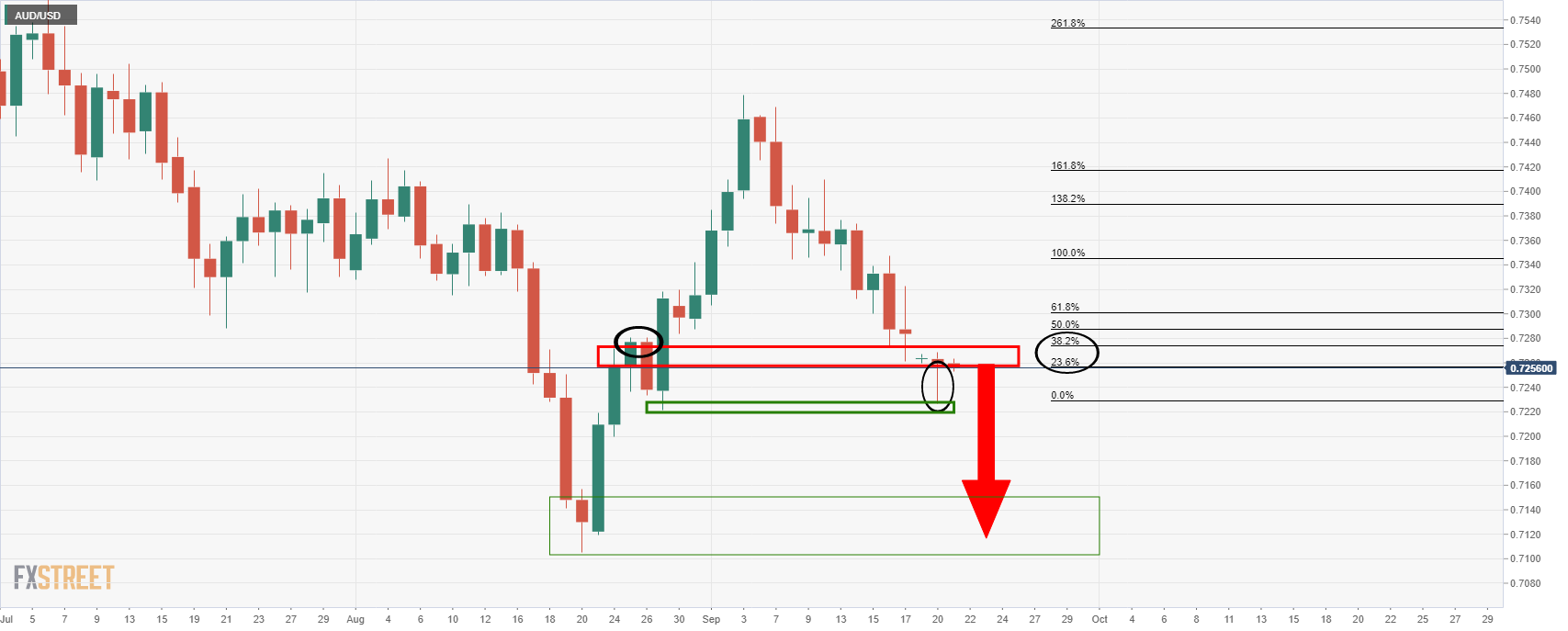
A move to the downside would target the overnight lows in the 0.7220s and fill in the wick. The wick represents a lower time frame correction.

The mid-Aug lows of 0.7105 are thereafter. However, if sentiment really deteriorates a big risk-off move making for disorderly gyrations in the financial markets would be expected to weigh heavily on proxy currencies such as the Aussie.

The RBA Minutes September meeting are scheduled for near term trade which could rock the apple cart if they will provide colour on the risks to the central case forecasts. An overtly dovish theme could see AUD move lower over the release. A hawkish tilt, which is unlikely, would be expected to support the currency. 

Governor Philip Lowe recently argued that “there is a clear path out of the current difficulties and it is likely that we will return to a stronger economy next year.” But he admitted to a lower degree of confidence about the economic rebound on looser restrictions, given that Australia won’t return to ‘Covid zero.’

Lowe also took aim at money market pricing: “I find it difficult to understand why rate rises are being priced in next year or early 2023.” He argued that “it will take some time for wage increases to lift to a rate that is consistent with achieving the inflation target.”

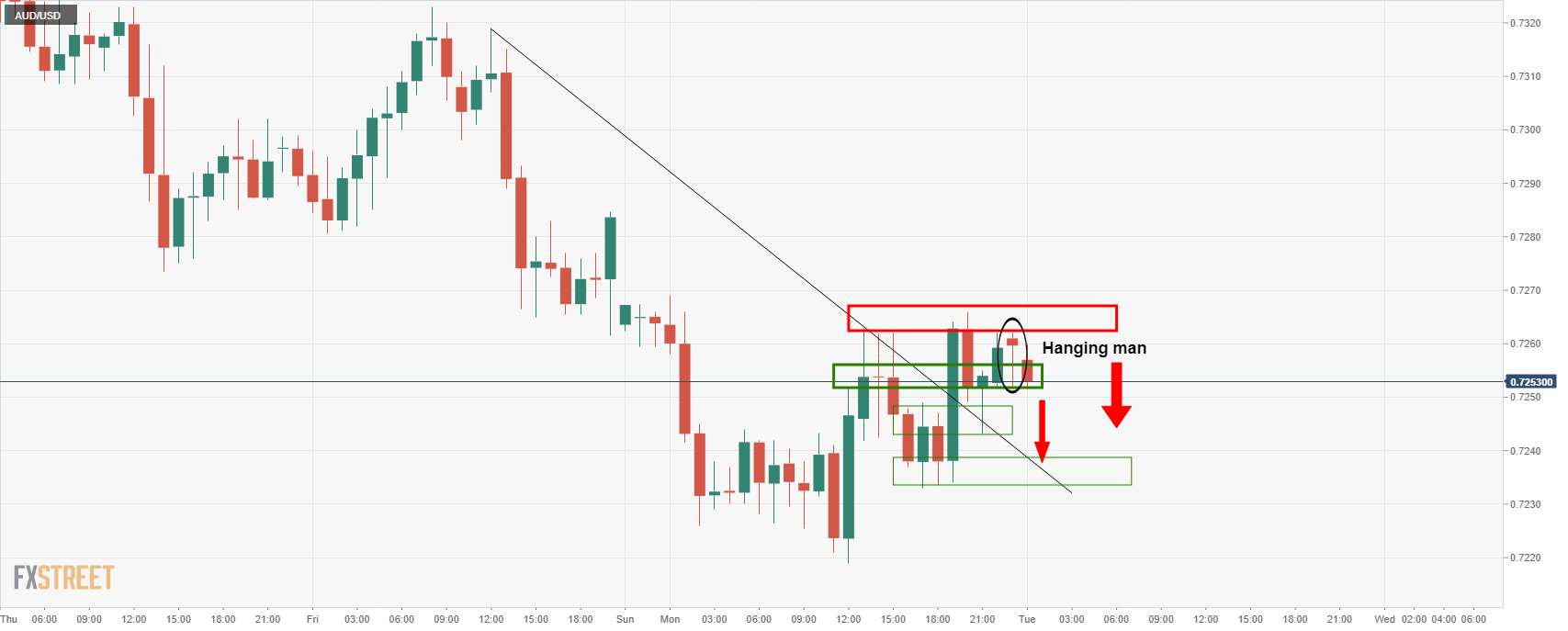
Meanwhile, we have a hanging man on the hourly chart at resistance which does not bode well for a market that is trying to move higher:
Author

Ross J Burland

Ross J Burland, born in England, UK, is a sportsman at heart. He played Rugby and Judo for his county, Kent and the South East of England Rugby team.


More from Ross J Burland
Share:

Editor's Picks

AUD/USD falls to near 0.7100 after slipping below 50-day EMA

AUD/USD depreciates after registering minor gains in the previous day, trading around 0.7120 during the Asian hours. The technical analysis of the daily chart shows the pair consolidating sideways within a rectangle pattern, as neither bulls nor bears gain control. The AUD/USD pair is holding a slight bearish tone however as it sits beneath both the nine-day and 50-day EMAs.

160.00: USD/JPY back near intervention territory after upbeat US jobs report

US Nonfarm Payrolls beat expectations by a wide margin in May, with 172K jobs added. The US Dollar rebounds after the release, helping USD/JPY recover from its intraday lows. Warnings from Japanese authorities continue to limit upside potential near the 160.00 threshold.

Gold targets $4,300 amid stronger Dollar

Gold faces increasing selling interest and navigates the area of three-month lows near the $4,300 mark per troy ounce on Friday. The precious metal’s decline comes as traders assess the stronger-than-expected NFP, while the bid bias in the Greenback and higher US Treasury yields also collaborate with the retracement.

Cardano hits five-year low even as Hoskinson clarifies "break" isn't an exit

Cardano (ADA) price is down 10% at press time on Friday, extending losses over 30% so far this week amid Charles Hoskinson's clarification that "break" isn't an exit.

Week ahead – Fed countdown begins amid US inflation data and geopolitical risks

Fed Chair Warsh’s first meeting approaches as key US inflation data could reshape expectations. Oil prices remain elevated as US-Iran talks continue; tariffs also return to the spotlight. ECB is expected to hike; will it be a one-off move or is July live?

The US economy defies the rules: 100 days into the Oil shock and the recession signal is still missing

More than three months after the start of the Iran war and the resulting disruption to global energy markets, the US economy continues to display remarkable resilience. The conflict has triggered a sharp rise in Oil prices, reignited inflationary pressures and fueled widespread concerns about a potential economic slowdown.