|

AUD/USD Price Analysis: Distribution and spring set, or bullish continuation?

  • AUD/USD breakout traders target 0.70 the figure and above.
  • Failures to hold in 0.7000 could lead to the capitulation of the bulls. 

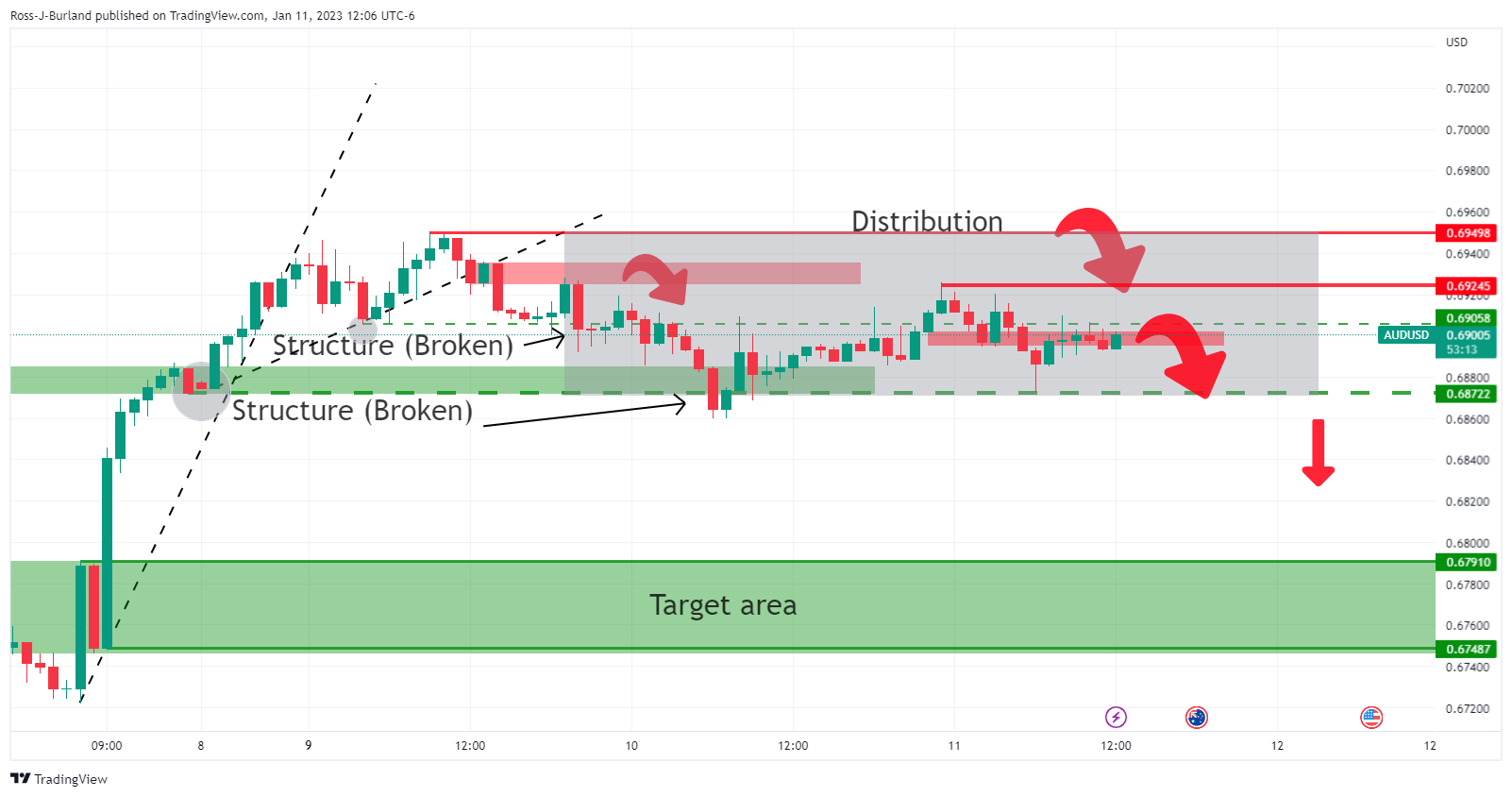
As per the prior analysis, AUD/USD Price Analysis: Distribution could be playing out into US CPI critical event, a thesis for the downside was illustrated leading up to the US Consumer Price Index event for a three-day set-up that had the downside-eyed should the bears crack the critical 0.68070 support structure and DXY move through key 103.00 and on to test the 103.50 equal highs. 

AUD/USD prior analysis

It was stated that a move higher in the greenback would cement the bearish themes for a run towards 0.6750:
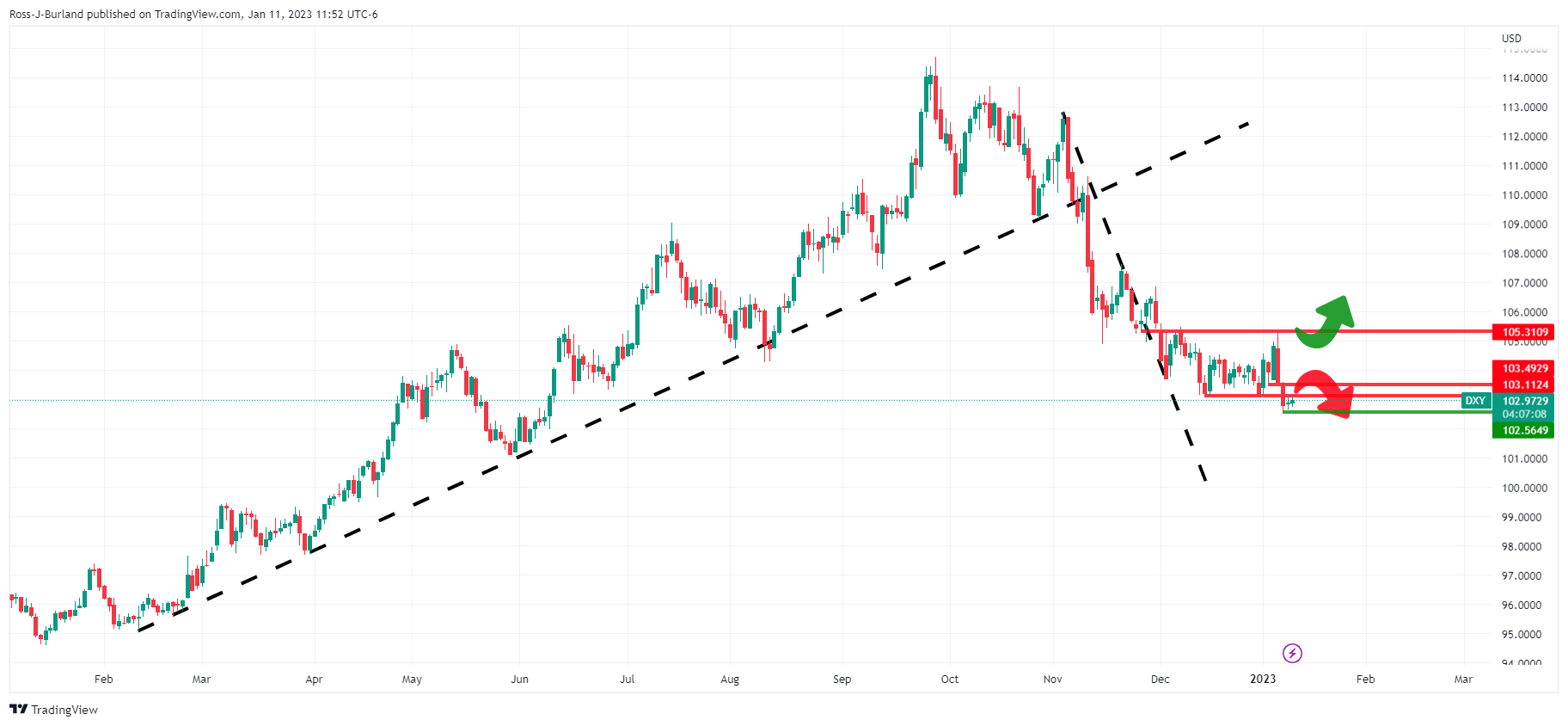
However, it was also warned that while the US Dollar's decline had been decelerating after moving to the backside of the bearish trendline, while below 105.31, the dominant bias was bearish:
AUD/USD and DXY update

The question now is whether or not what we are seeing is a bearish continuation in the greenback and bullish in AUD, or, from a technical perspective and applying the Wycoff / smart money concepts onto the charts, if this move today is the 'spring' and part of a wider schematic. 

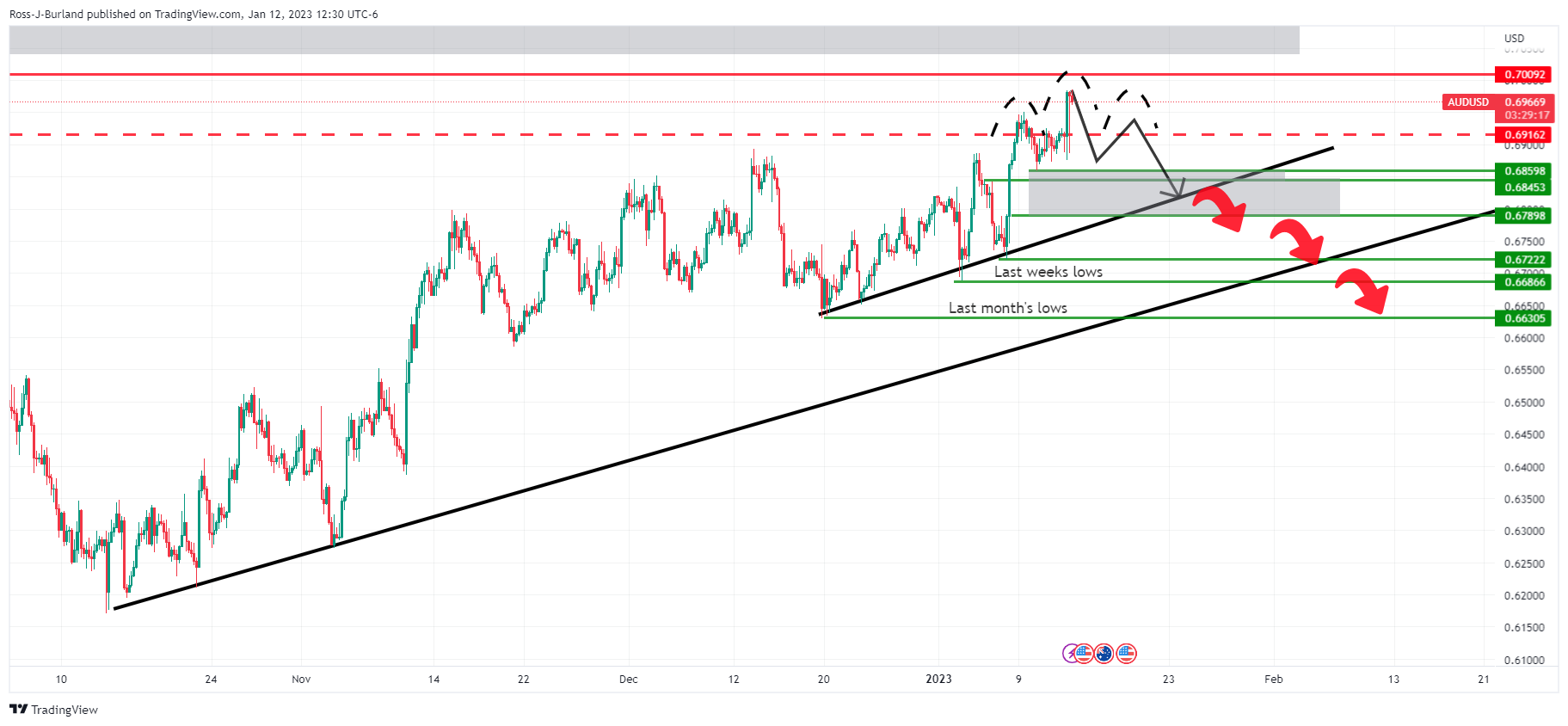
 Looking at the AUD/USD schematic, while there is scope for a test of 0.7000, a valid case for the downside can also be made given the net length in the market vs.shorts. A pairing back of in-the-money-longs could be envisaged resulting in a retest to the trendline support as follows:
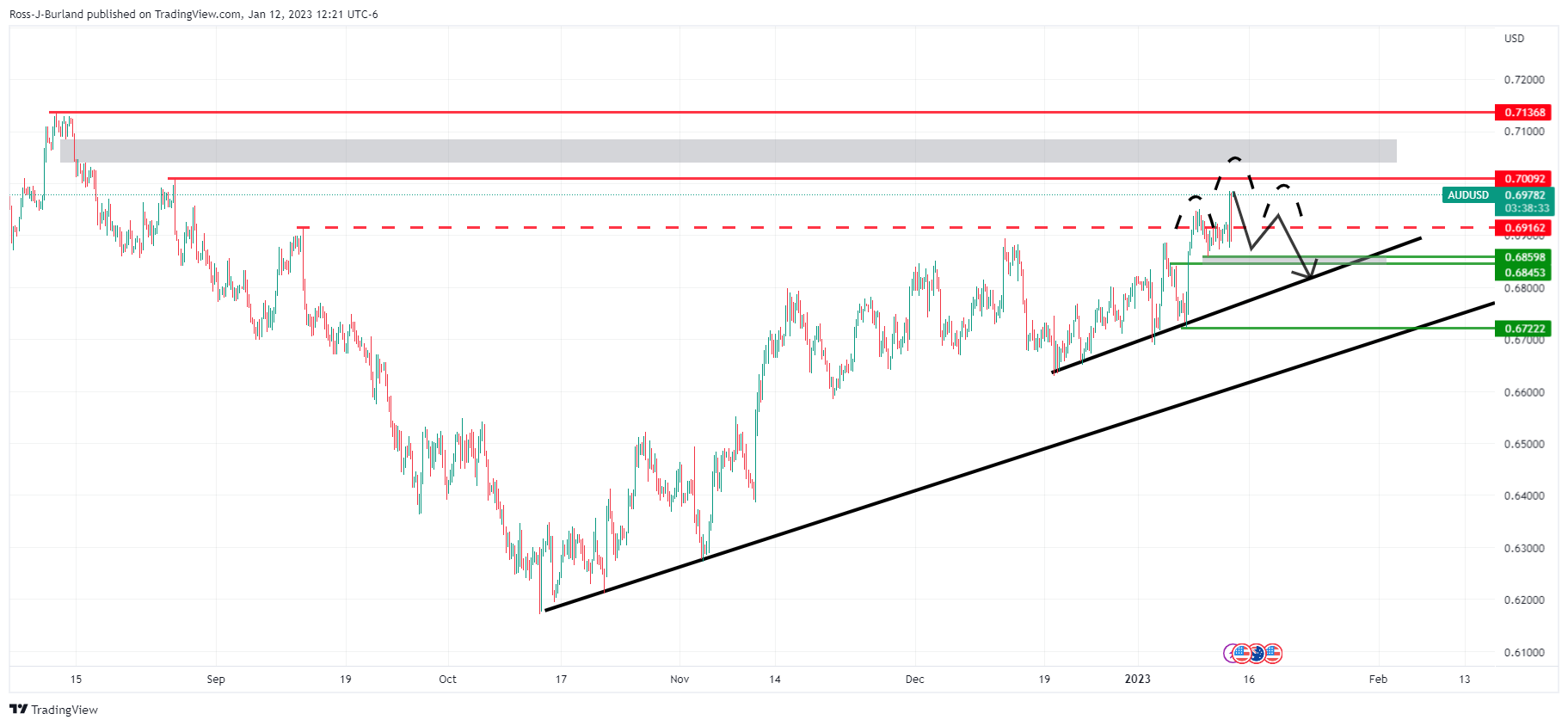
(AUD/USD H4 charts)
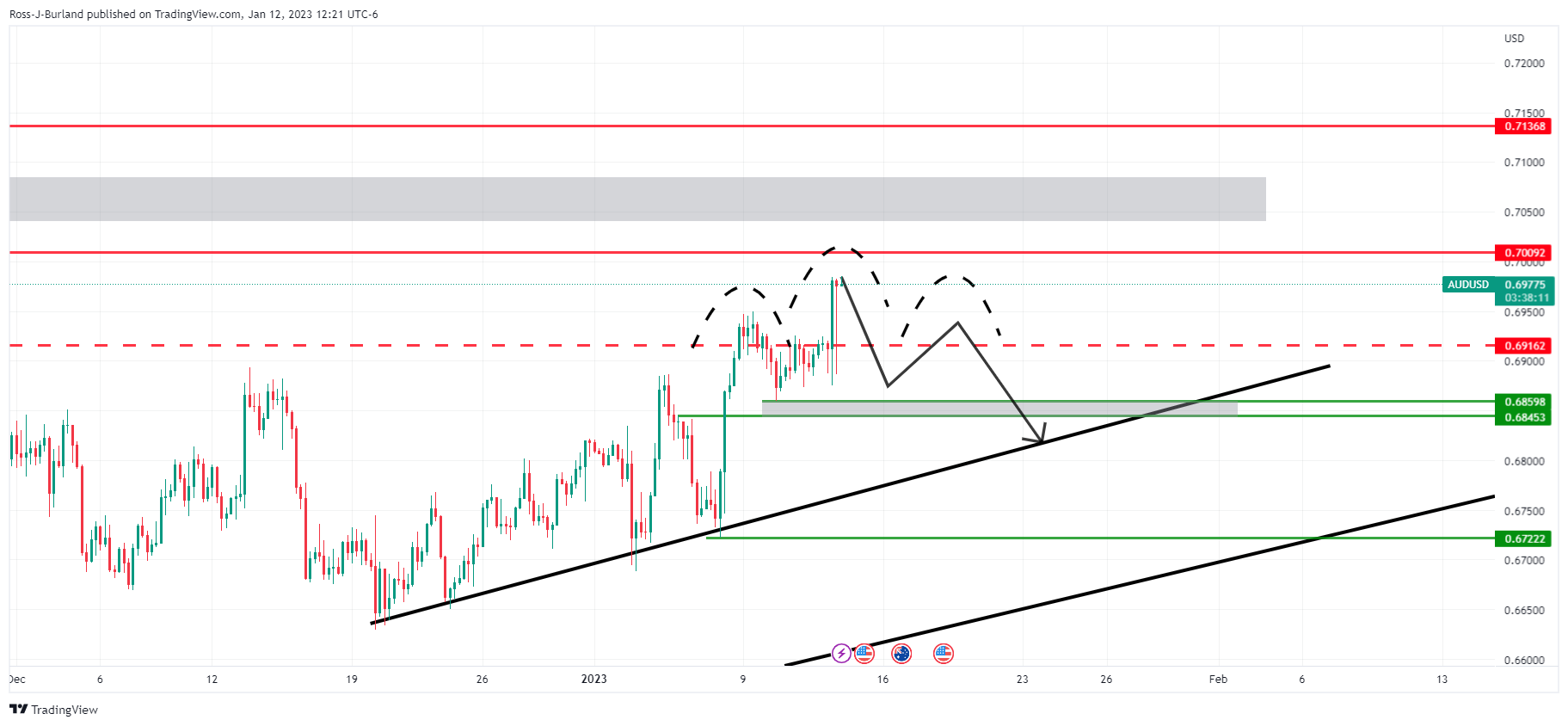
If this were the case, then the CPI volatility could be argued as being the spring of the distribution schematic:
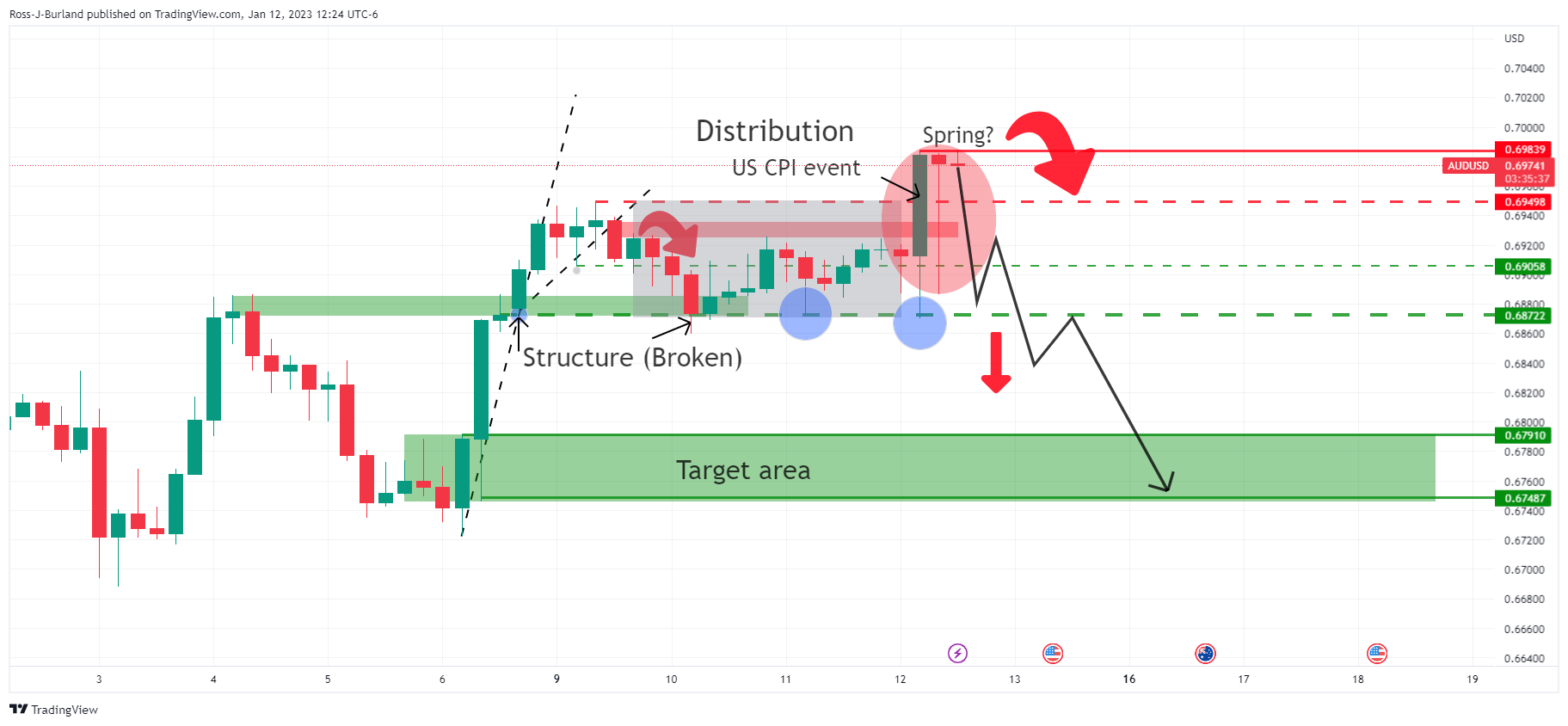
The trapped higher time frame breakout traders would be squeezed, forced to cut positions and adding to a fast capitulation of the bulls and leading to a downside breakout below 0.6870 key structure. 

Such a move could even see a continuation towards last week's lows:
Author

Ross J Burland

Ross J Burland, born in England, UK, is a sportsman at heart. He played Rugby and Judo for his county, Kent and the South East of England Rugby team.


More from Ross J Burland
Share:

Editor's Picks

AUD/USD bounces back toward 0.6950 on fresh USD supply

AUD/USD bounces back toward 0.6950 in the Asian session on Friday. The US Dollar retreats from 17-month highs as traders take profits off the table ahead of the all-important US Nonfarm Payrolls report. Meanwhile, the Australian Dollar draws support from reviving expectations of a November interest rate hike amid elevated global yields and inflation risks.


USD/JPY struggles near 158.00 as USD retreats ahead of NFP

USD/JPY is struggling for fresh impetus near 158.00, moving away from the top end of its weekly range in the Asian session on Friday, after hotter-than-expected Tokyo CPI and amid a broad US Dollar retreat. Traders reposition themselves ahead of US Nonfarm Payrolls.

Gold fades the earlier optimism; back below $4,200

Gold could not sustain the post-NFP bull run past the $4,200 mark per troy ounce, receding toward the $4,180 region at the end of the week. The precious metal’s inconclusive price action comes amid fresh selling pressure hurting the US Dollar as investors assess the latest NFP data.

Crypto Today: Bitcoin, Ethereum and XRP gains reinforce bullish outlook

Cryptocurrency prices are broadly recovering on Friday, led by Bitcoin moving above $86,000. Ethereum has reaffirmed its bullish outlook, rising above $2,700 while the immediate area at $2,800 caps upside. Meanwhile, Ripple hovers near $1.54.

Week ahead – Fed minutes in the spotlight amid bond market rout

Energy crisis and soaring bond yields to stay in driver’s seat in quiet week. Fed minutes eyed after drop in October rate hike bets. ISM services PMI and Treasury auctions to be watched too. Canadian employment, Japanese wages and ECB minutes also on tap.

The Euro is near a one-year low: Inflation could trigger its rebound, not its fall

EUR/USD has fallen to its lowest level since May 2025. The pair hit 1.1312 on Wednesday and trades well below the January peak of 1.2082. The decline reflects a powerful combination of US Dollar strength, geopolitical uncertainty and renewed concerns about Europe's exposure to higher energy prices.















