|

AUD/USD Price Analysis: Bulls eye a correction to test dynamic resistance

  • AUD/USD bulls are lurking for the initial balance this week. 
  • US Dollar is sky-high and could be due for a correction.

The US Dollar climbed to seven-week peaks on Friday, leaving the Aussie on the backfoot after data showed US inflation accelerated while consumer spending rebounded last month.

With the Federal Reserve sentiment in the driving seat, the data will be key this week ahead of the second Friday of the month's US Nonfarm Payrolls. ISM surveys will follow last Friday's Personal Consumption Expenditures (PCE) price index, tracked by the Fed for monetary policy which rose 0.6% last month after gaining 0.2% in December. In the 12 months through January, the PCE price index accelerated 5.4% after rising 5.3% in December. This sent the US Dollar heavily bid as follows:

US Dollar charts
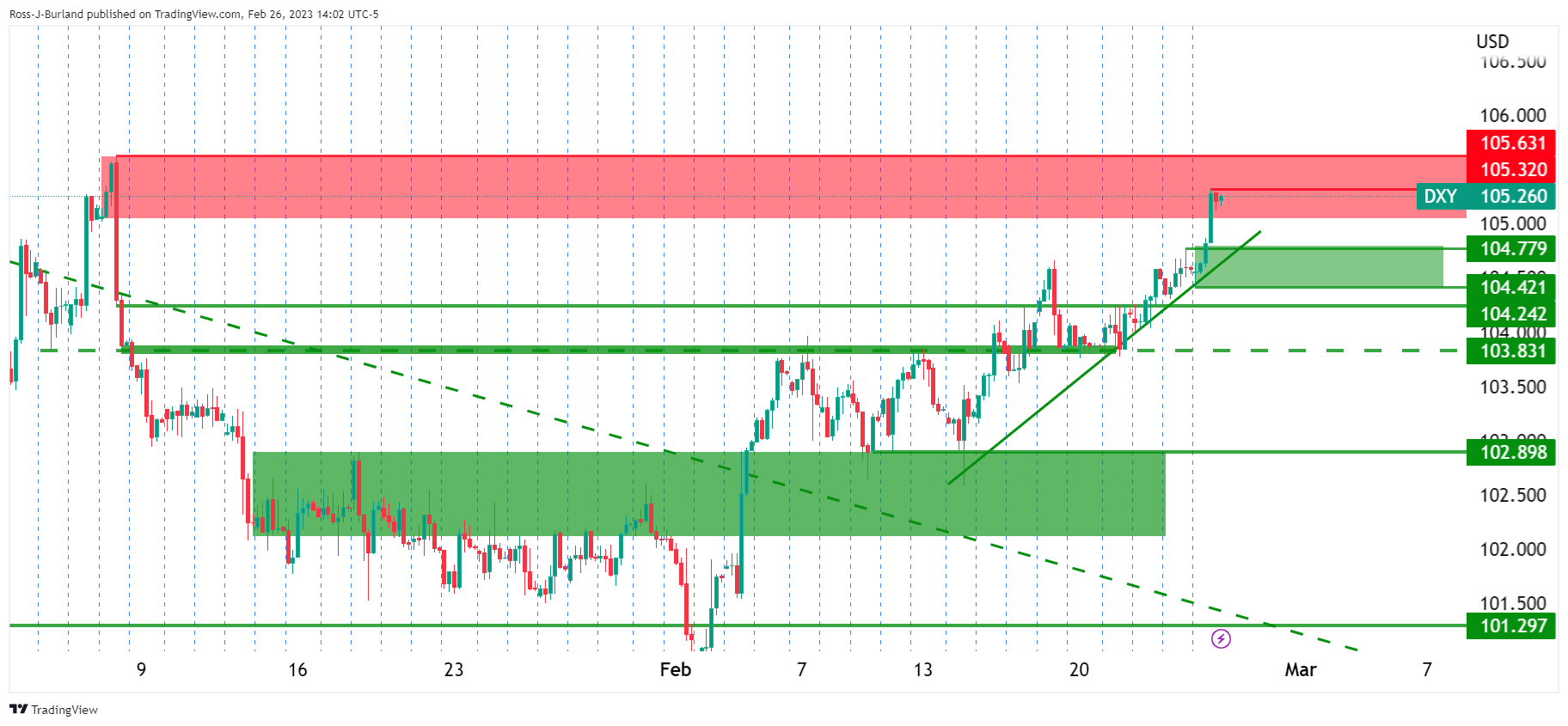
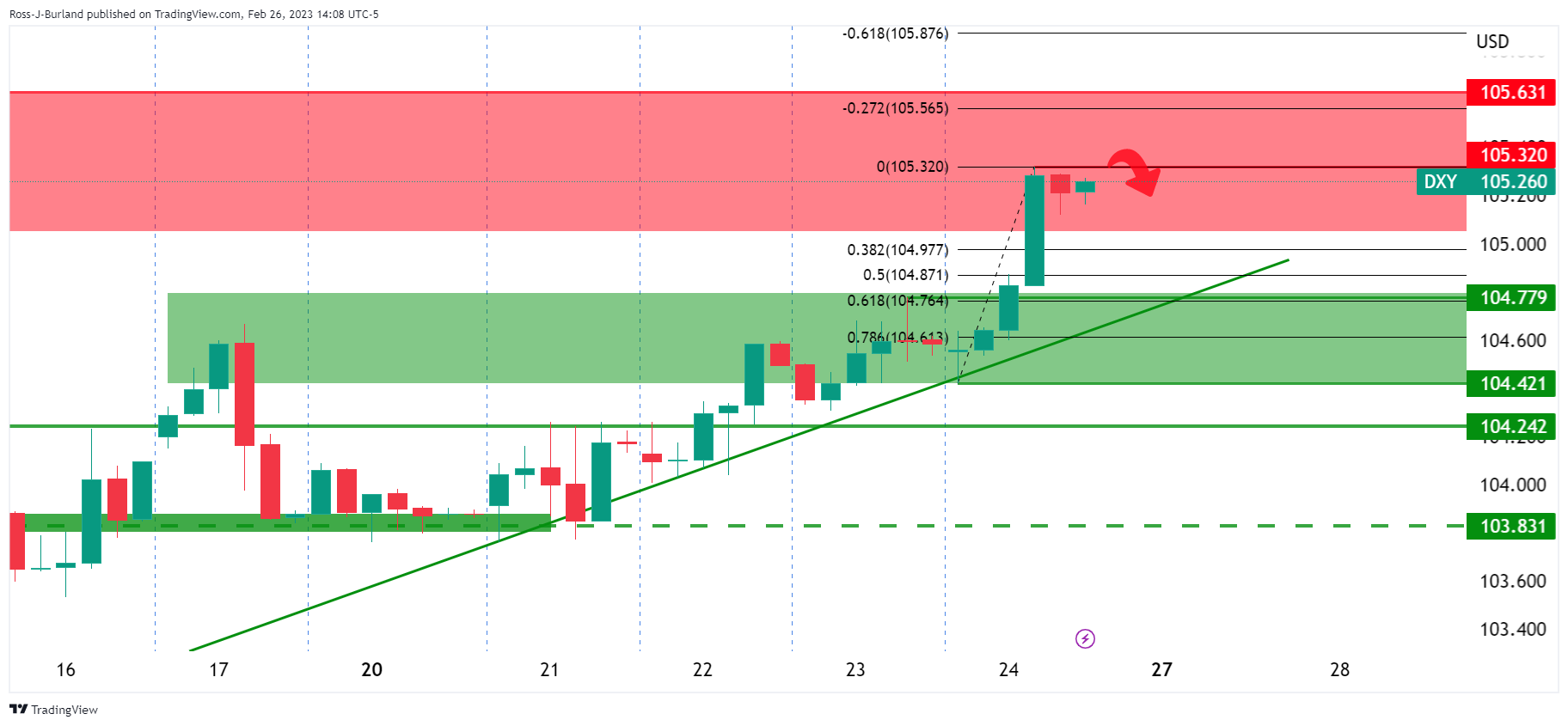
However, we are now in correction territory on the US Dollar which makes for a bullish outlook for the initial balance this week for AUD/USD. 

AUD/USD H4 charts
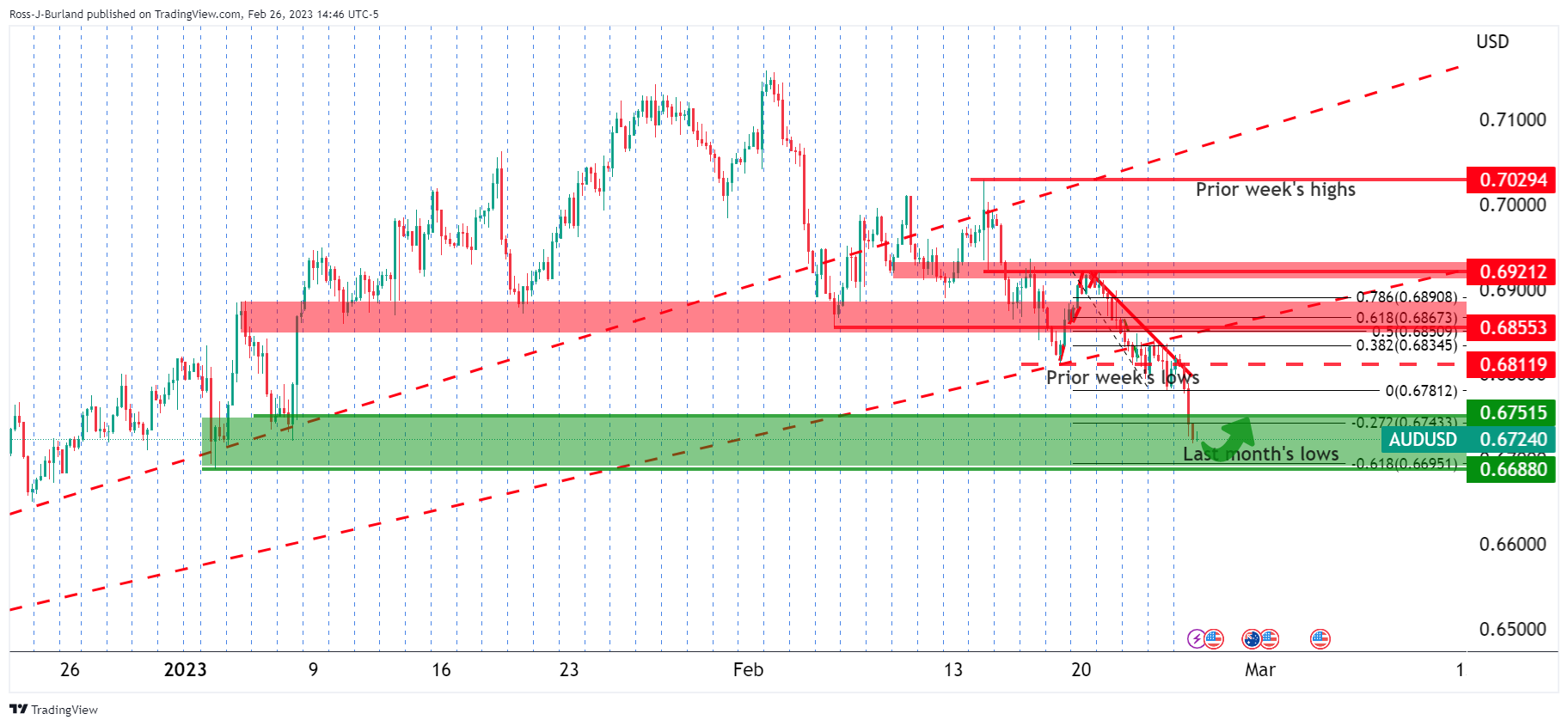
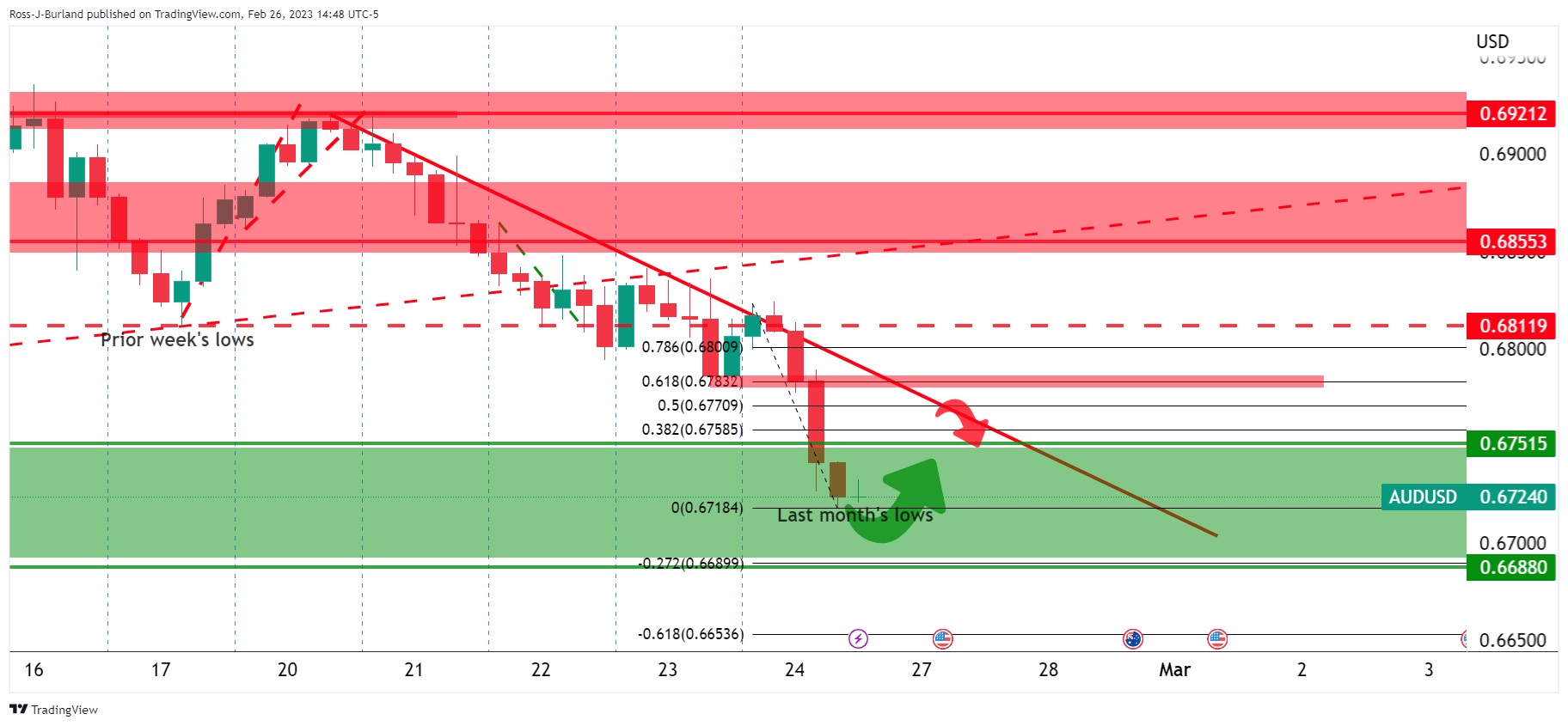
AUD/USD, while potentially on course for a full test of last month's lows, is now in a correction zone and the trendline resistance is compelling for a target of liquidity. 

Author

Ross J Burland

Ross J Burland, born in England, UK, is a sportsman at heart. He played Rugby and Judo for his county, Kent and the South East of England Rugby team.


More from Ross J Burland
Share:

Editor's Picks

USD/JPY retreats from nearly two-year high on hawkish BoJ Minutes

USD/JPY drifts lower during the Asian session on Friday, retreating further from its highest level since July 2024, set the previous day. Minutes from the April BoJ meeting keep further policy normalization firmly on the table amid expectations for a pickup in inflation over the coming months, due to higher energy costs. This offsets Japan's softer National CPI print and lifts the Japanese Yen amid intervention fears, exerting some pressure on the currency pair.

AUD/USD awaits 0.7000 breakdown before the next leg down amid bullish USD

AUD/USD holds above 0.7000 during the Asian session on Friday, though it remains close to the weekly low and seems poised to register modest weekly losses. The US Dollar sits near its highest level since May 2025 as the Fed's hawkish tilt overshadows optimism over the US-Iran peace deal, capping the currency pair. However, the RBA's signal that additional rate hikes were possible if inflation persists lends some support to the Aussie.

Gold refreshes weekly low as Fed's hawkish tilt underpins USD

Gold attracts sellers for the third consecutive day and weakens below $4,200, hitting a fresh weekly low during the Asian session on Friday. Despite the latest optimism over a US-Iran peace deal, the Fed's hawkish tilt helps the US Dollar to preserve its strong weekly gains to the highest level since May 2025. This, in turn, undermines the non-yielding bullion and backs the case for further losses.

Ethereum: Tokenization and network activity skyrocket in Q1 despite DeFi contraction
Following months of crashing prices and macro-driven fragility, Ethereum saw mixed performance across key metrics in the first quarter of 2026, according to Token Terminal. In its quarterly Ethereum report, the onchain analytical platform highlighted contraction across DeFi-focused metrics such as lending, trading volume and fees, while tokenization and throughput expanded.
Regime change: Inside Kevin Warsh's first move to make the Fed unreadable on purpose

The rate did not move. That was the least interesting thing about Kevin Warsh's first meeting in charge of the Fed. The FOMC held its benchmark at 3.50%-3.75% for the fourth straight meeting, exactly as priced, and then the new chair used his first press conference to dismantle the machinery the market has leaned on for a decade.

The next big AI trade may not be about chips or software

Artificial intelligence has already created some of the biggest winners in modern market history. Chipmakers have surged, data centre construction is booming, and electricity demand forecasts are changing globally.