|

Apple inc: Forecasting the reaction lower after wave (2) bounce
Apple Inc. yet another stock that many people and traders are looking at these days after it’s peak from January 2022. In total the drop so far is about 32%. Almost everyone is aware of them as a big chunk of people worldwide are using an Iphone or a Macbook device.

However we must never forget that the market (stock market) runs in cycles. When a larger cycle ends then a correction of that cycle always takes place. In some cases the correction is shallow and in other cases deep. Here at Elliott Wave Forecast by using our system we are able to identify when a cycle is getting mature and close to an end. Additionally we are able to correlate an instrument with others. And with out distribution and sequence system determine the areas of the market that we can expect the next reaction.

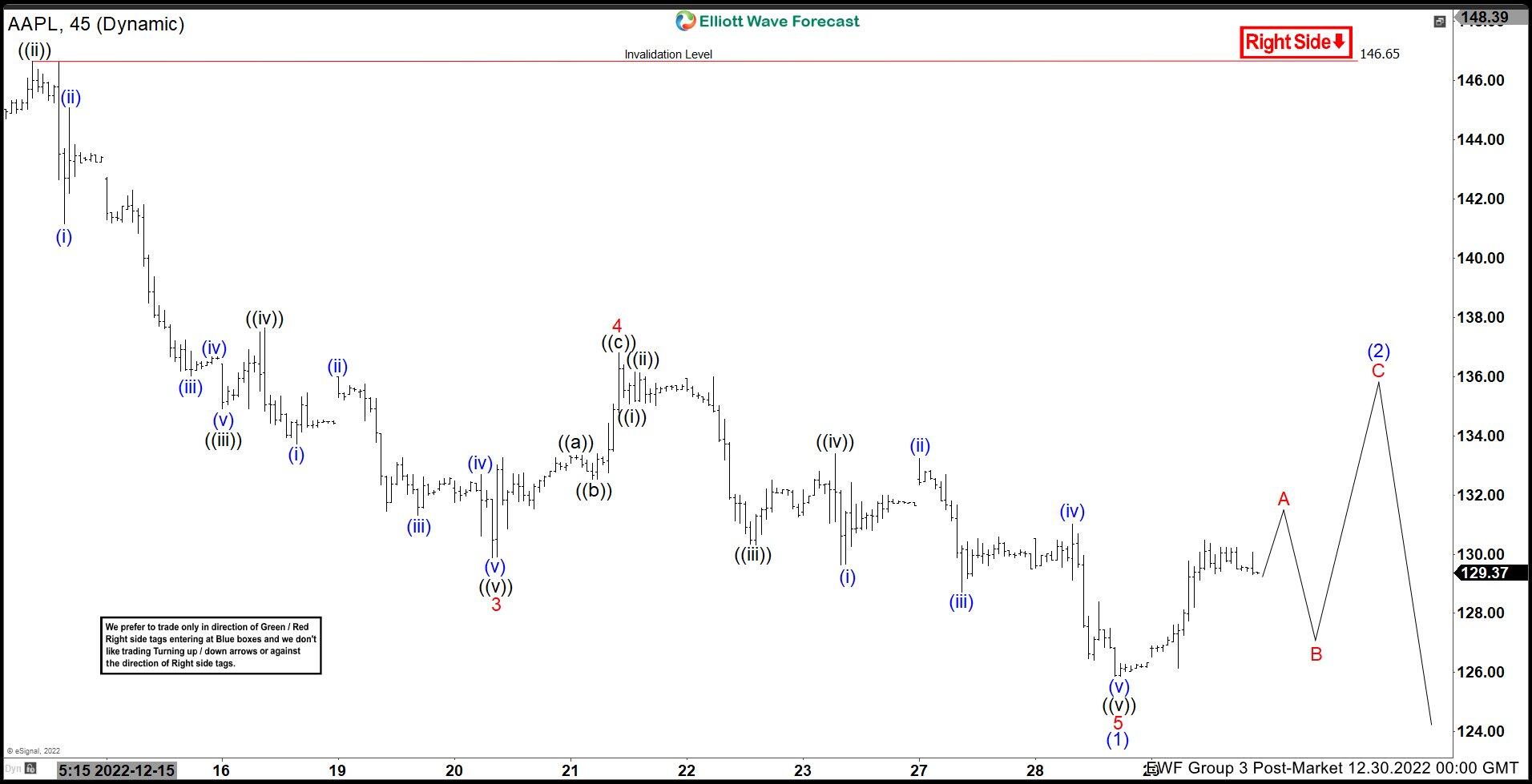
What we will look at in this article is how we have been able to forecast the reaction lower after the recent bounce in wave (2) in Apple. First of all let’s look at AAPL from 12.30.22 where we have been expecting a bounce in (2) as A – B – C.

AAPL 12.30.22 post market update update
AAPL

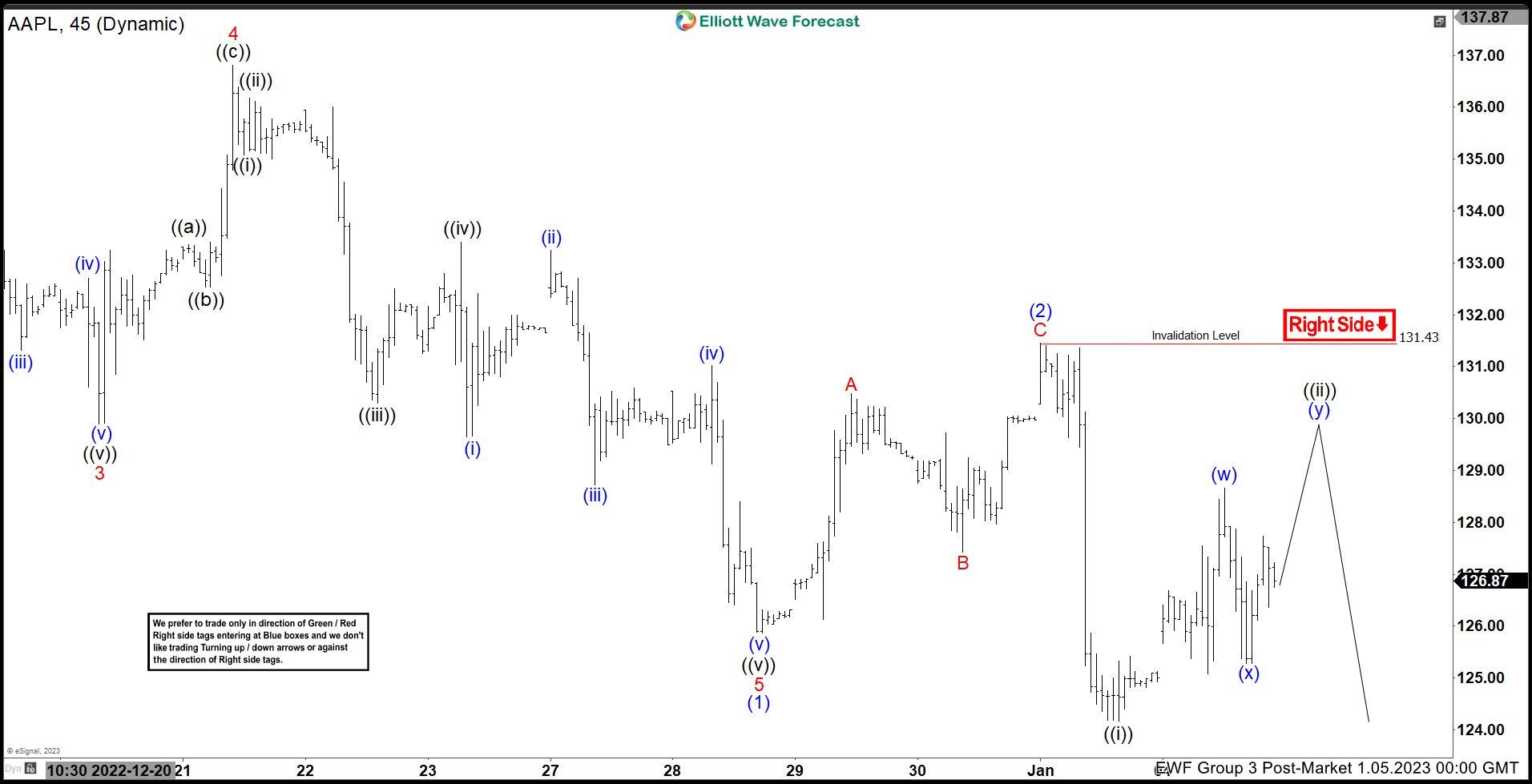
In this case we can see how AAPL was expected to do a 3 swing bounce before it turn lower in wave (3) of a larger degree ((3)). And lastly let’s have a look on how the market reacted.

AAPL 01.05.23 Post market update
AAPL

Author

Elliott Wave Forecast Team

Elliott Wave Forecast Team

ElliottWave-Forecast.com

More from Elliott Wave Forecast Team
Share:

Editor's Picks

GBP/USD declines toward 1.3500 as markets turn risk-averse

GBP/USD comes under bearish pressure and declines toward 1.3500 on Tuesday. The UK ILO Unemployment Rate held steady at 4.9% in the three months to June, against a forecast of 4.8%, while Employment Change arrived at 83K in the same period versus 147K previous. Weak UK labor data, combined with the risk-averse market atmosphere amid a re-escalation of tensions in the Middle East weigh on the pair.

EUR/USD retreats below 1.1600 on modest USD recovery

EUR/USD struggles to gain traction and trades below 1.1600 in the second half of the day on Tuesday, even after the data from the Eurozone and Germany highlighted improving economic sentiment in August. The US Dollar (USD) benefits from the risk-averse market atmosphere as tensions in Middle East remain high, making it difficult for the pair to turn north.

Gold sticks to losses below $4,400 as USD recovers further from two-month low

Gold remains depressed below the $4,400 mark through the first half of the European session, snapping a two-day winning streak amid a broadly firmer US Dollar. Inflation risks stemming from higher oil prices back the case for at least one interest rate hike by the US Federal Reserve in 2026.

Pi Network holds steady amid app studio costs surge to push user adoption

Pi Network extends a consolidation range capped below $0.0900 holding above the $0.0839 support level. PI token remains under pressure as the Core Team pushes for real user adoption by raising costs for AI-powered app creation, effective from August 24. Leverage-linked risk exposure eases as Open Interest declines despite an increase in social interest.

Fiscal concerns and doubts on Fed independence send US yields to long-term highs

US Treasury yields keep rising across the curve this week, with the yield for the 30-year Treasury bond reaching its highest level since 2007, during the global financial crisis, at 5.33% so far on Monday. A mix of concerns about the ballooning US fiscal deficit and growing doubts about the Federal Reserve’s Independence are increasing pressure on US Government Bonds.

Why is Crude Oil priced for a reopening the ships haven't made?
Fourteen vessels crossed the Strait of Hormuz on Tuesday. Before the war, the count ran near 120 a day. In the sessions since the waterway was publicly declared open, Brent has drifted back to $87 and West Texas Intermediate (WTI) to $81, both a little lower again on Wednesday, with daily momentum on each unwound from the top of its range in late July to the low twenties now.
















