
In a world obsessed with hustle, action, and relentless execution, entrepreneurs often overlook the most powerful metric of success: restraint. We celebrate the moves people make but rarely analyze the ones they don’t. Yet, history shows that the greatest fortunes, careers, and companies weren’t built just on smart decisions but on the discipline to avoid costly ones. If you analyze successful entrepreneurs, you'll find that they spend a lot of time planning for things not going according to plan.
Take Warren Buffett, arguably the most successful investor of all time. His long-term wealth isn’t just a product of what he invested in but what he chose to ignore. As Morgan Housel explains in The Psychology of Money, Buffett’s refusal to take on debt early in his career shielded him from financial ruin. During 14 recessions, he stayed calm, avoiding panic selling while others folded. He also refrained from chasing speculative tech stocks, missing out on some explosive gains but ensuring his portfolio remained within his circle of competence. As Buffett famously puts it, "We swing only at things we like."
This concept extends beyond investing. Jobs is often remembered for his visionary leadership, but his genius was also in what Apple didn’t do. When Jobs returned to Apple in 1997, the company had dozens of failing product lines. His first major move? Cut nearly 70% of Apple’s products and projects. By focusing on a handful of high-impact innovations, Apple became the trillion-dollar giant we know today. Jobs understood that saying ‘no’ is just as important, if not more so, than saying ‘yes.’ Similarly, his successor, Tim Cook, refrained from reacting to Elon Musk's attacks on his integration of AI tools into the new iPhone. What did Mr. Cook do? Absolutely nothing. Why pick a fight with the owner of one of the largest social media groups? Instead, he focused on what he had full control over. Think of it this way: a conflict is not a conflict unless you decide to take part in it.
The same applies to Amazon’s Jeff Bezos. While Amazon has expanded into countless sectors, Bezos was remarkably disciplined in avoiding short-term trends that didn’t align with his long-term vision. He famously ignored the early hype around cryptocurrencies, focusing instead on infrastructure investments like AWS. That singular focus transformed Amazon into an empire while others burned cash chasing shiny trends.
The hidden power of not doing
Most entrepreneurs fail not because of a lack of effort but because they spread themselves too thin. They take on every opportunity, hire too fast, launch too many products, or chase every new business trend. They also fail to identify the exceptional trait they have and focus solely on it. The most successful ones, however, master the art of strategic omission and use "no" as their default decision-making.
-
They avoid distractions. Every "shiny object" demands time and energy. The best entrepreneurs ruthlessly prioritize what moves the needle and discard everything else. You should not jump on AI unless there are clear gains attached to it.
-
They resist emotional decisions. Fear, greed, and impatience ruin businesses. Warren Buffett’s ability to withstand market crashes wasn’t brilliance—it was discipline and patience.
-
They stay in their lane. Buffett didn’t invest in tech for decades because he knew it wasn’t his strength. Likewise, Jobs focused Apple on a few core products. Knowing what to ignore is key.
-
They don't chase short-term validation. Saying ‘yes’ often provides immediate gratification. Saying ‘no’ enables focus, which is key to obtaining long-term impact.
Two Must-Read Books on the Power of Not Doing
-
"Essentialism: The disciplined pursuit of less" by Greg McKeown – A masterclass in eliminating the unnecessary and focusing on what truly matters.
-
"The art of thinking clearly" by Rolf Dobelli – Explores cognitive biases that lead people to bad decisions and how avoiding certain actions leads to better outcomes.
Final thought
Entrepreneurial success isn’t just about making bold moves—it’s about avoiding reckless ones. The businesses that thrive aren’t necessarily the ones that do the most, but the ones that strategically resist doing the wrong things. Learn what to ignore, and you’ll gain an advantage most people will never see.
Because sometimes, the smartest move you can make is not making a move at all.
All information posted is for educational and information use only, and it should never replace professional advice. Should you decide to act upon any information in this article, you do so at your own risk.
Editors’ Picks

EUR/USD loses ground below 1.1850 ahead of FOMC Minutes
The EUR/USD pair loses traction near 1.1840 during the early European session on Wednesday, pressured by renewed US Dollar demand. Traders brace for the Federal Open Market Committee Minutes for signals on future rate cuts, which will be released later on Wednesday.

When is the UK CPI data and how could it affect GBP/USD?
The United Kingdom Consumer Price Index data for January is scheduled to be published today at 07:00 GMT. GBP/USD trades slightly lower at around 1.3556 as of writing. The 20-period Exponential Moving Average trends lower at 1.3593 and continues to cap rebounds. Price holds beneath this gauge, maintaining a short-term bearish bias.

USD/JPY is looking for direction around 153.00 with key US data in focus
USD/JPY reversal from 153.70 has been contained above 152.70 on Tuesday. Major currencies are trading within narrow ranges amid thin trading volumes. Investors await the release of the US GDP and PCE Inflation figures to make decisions.
Editors’ Picks
When is the UK CPI data and how could it affect GBP/USD?
The United Kingdom Consumer Price Index data for January is scheduled to be published today at 07:00 GMT. GBP/USD trades slightly lower at around 1.3556 as of writing. The 20-period Exponential Moving Average trends lower at 1.3593 and continues to cap rebounds. Price holds beneath this gauge, maintaining a short-term bearish bias.
EUR/USD loses ground below 1.1850 ahead of FOMC Minutes
The EUR/USD pair loses traction near 1.1840 during the early European session on Wednesday, pressured by renewed US Dollar demand. Traders brace for the Federal Open Market Committee Minutes for signals on future rate cuts, which will be released later on Wednesday.

Gold: Is the $5,000 level back in sight?
Gold snaps a two-day downtrend, as recovery gathers traction toward $5,000 on Wednesday. The US Dollar recovers from the overnight sell-off as rebalancing trades resume ahead of Fed Minutes. The 38.2% Fib support holds on the daily chart for now. What does that mean for Gold?

Pi Network rally defies market pressure ahead of its first anniversary
Pi Network is trading above $0.1900 at press time on Wednesday, extending the weekly gains by nearly 8% so far. The steady recovery is supported by a short-term pause in mainnet migration, which reduces pressure on the PI token supply for Centralized Exchanges. The technical outlook focuses on the $0.1919 resistance as bullish momentum increases.
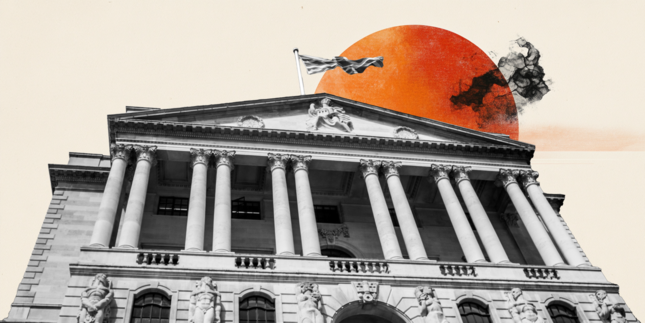
UK jobs market weakens, bolstering rate cut hopes
In the UK, the latest jobs report made for difficult reading. Nonetheless, this represents yet another reminder for the Bank of England that they need to act swiftly given the collapse in inflation expected over the coming months.
RECOMMENDED LESSONS
Making money in forex is easy if you know how the bankers trade!

I’m often mystified in my educational forex articles why so many traders struggle to make consistent money out of forex trading. The answer has more to do with what they don’t know than what they do know. After working in investment banks for 20 years many of which were as a Chief trader its second knowledge how to extract cash out of the market.
5 Forex News Events You Need To Know

In the fast moving world of currency markets where huge moves can seemingly come from nowhere, it is extremely important for new traders to learn about the various economic indicators and forex news events and releases that shape the markets. Indeed, quickly getting a handle on which data to look out for, what it means, and how to trade it can see new traders quickly become far more profitable and sets up the road to long term success.
Top 10 Chart Patterns Every Trader Should Know

Chart patterns are one of the most effective trading tools for a trader. They are pure price-action, and form on the basis of underlying buying and selling pressure. Chart patterns have a proven track-record, and traders use them to identify continuation or reversal signals, to open positions and identify price targets.
7 Ways to Avoid Forex Scams

The forex industry is recently seeing more and more scams. Here are 7 ways to avoid losing your money in such scams: Forex scams are becoming frequent. Michael Greenberg reports on luxurious expenses, including a submarine bought from the money taken from forex traders. Here’s another report of a forex fraud. So, how can we avoid falling in such forex scams?
What Are the 10 Fatal Mistakes Traders Make
Trading is exciting. Trading is hard. Trading is extremely hard. Some say that it takes more than 10,000 hours to master. Others believe that trading is the way to quick riches. They might be both wrong. What is important to know that no matter how experienced you are, mistakes will be part of the trading process.
The challenge: Timing the market and trader psychology

Successful trading often comes down to timing – entering and exiting trades at the right moments. Yet timing the market is notoriously difficult, largely because human psychology can derail even the best plans. Two powerful emotions in particular – fear and greed – tend to drive trading decisions off course.