What is forex trading? Understanding the global currency market
The market behind every global transaction
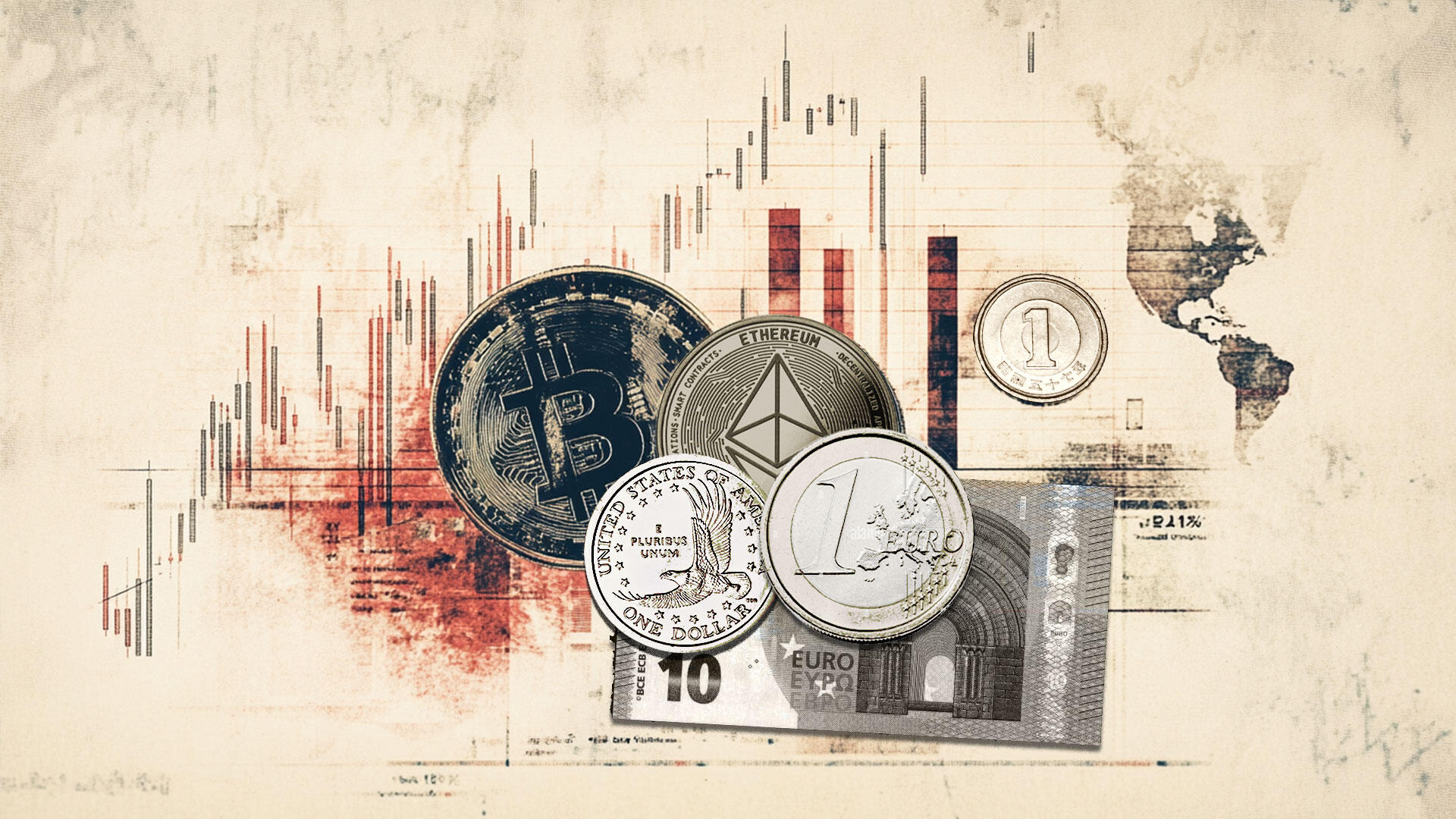
Foreign exchange trading, commonly referred to as forex, is often described as the largest financial market in the world. With daily turnover measured in trillions of dollars, it underpins global trade, investment flows, central bank operations, and cross-border capital movement.
Despite its scale and importance, forex trading is frequently misunderstood—particularly by new market participants who encounter it through retail platforms without understanding the broader institutional context.
This article provides a structured overview of what forex trading is, how the market functions, and how traders should think about currency markets from a practical and risk-aware perspective.
What is the forex market?
The forex market is a decentralized global marketplace where currencies are exchanged against one another. Unlike equities, there is no single centralized exchange. Pricing is formed through a global network of banks, financial institutions, corporations, hedge funds, and retail brokers.
Currencies are always traded in pairs, reflecting the relative value of one currency compared to another. When a trader buys a currency pair, they are simultaneously buying one currency and selling another.
For example:
Buying EUR/USD means buying euros while selling US dollars
Selling USD/JPY means selling US dollars while buying Japanese yen
At its core, forex trading is not about the absolute value of a currency, but about relative economic strength.
Why the forex market exists
The forex market exists primarily to support global economic activity, not speculation. Its main functions include:
- Facilitating international trade and commerce
- Enabling cross-border investment flows
- Supporting central bank monetary policy operations
- Allowing corporations to hedge currency exposure
Speculative trading adds liquidity and efficiency to the market, but it is not the market’s foundation. Understanding this distinction helps traders better interpret price movements and macroeconomic drivers.
Key participants in the forex market
Forex pricing is shaped by a hierarchy of participants, each operating with different objectives and time horizons:
- Central banks
Influence currencies through interest rates, policy guidance, and direct intervention. - Commercial and investment banks
Provide liquidity, facilitate transactions, and manage large currency exposures. - Institutional investors and hedge funds
Trade currencies based on macroeconomic trends, valuation, and risk positioning. - Corporations
Hedge operational risks tied to international revenues and expenses. - Retail traders
Access the market through brokers, typically trading smaller position sizes with leverage.
Retail traders operate at the end of this hierarchy, meaning market price is often a reaction to decisions made by larger participants.
Understanding currency pairs
Every forex trade involves two currencies:
- The base currency, listed first
- The quote currency, listed second
If EUR/USD is trading at 1.1000, it means one euro is worth 1.10 US dollars.
Currency pairs are generally categorized as:
- Major pairs, which include the US dollar and highly liquid currencies
- Minor pairs, which exclude the US dollar
- Exotic pairs, which involve emerging market currencies
Liquidity, volatility, and execution quality vary significantly across these categories and should be considered when selecting instruments to trade.
Forex market hours and trading sessions
The forex market operates 24 hours a day, five days a week, following the global business day across regions. Activity rotates through major financial centers in Asia, Europe, and North America.
Although the market is technically open throughout the week, liquidity and volatility are not evenly distributed. Certain sessions and overlaps tend to produce more meaningful price movement, while others are characterized by consolidation and lower participation.
Professional traders do not trade all hours equally. They specialize in specific sessions aligned with their strategies and instruments.
How forex trading works for retail traders
Retail traders access the forex market through brokers that aggregate prices from institutional liquidity providers. Trades are executed electronically, often using leverage, which allows traders to control larger positions with relatively small amounts of capital.
Leverage magnifies both gains and losses. As a result, long-term success in forex trading depends far more on risk management and discipline than on trade frequency or prediction accuracy.
Forex trading is not a shortcut to profits. It is a probability-based process that rewards consistency and sound decision-making over time.
Common misconceptions about forex trading
Several misconceptions frequently affect new traders:
- Forex trading is about predicting price direction
- More trades create more opportunity
- Indicators alone provide a trading edge
In practice, successful trading is less about prediction and more about managing risk within uncertain environments. Tools and indicators support decision-making, but they do not replace structured analysis and discipline.
A professional perspective
From an institutional standpoint, forex trading is approached as a structured decision-making process rather than a constant search for opportunity. Trades are taken selectively, guided by macroeconomic context, liquidity conditions, and predefined risk limits.
Retail traders who adopt this mindset early—prioritizing education, preparation, and capital preservation—significantly improve their chances of long-term consistency.
In conclusion
Forex trading offers access to one of the most liquid and dynamic markets in the world. However, accessibility should not be mistaken for simplicity.
Understanding how the forex market functions, who participates, and why currencies move is the foundation upon which all successful trading strategies are built. Before focusing on execution tactics, traders must first understand the structure of the market they are operating in.
Author

Vrajeshwari Bhardwaj
SharmaFX
Vrajeshwari Bhardwaj is the founder of SharmaFX, a global trading education and mentorship platform built on an institutional approach to forex, indices, commodities, and crypto markets.