 Boris Schlossberg
BKTraders and Prop Traders Edge
The other day Nick Maggulli @dollarsanddata who runs a wonderful and always insightful financial blog of Dollars and Data wrote a piece called a “Stock is not an Index in which he pointed out that if you owned an S&P 500 index fund you would be assured of outperforming 80% of all investors whereas if you you owned just one stock - not so much.
The reason of course is clear. An index is a dynamic list that changes constantly based upon the various selection rules of the S&P committee whereas a stock is a single static business entity that may thrive or fail miserably based on a myriad of idiosyncratic risks. Of course you may get lucky with a stock - you may have chosen Google or Amazon in early aughts and outperformed the broader market by a wide margin. But what are the odds of that? Put simply, the question you want to ask yourself is what would you rather have in 30 years - a near 85% certainty of one million dollars in your retirement account or one in a thousand chance of making five million dollars but a fifty percent possibility of having no retirement funds whatsoever. (Those aren’t real odds because no one can predict the future, but they are a close enough approximation of what happened over the past two hundred years of investing).
The index vs. single stock investment is an example of a simple market edge that could have literally life altering consequences if you chose incorrectly. Many such simple edges exist in trading as well but most of us roundly ignore them.
One obvious edge in trading is to widen your stops and targets and lower your leverage. I’ve moved away from trading forex - but recently just for s-ts and giggles I’ve started to post on Twitter a few select trade ideas that I put into my personal account once or twice a week. Since I am very busy running BK and day trading equity indices I’ve moved to a simple 100 pip stop 100 pip target in my FX trades using very low starting leverage to ensure that I have plenty of capital to adjust my positions. I do this frankly because I don’t care about FX and I don’t have the time or the desire to follow it closely but the irony of course is that my FX trading has never been more successful as the wide stops avoid the endless intra day churn outs and the low lever factor allows me to size up modestly and bank fresh profits on any follow up trades I make.
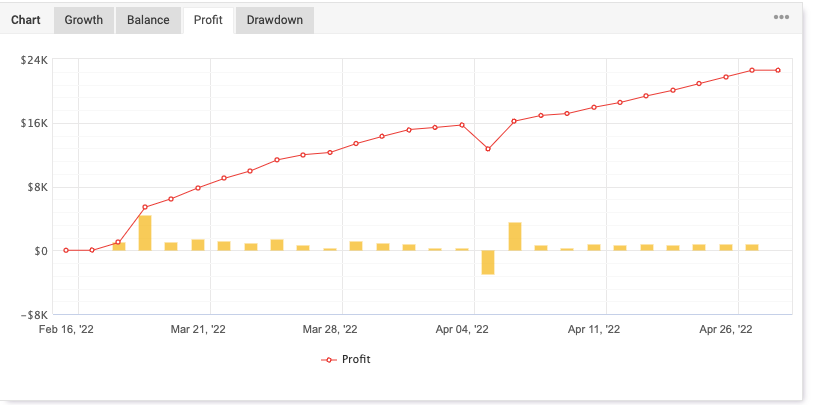
Yet another simple edge in trading that very few retail traders employ is to automate as much of the trade execution as possible. I have a day trading system that I trigger manually, but after that the algo does all the work. The automation makes sure that I have the right instrument, the right size, the right stops, the right exits and most importantly the right entries for the full trade cycle strategy. It does all the clerical work while I am sleeping, or walking my dog or eating lunch or just wasting time watching YouTube videos.
It’s amazing how much better my trading has been since I actually stopped... trading.
And that is what edge is all about.
Edge in trading doesn’t come from your brilliant technical analysis or fundamental insight. As one old time trader used to tell me, “Opinions are like a-holes - everyone has them.” Every single trade idea in the world, no matter how complex or simple, can be reduced to just two primary concepts - continuation or reversal. The value of analysis is grossly overblown. Rather, an edge in trading comes from eliminating mistakes. Eliminating mistakes comes from eliminating decisions. The less decisions you have to make manually, the more edge you will likely have. Just as Mr. and Mrs. Main Street trounce almost every hedge fund manager in the world by buying an index fund and making no decisions whatsoever; traders who make fewer decisions will likely outperform those that make many.
Of course that’s not a hard and fast rule. Trading is an extremely personal endeavor and works best when you trade to your personality rather than some system forced upon you, but regardless of whether you are a degenerate day trader like I am, or a thoughtful and patient investor like my wife, the edge always comes from doing less than more.
Past performance is not indicative of future results. Trading forex carries a high level of risk, and may not be suitable for all investors. The high degree of leverage can work against you as well as for you. Before deciding to trade any such leveraged products, you should carefully consider your investment objectives, level of experience, and risk appetite. The possibility exists that you could sustain a loss of some or all of your initial investment and therefore you should not invest money that you cannot afford to lose. You should be aware of all the risks associated with trading on margin, and seek advice from an independent financial advisor if you have any doubts.
Editors’ Picks

EUR/USD bounces off lows, back to 1.1860
EUR/USD now manages to regain some balance, retesting the 1.1860-1.1870 band after bottoming out near 1.1830 following the US NFP data on Wednesday. The pair, in the meantime, remains on the defensive amid fresh upside traction surrounding the US Dollar.

GBP/USD rebounds to 1.3660, USD loses momentum
GBP/USD trades with decent gains in the 1.3660 region, regaining composure following the post-NFP knee-jerk toward the 1.3600 zone on Wednesday. Cable, in the meantime, should now shift its attention to key UK data due on Thursday, including preliminary GDP gauges.

USD/JPY declines as Yen strengthens after election win, overshadowing US jobs data
The US Dollar rose briefly after stronger-than-expected job creation but gave back gains against a firm Japanese Yen. The Unemployment Rate falls to 4.3% and wages accelerate, reinforcing expectations of a prolonged Fed pause. Sanae Takaichi’s election victory fuels demand for the Japanese Yen, pushing USD/JPY down for the day.
Editors’ Picks
EUR/USD bounces off lows, back to 1.1860
EUR/USD now manages to regain some balance, retesting the 1.1860-1.1870 band after bottoming out near 1.1830 following the US NFP data on Wednesday. The pair, in the meantime, remains on the defensive amid fresh upside traction surrounding the US Dollar.
GBP/USD rebounds to 1.3660, USD loses momentum
GBP/USD trades with decent gains in the 1.3660 region, regaining composure following the post-NFP knee-jerk toward the 1.3600 zone on Wednesday. Cable, in the meantime, should now shift its attention to key UK data due on Thursday, including preliminary GDP gauges.

Gold stays bid, still below $5,100
Gold keeps the bid tone well in place on Wednesday, retargeting the $5,100 zone per troy ounce on the back of humble gains in the US Dollar and firm US Treasury yields across the curve. Moving forward, the yellow metal’s next test will come from the release of US CPI figures on Friday.

Ripple Price Forecast: XRP sell-side pressure intensifies despite surge in addresses transacting on-chain
Ripple (XRP) is edging lower around $1.36 at the time of writing on Wednesday, weighed down by low retail interest and macroeconomic uncertainty, which is accelerating risk-off sentiment.

US jobs data surprises to the upside, boosts stocks but pushes back Fed rate cut expectations
This was an unusual payrolls report for two reasons. Firstly, because it was released on Wednesday, and secondly, because it included the 2025 revisions alongside the January NFP figure.
RECOMMENDED LESSONS
Making money in forex is easy if you know how the bankers trade!

I’m often mystified in my educational forex articles why so many traders struggle to make consistent money out of forex trading. The answer has more to do with what they don’t know than what they do know. After working in investment banks for 20 years many of which were as a Chief trader its second knowledge how to extract cash out of the market.
5 Forex News Events You Need To Know

In the fast moving world of currency markets where huge moves can seemingly come from nowhere, it is extremely important for new traders to learn about the various economic indicators and forex news events and releases that shape the markets. Indeed, quickly getting a handle on which data to look out for, what it means, and how to trade it can see new traders quickly become far more profitable and sets up the road to long term success.
Top 10 Chart Patterns Every Trader Should Know

Chart patterns are one of the most effective trading tools for a trader. They are pure price-action, and form on the basis of underlying buying and selling pressure. Chart patterns have a proven track-record, and traders use them to identify continuation or reversal signals, to open positions and identify price targets.
7 Ways to Avoid Forex Scams

The forex industry is recently seeing more and more scams. Here are 7 ways to avoid losing your money in such scams: Forex scams are becoming frequent. Michael Greenberg reports on luxurious expenses, including a submarine bought from the money taken from forex traders. Here’s another report of a forex fraud. So, how can we avoid falling in such forex scams?
What Are the 10 Fatal Mistakes Traders Make
Trading is exciting. Trading is hard. Trading is extremely hard. Some say that it takes more than 10,000 hours to master. Others believe that trading is the way to quick riches. They might be both wrong. What is important to know that no matter how experienced you are, mistakes will be part of the trading process.
The challenge: Timing the market and trader psychology

Successful trading often comes down to timing – entering and exiting trades at the right moments. Yet timing the market is notoriously difficult, largely because human psychology can derail even the best plans. Two powerful emotions in particular – fear and greed – tend to drive trading decisions off course.