 Sam Seiden
Independent Analyst
What Happened with the Dow?
Over the past 3 days, the stock market has given up gains going back to November 1st. The S&P at one point yesterday was down 8% since its record high in January. While the markets are likely to rebound a bit in the near term, we just got a small glimpse of the damage that is possible and likely coming. The only question that matters… Can your accounts and retirement plan handle a major market decline and if not, what’s your plan?
Can We Expect Further Declines in the Market?
The markets plunged on relatively no news which means if and when we do get the next unexpected negative news, expect a much larger market decline. The fact that market prices declined to the lows that they did tells us there is little demand for stocks above those levels.
OTA Issued Warning Days Before the Plunge
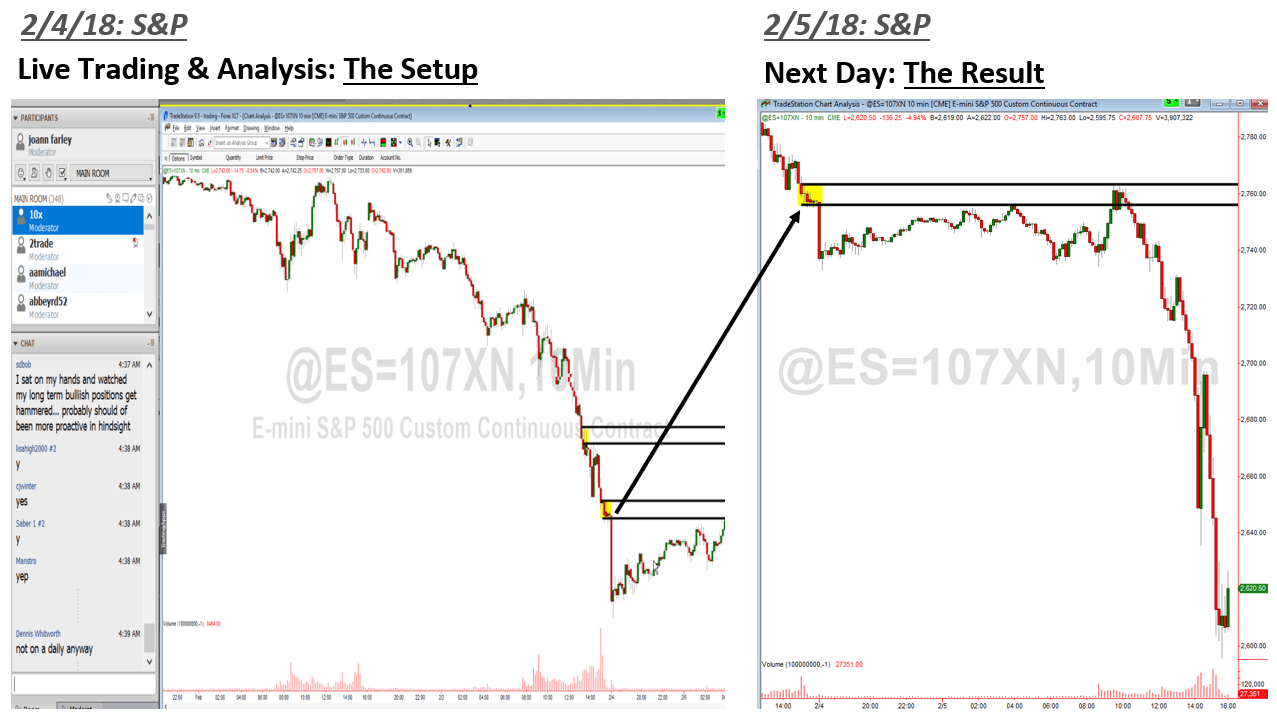
On February 4th, Online Trading Academy issued a warning to members that a major market decline was likely. As seen on the charts below, following OTA’s patented core strategy we were able to determine that Supply greatly exceeded Demand in the S&P; major banks were heavy sellers at 2760 in the S&P. On Feb 5th, price rallies to our predetermined Supply level and the markets plunge from there. As you can see, knowing how to identify supply and demand on a price chart can help you protect your investments, even when the market plunges this dramatically.
A Retirement Savings Solution: Market Gains without Market Risk
Starting on the Wall Street side of the business, I learned exactly how Wall Street invests their own money which opened my eyes to simple yet powerful strategies. One that I utilize and teach our Online Trading Academy members is the Bond Strategy. The strategy offers stock market gains without any stock market risk to your investment capital. Instead of your investment capital sitting in the stock market with all the risk and fees, put it in one of three very safe, short maturity and high yielding bond funds. We then use the monthly interest payments to enter directional positions in the stock market. In other words, you’re able to take advantage of stock market gains without stock market risk. This is one of the many simple strategies Wall Street firms use for their capital, are you?
Participating in stock market gains without exposure to stock market risk is key for your retirement savings. Like anything in life, if you don’t take care of the risk, the risk will take care of you. Since 2000 through, this strategy has averaged an annual rate of return of just over 9%, while the S&P 500 index has averaged 3.2%. How can this be? Simple… you don’t participate in the losses. People don’t realize how devastating losses and down years are to their retirement savings or the true impact of having to make up those losses. It’s the single biggest risk to your nest egg and the most overlooked, until markets crash. This is why most people you know never enjoy the retirement they spent a lifetime dreaming of.
The Benefits of Market Timing
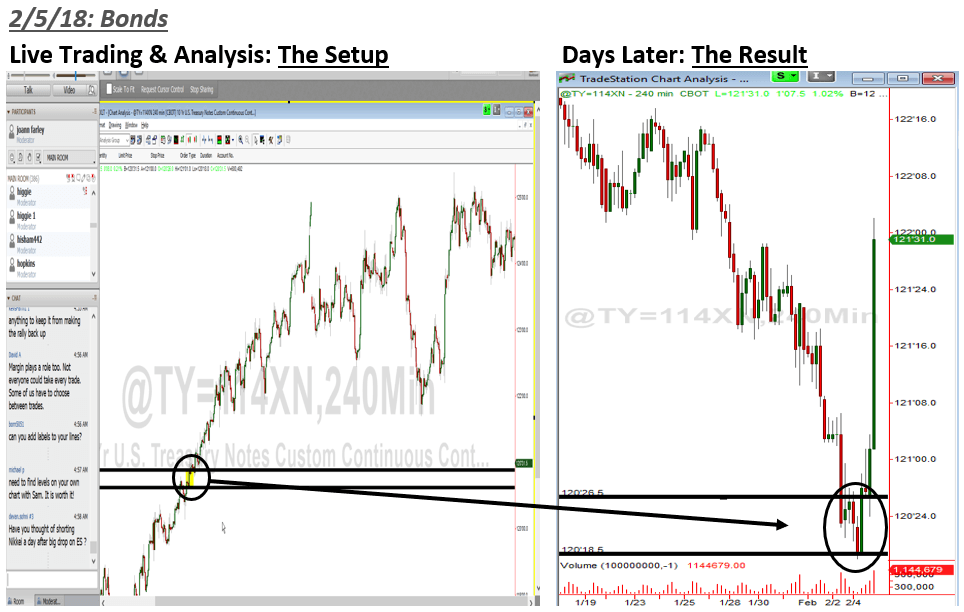
Have a simple rules-based strategy that helps you forecast major market turning points in advance, like we did above in the S&P and Dow. This allows you to both protect market gains and also profit from a down market.
Note: All information on this page is subject to change. The use of this website constitutes acceptance of our user agreement. Please read our privacy policy and legal disclaimer. Opinions expressed at FXstreet.com are those of the individual authors and do not necessarily represent the opinion of FXstreet.com or its management. Risk Disclosure: Trading foreign exchange on margin carries a high level of risk, and may not be suitable for all investors. The high degree of leverage can work against you as well as for you. Before deciding to invest in foreign exchange you should carefully consider your investment objectives, level of experience, and risk appetite. The possibility exists that you could sustain a loss of some or all of your initial investment and therefore you should not invest money that you cannot afford to lose. You should be aware of all the risks associated with foreign exchange trading, and seek advice from an independent financial advisor if you have any doubts.
Editors’ Picks

EUR/USD appears supported by the 200-day SMA, for now
Following an early pullback to multi-week lows near 1.1670, EUR/USD now manages to reclaim the 1.1700 region as the NA session draws to a close on Monday. The steep retracement in spot follows the equally strong move higher in the US Dollar, as investors continue to assess the geopolitical landscape in the wake of the US and Israel attacks on Iran.

GBP/USD hits new yearly lows near 1.3300
GBP/USD adds to the recent bearish tone, approaching to the key 1.3300 support to reach fresh YTD troughs against the backdrop of the robust performance of the US Dollar. Indeed, Cable’s decline comes amid the firm demand for the safe-haven space in the wake of the US and Israel attacks to Iran.

USD/JPY: Japanese Yen remains depressed vs. USD amid Middle East tensions; lacks follow-through
The USD/JPY pair catches fresh bids at the start of a new week and climbs back closer to last week's swing high, though it lacks follow-through and remains below the 157.00 mark through the Asian session. A coordinated US-Israel military strike on Iran marks a dramatic escalation of geopolitical tensions and unsettles global markets.
Editors’ Picks

AUD/USD trims losses, targets 0.7100
AUD/USD manages to regain composure and trim a big chunk of the earlier drop, re-shifting its attention to the 0.7100 hurdle ahead of the opening bell in Asia. The pair’s decline follows the marked improvement in the Greenback, which is in turn propped up by safe haven demand on the back of the deteriorating geopolitical scenario in the Middle East.
EUR/USD appears supported by the 200-day SMA, for now
Following an early pullback to multi-week lows near 1.1670, EUR/USD now manages to reclaim the 1.1700 region as the NA session draws to a close on Monday. The steep retracement in spot follows the equally strong move higher in the US Dollar, as investors continue to assess the geopolitical landscape in the wake of the US and Israel attacks on Iran.

Gold eases some ground, approaches $5,300
Gold now surrenders part of the earlier advance, reshifting its attenton to the $5,300 zone per troy ounce at the beginning of the week. Indeed, the yellow metal’s firm performance appears propped up by incresing geopolitical jitters in the Middle East, which at the same time fuels the demand for the safe-haven space.

Strategy lifts holdings to 3.4% of Bitcoin's total supply amid inflows into crypto products
Strategy continued its accumulation of the top crypto last week, acquiring 3,015 BTC for $204 million amid renewed interest in crypto products after four weeks of outflows.

The Fed is finally talking about AI – Here's why it matters for the US Dollar Premium
AI is moving from earnings calls into the heart of monetary policy discussions, forcing Federal Reserve officials to confront a new question: How to act if AI reshapes inflation, employment and interest rates at the same time?
RECOMMENDED LESSONS
Making money in forex is easy if you know how the bankers trade!

I’m often mystified in my educational forex articles why so many traders struggle to make consistent money out of forex trading. The answer has more to do with what they don’t know than what they do know. After working in investment banks for 20 years many of which were as a Chief trader its second knowledge how to extract cash out of the market.
5 Forex News Events You Need To Know

In the fast moving world of currency markets where huge moves can seemingly come from nowhere, it is extremely important for new traders to learn about the various economic indicators and forex news events and releases that shape the markets. Indeed, quickly getting a handle on which data to look out for, what it means, and how to trade it can see new traders quickly become far more profitable and sets up the road to long term success.
Top 10 Chart Patterns Every Trader Should Know

Chart patterns are one of the most effective trading tools for a trader. They are pure price-action, and form on the basis of underlying buying and selling pressure. Chart patterns have a proven track-record, and traders use them to identify continuation or reversal signals, to open positions and identify price targets.
7 Ways to Avoid Forex Scams

The forex industry is recently seeing more and more scams. Here are 7 ways to avoid losing your money in such scams: Forex scams are becoming frequent. Michael Greenberg reports on luxurious expenses, including a submarine bought from the money taken from forex traders. Here’s another report of a forex fraud. So, how can we avoid falling in such forex scams?
What Are the 10 Fatal Mistakes Traders Make
Trading is exciting. Trading is hard. Trading is extremely hard. Some say that it takes more than 10,000 hours to master. Others believe that trading is the way to quick riches. They might be both wrong. What is important to know that no matter how experienced you are, mistakes will be part of the trading process.
The challenge: Timing the market and trader psychology

Successful trading often comes down to timing – entering and exiting trades at the right moments. Yet timing the market is notoriously difficult, largely because human psychology can derail even the best plans. Two powerful emotions in particular – fear and greed – tend to drive trading decisions off course.