
It can be said that forex trading is one of the most challenging markets to master. Like any wild beast that’s awake 24 hours a day, it can be a wee bit irrational and cranky. And with the slightest agitation, that beast can unpredictably go from docile to volatile and back again in an instant. Given that we are in uncharted waters in terms of a volatile environment and unprecedented events, it looks like this increasing uncertainty will only make the beast that much more fierce.
As the global economy faces the possibility of slowing down again and as political leaders struggle amongst each other to resolve conflict, what can we do to prevent uncertainty from crippling us with fear?
In my experience, battling uncertainty and getting past my fears requires two simple things:
1. Acceptance
No one could have put it any simpler than when Ray Dalio (founder of the world’s current #1 ranked and largest hedge fund, Bridgewater Associates) once wrote in reference to the market speculation that, “No matter how hard you work, you can still be wrong.” With his 35+ years of experience in the markets and working with some the best people and trading tools, he still attests to the fact that there is no perfect pill or holy grail to trading and investing.
If you have it in your mind that your analysis skills will be so good or that you’ll find that perfect mathematical formula to building a flawless trading record, guess again! The reality is that unless you can see into the future, you won’t be able to predict every market move or your mech system won’t be able to factor in every imaginable variable. Yes, you WILL have losing trades and, if you can’t internalize the principle that no matter what you do you’ll never know everything that’s around the corner, then you will continue to be blind to what’s really going on and be unable to adapt to the ever changing conditions.
Now, everyone is different, so the catalyst for a paradigm shift to acceptance may come at different moments for each of us. But you can bet that it usually doesn’t come until after a lot of trades and experience…
2. Preparation
The second step of reducing the risk of the unknown is to be prepared. Serious business requires serious planning. For example, would a doctor just say, “Well, I think you have a bad heart. I’ll just cut open and poke around a bit to see what I can find. Just lay back, relax and don’t worry. I’ve done this a million times…” If the doc likes lawsuits, then he may suggest that plan of action. But the reality is that even a doctor with many years of experience would conduct many tests and then if necessary, prepare a team of highly skilled professionals to perform open heart surgery and be ready for any unforeseen complications that may arise.
Like surgery, trading is serious business. And while unpredictable factors will always be present, uncertainty can be significantly reduced through proper preparation. Taking the time to study and control what you can (e.g., being aware of sentiment and upcoming news, considering all possible market reactions, controlling your max loss with stops) reduces much of the uncertainty, because you have identified and planned for the “worst case” scenario. And if you already know the outcome of your trade regardless if the market goes up, down or sideways, then how can you be afraid?
Acceptance and preparation sound like no-brainer solutions to overcoming the emotions created by facing the unknown, but of course, it’s easier said than done. The former may go against a belief system already deeply internalized in all of us: there is a logical reason for everything. Therefore we think, “If I work hard and find the reasons that moved the market, I can use it as an edge.” As I’m sure you’ve already experienced, the markets can be illogical and stay illogical longer than you can stay solvent.
The second solution, preparation, just flat out requires work. Like a chef waking up at 4 am to prep for a long day in the restaurant, you just have to put in the chart time, economic reading, and/or system research and testing to be prepared for whatever the market will throw at you–day in and day out.
But don’t worry, if you survive in this game long enough, uncertainty will be overcome through sheer experience. Just keep your head up when you take a hit, focus on developing good trading habits (not profits), and soon enough you’ll be saying, “Uncertainty? What uncertainty?”
As the global economy faces the possibility of slowing down again and as political leaders struggle amongst each other to resolve conflict, what can we do to prevent uncertainty from crippling us with fear?
In my experience, battling uncertainty and getting past my fears requires two simple things:
1. Acceptance
No one could have put it any simpler than when Ray Dalio (founder of the world’s current #1 ranked and largest hedge fund, Bridgewater Associates) once wrote in reference to the market speculation that, “No matter how hard you work, you can still be wrong.” With his 35+ years of experience in the markets and working with some the best people and trading tools, he still attests to the fact that there is no perfect pill or holy grail to trading and investing.
If you have it in your mind that your analysis skills will be so good or that you’ll find that perfect mathematical formula to building a flawless trading record, guess again! The reality is that unless you can see into the future, you won’t be able to predict every market move or your mech system won’t be able to factor in every imaginable variable. Yes, you WILL have losing trades and, if you can’t internalize the principle that no matter what you do you’ll never know everything that’s around the corner, then you will continue to be blind to what’s really going on and be unable to adapt to the ever changing conditions.
Now, everyone is different, so the catalyst for a paradigm shift to acceptance may come at different moments for each of us. But you can bet that it usually doesn’t come until after a lot of trades and experience…
2. Preparation
The second step of reducing the risk of the unknown is to be prepared. Serious business requires serious planning. For example, would a doctor just say, “Well, I think you have a bad heart. I’ll just cut open and poke around a bit to see what I can find. Just lay back, relax and don’t worry. I’ve done this a million times…” If the doc likes lawsuits, then he may suggest that plan of action. But the reality is that even a doctor with many years of experience would conduct many tests and then if necessary, prepare a team of highly skilled professionals to perform open heart surgery and be ready for any unforeseen complications that may arise.
Like surgery, trading is serious business. And while unpredictable factors will always be present, uncertainty can be significantly reduced through proper preparation. Taking the time to study and control what you can (e.g., being aware of sentiment and upcoming news, considering all possible market reactions, controlling your max loss with stops) reduces much of the uncertainty, because you have identified and planned for the “worst case” scenario. And if you already know the outcome of your trade regardless if the market goes up, down or sideways, then how can you be afraid?
Acceptance and preparation sound like no-brainer solutions to overcoming the emotions created by facing the unknown, but of course, it’s easier said than done. The former may go against a belief system already deeply internalized in all of us: there is a logical reason for everything. Therefore we think, “If I work hard and find the reasons that moved the market, I can use it as an edge.” As I’m sure you’ve already experienced, the markets can be illogical and stay illogical longer than you can stay solvent.
The second solution, preparation, just flat out requires work. Like a chef waking up at 4 am to prep for a long day in the restaurant, you just have to put in the chart time, economic reading, and/or system research and testing to be prepared for whatever the market will throw at you–day in and day out.
But don’t worry, if you survive in this game long enough, uncertainty will be overcome through sheer experience. Just keep your head up when you take a hit, focus on developing good trading habits (not profits), and soon enough you’ll be saying, “Uncertainty? What uncertainty?”
Editors’ Picks

EUR/USD climbs to daily highs near 1.1820
EUR/USD now picks up pace and advances to the area of daily peaks north of the 1.1800 barrier at the end of the week. The pair’s decent move higher comes against the backdrop of a generalised lack of direction in the FX galaxy and the mild offered stance in the US Dollar.

GBP/USD trims losses, retests 1.3460
After briefly challenging its key 200-day SMA near 1.3440, GBP/USD now manages to regain some balance and revisit the 1.3460 zone on Friday. Cable’s pullback comes as the selling pressure on the Greenback gathers traction, reigniting some recovery in the risk-linked space.

Japanese Yen gives back half of early gains against USD ahead of US PPI data
The Japanese Yen (JPY) surrenders half of its early gains against the US Dollar (USD) during the European trading session on Friday. The USD/JPY pair rebounds to near 155.90 as the JPY falls back, but is still 0.15% down.
Editors’ Picks
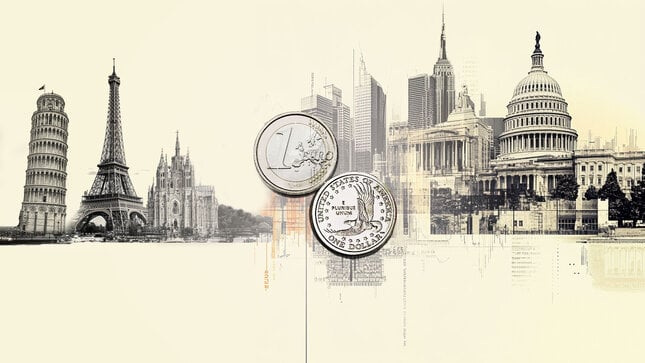
EUR/USD: Fed calm, ECB steady, but the Dollar still leads Premium
EUR/USD is still struggling to find real traction. The pair has tried to stabilise, but momentum keeps fading, leaving the door open to further weakness.

Gold: Falling US yields, geopolitics help XAU/USD hold ground Premium
Gold (XAU/USD) gained traction and climbed above $5,200, ending the fourth consecutive week in positive territory. The next round of US-Iran talks and crucial macroeconomic data releases from the US will be watched closely by market participants in the short term.

GBP/USD: Will Pound Sterling defend key 1.3450 support ahead of US jobs data? Premium
The Pound Sterling (GBP) entered a bearish consolidation phase against the US Dollar (USD), after having tested critical support near the 1.3450 level on several occasions.

Bitcoin: Another month of losses, and it’s been five
Bitcoin (BTC) price is stabilizing around $68,000 at the time of writing on Friday, but the Crypto King is poised to close February on a fragile footing, marking its fifth consecutive month of losses since October and a rare start to the year with back-to-back monthly corrections.
US Dollar: At a crossroads; Fed steady, tariffs in flux Premium
The US Dollar’s (USD) upward momentum from the previous week seems to have encountered a tough nut to crack in the 98.00 region, as measured by the US Dollar Index (DXY).
RECOMMENDED LESSONS
Making money in forex is easy if you know how the bankers trade!

I’m often mystified in my educational forex articles why so many traders struggle to make consistent money out of forex trading. The answer has more to do with what they don’t know than what they do know. After working in investment banks for 20 years many of which were as a Chief trader its second knowledge how to extract cash out of the market.
5 Forex News Events You Need To Know

In the fast moving world of currency markets where huge moves can seemingly come from nowhere, it is extremely important for new traders to learn about the various economic indicators and forex news events and releases that shape the markets. Indeed, quickly getting a handle on which data to look out for, what it means, and how to trade it can see new traders quickly become far more profitable and sets up the road to long term success.
Top 10 Chart Patterns Every Trader Should Know

Chart patterns are one of the most effective trading tools for a trader. They are pure price-action, and form on the basis of underlying buying and selling pressure. Chart patterns have a proven track-record, and traders use them to identify continuation or reversal signals, to open positions and identify price targets.
7 Ways to Avoid Forex Scams

The forex industry is recently seeing more and more scams. Here are 7 ways to avoid losing your money in such scams: Forex scams are becoming frequent. Michael Greenberg reports on luxurious expenses, including a submarine bought from the money taken from forex traders. Here’s another report of a forex fraud. So, how can we avoid falling in such forex scams?
What Are the 10 Fatal Mistakes Traders Make
Trading is exciting. Trading is hard. Trading is extremely hard. Some say that it takes more than 10,000 hours to master. Others believe that trading is the way to quick riches. They might be both wrong. What is important to know that no matter how experienced you are, mistakes will be part of the trading process.
The challenge: Timing the market and trader psychology

Successful trading often comes down to timing – entering and exiting trades at the right moments. Yet timing the market is notoriously difficult, largely because human psychology can derail even the best plans. Two powerful emotions in particular – fear and greed – tend to drive trading decisions off course.