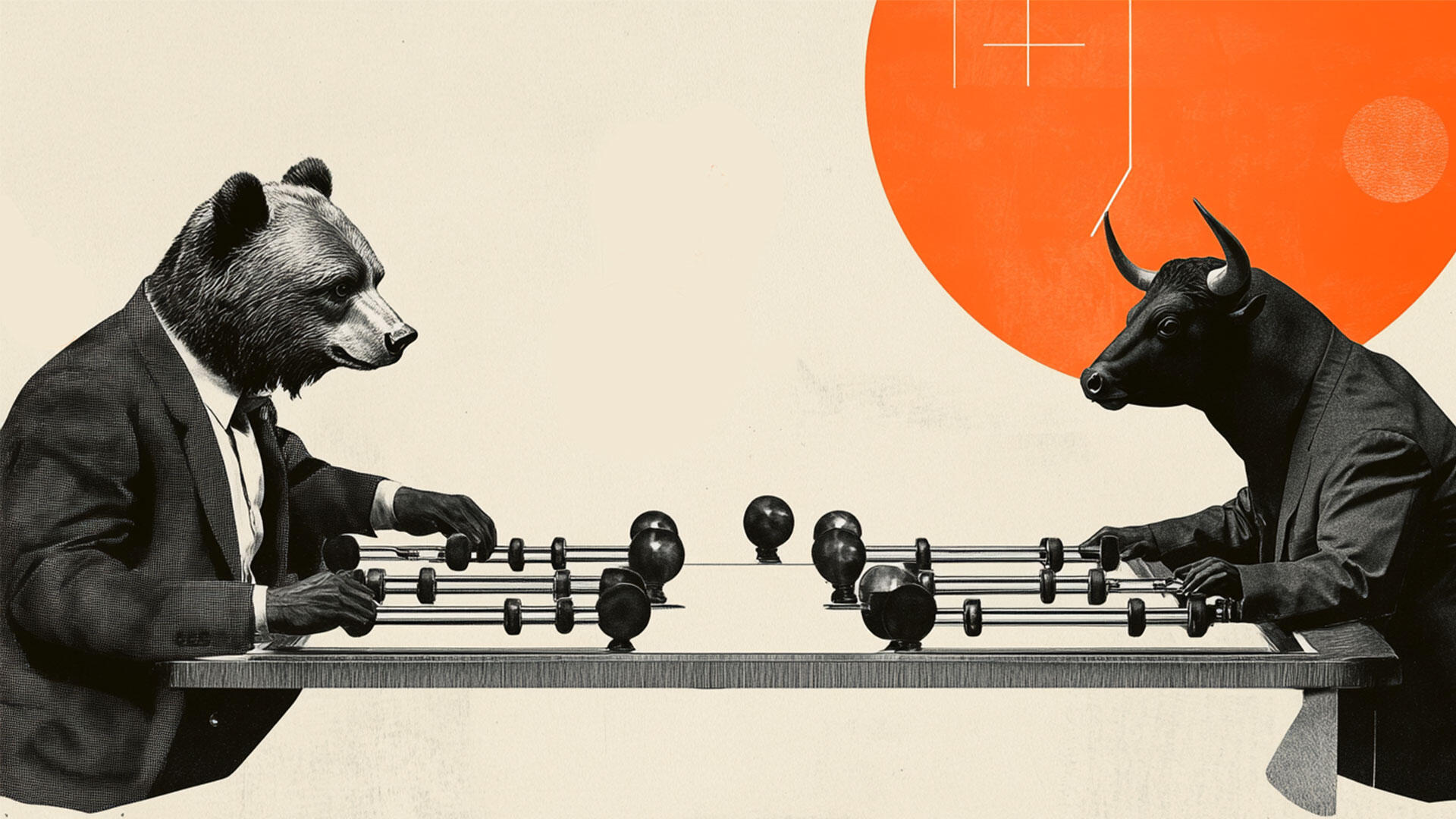
Has your trading strategy failed? It happens – Here's how to fix it for good [Video]
It's-all-too-common
It's a universal experience. You feel personally attacked or demoralised when it happens, correct?
The good news is there's a solution, which I'll share in a minute. But first, knowing the issue is key to understanding the solution.
Lost on traders is:
Trading is not waiting for a pattern or setup to appear to enter the market—that's amateur hour.
Instead:
Imagine you're a detective solving a crime. You start by gathering evidence and—like a puzzle—putting the pieces together to form a plausible thesis.
The same applies to trading. But instead of solving a crime, you're solving:
- Who's going to move the price?
- Why will they move the price?
- Where will they move the price to?
It's a fund that trades using computer-programmed models. Founder Jim Simons revealed:
"We don't want to predict price, but we want to predict when other market participants are going to do something."
Cycles, sectors, technology, and market activities are always changing, which is why trading strategies have short shelf lives.
The only approach built to last is rooted in human behaviour because human beings don't change.
But what about playbook trades?
Let me explain:
You did or still travel the same route to and from work.
But ignoring the time they take, there are alternative routes you can choose.
Price takes different routes from one price level to another regularly. Each signature trade is a map of a one of the routes price can take.
If and when the market starts agreeing with your thesis, choose the signature trade matching the current route.
Now you have accurate directions to trade your thesis. Make sense?
A note on human behaviour:
You can pay experts on human behaviour who'll tell you everything there is to know about:
- Unconscious bias,
- What happens at a brain-chemical level and,
- How it impacts decision-making.
But ask them to show you all the different ways it's expressed in the markets, and it's... crickets.
Yet the footage below is your front-row seat to a trading approach rooted in human behaviour.
Human beings don't change, so these principles have always been effective and will continue to be so in the future.
Now's the perfect time to cement your understanding of how effective trading is when based on human behaviour with the 3 minute demonstration below.
Author

Adam Fiske
Boss Trading
Adam is an industry-trained trader with 19 years of professional trading experience.