 Boris Schlossberg
BKTraders and Prop Traders Edge
The other day I stumbled across Horselover Fat’s (@Michigandolf) website where the very first thing that he says is that trading is gambling. Right away I knew this guy traded for real. Anyone who trades for more than half a second in the markets quickly learns that luck is a major factor of the day to day flows and that instead of suppressing this reality under the pretense of some statistical model we should embrace it with all our heart.
This isn’t to argue that all trading is luck as many non traders do. They look at the seeming randomness of prices and conclude success in this game is impossible to attain through skill and therefore every profitable trader is just a lucky fool whose luck will eventually run out. This also is bullshit for anyone who watches market action intently and quickly learns that there are numerous behavior patterns that repeat themselves with the frequency and consistency of New York City public transit schedule.
Of course just because the subway operates 24 hours a day, it doesn't mean that the trains are always running on time. There are million things that could derail your plans - from track fires, to 911 incidents to just plain old congestion. Variance exists everywhere and every seasoned NY commuter just like every successful trader knows that you damn well better have backup plans if you want to reach your destination.
The greatest gambler of all time was also one the greatest traders. If you’ve never heard of Ed Thorpe you need to research his career because his exploits both in Vegas and Wall Street were legendary and his ability to extract edge from seemingly “lucky” situations is a perpetual lesson in how to gamble well and tilt the odds in your favor.
In his latest column @dollarsanddata explains this process way better than I ever could.
“Have you seen the movie 21? Ever heard of the MIT blackjack team? Does the term “card counting” mean anything to you?
If so, then you already know the story of how a clever group of students were able to beat the casinos at their own game and make a fortune. They did it by playing blackjack and following a relatively simple strategy—keep a running count of how many high and low cards had been dealt, and then bet a larger amount anytime there were more high cards than low cards remaining.
This concept, known as card counting, was first popularized by the mathematician Edward Thorpe in his seminal book Beat the Dealer. Thorpe’s big revelation was that the probability of winning a particular hand changed over time based on which cards had been dealt previously. As Thorpe calculated, the standard casino edge when a player was playing perfectly was 0.21%, meaning that the casino should win 0.21% of all money wagered over time.
However, when certain cards were removed from the deck, the casino’s probability of winning changed. For example, as high cards (ace/king/queen/jack/ten) were removed, the casino’s chance of winning a particular hand increased. But, Thorpe discovered that the opposite was also true. As he stated in A Man for All Markets (emphasis mine):
‘But taking out the “small” cards, which are 2, 3, 4, 5, and 6, helped the player enormously. Removing four 5s was the best, changing the casino edge of 0.21 percent to a huge player edge of 3.29 percent.’
This meant that, in an ideal scenario, the player would go from losing 0.21% of what they wagered to winning 3.29% of what they wagered in the long run. Though this change in edge was small, it had enormous implications. These implications resulted in a new way to make money, the MIT Blackjack team, and a film that grossed $160 million at the box office.”
Card counting is the perfect analogy to understanding pattern trading. If you’ve been trading for a while you learn that there is no such thing as a good or a bad trade. There is just context. The best traders in the world learn how to filter for the most optimal context and place their bets accordingly. If you keep the mental model of card counting in your head it helps you to make better choices in the market.
I scalp on the one minute chart, so I get a look at a lot of patterns over a relatively short period of time. Reviewing price action the other day I noticed that in equities momentum almost always precedes price. So now instead of trying to catch every falling knife I see, I only trade reversals if momentum shows a clear turn. Basically I started to “remove the small cards from the deck.”
As a side benefit the process also taught me natural patience - something that I’ve never been able to achieve through discipline alone. By trading a mental model the setup makes it easy to avoid FOMO.
“Trading is gambling” metaphor should be embraced rather than discouraged. The sooner we accept this fact, the easier it becomes to see how markets really operate.
Past performance is not indicative of future results. Trading forex carries a high level of risk, and may not be suitable for all investors. The high degree of leverage can work against you as well as for you. Before deciding to trade any such leveraged products, you should carefully consider your investment objectives, level of experience, and risk appetite. The possibility exists that you could sustain a loss of some or all of your initial investment and therefore you should not invest money that you cannot afford to lose. You should be aware of all the risks associated with trading on margin, and seek advice from an independent financial advisor if you have any doubts.
Editors’ Picks

EUR/USD off highs, back to around 1.1900
EUR/USD keeps its strong bid bias in place despite recedeing to the 1.1900 zone following earlier peaks north of 1.1900 the figure on Monday. The US Dollar remains under pressure, as traders stay on the sidelines ahead of Wednesday’s key January jobs report, leaving the pair room to extend its upward trend for now.

GBP/USD hits three-day peaks, targets 1.3700
GBP/USD is clocking decent gains at the start of the week, advancing to three-day highs near 1.3670 and building on Friday’s solid performance. The better tone in the British Pound comes on the back of the intense sekk-off in the Greenback and despite re-emerging signs of a fresh government crisis in the UK.

USD/JPY bounces off lows, back above 156.00
USD/JPY is starting the week markedly on the defensive, sliding back toward the 155.50 area where it has met some decent contention for now. The move lower in spot follows FX intervention chatter after PM S. Takaichi scored a landslide win in Sunday’s election..
Editors’ Picks
EUR/USD off highs, back to around 1.1900
EUR/USD keeps its strong bid bias in place despite recedeing to the 1.1900 zone following earlier peaks north of 1.1900 the figure on Monday. The US Dollar remains under pressure, as traders stay on the sidelines ahead of Wednesday’s key January jobs report, leaving the pair room to extend its upward trend for now.
USD/JPY bounces off lows, back above 156.00
USD/JPY is starting the week markedly on the defensive, sliding back toward the 155.50 area where it has met some decent contention for now. The move lower in spot follows FX intervention chatter after PM S. Takaichi scored a landslide win in Sunday’s election..

Gold picks up pace, retargets $5,100
Gold gathers fresh steam, challenging daily highs en route to the $5,100 mark per troy ounce in the latter part of Monday’s session. The precious metal finds support from fresh signs of continued buying by the PBoC, while expectations that the Fed could lean more dovish also collaborate with the uptick.

Crypto Today: Bitcoin steadies around $70,000, Ethereum and XRP remain under pressure
Bitcoin hovers around $70,000, up near 15% from last week's low of $60,000 despite low retail demand. Ethereum delicately holds $2,000 support as weak technicals weigh amid declining futures Open Interest. XRP seeks support above $1.40 after facing rejection at $1.54 during the previous week's sharp rebound.
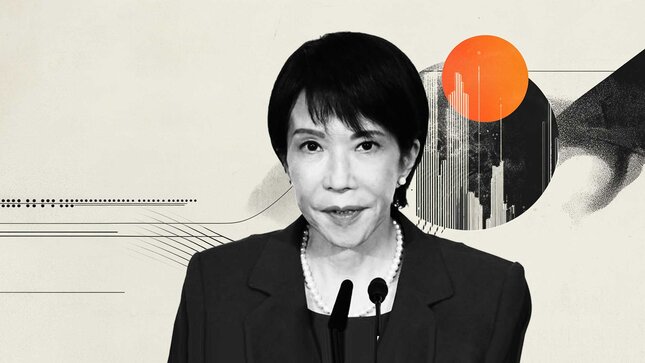
Japanese PM Takaichi nabs unprecedented victory – US data eyed this week
I do not think I would be exaggerating to say that Japanese Prime Minister Sanae Takaichi’s snap general election gamble paid off over the weekend – and then some. This secured the Liberal Democratic Party (LDP) an unprecedented mandate just three months into her tenure.
RECOMMENDED LESSONS
Making money in forex is easy if you know how the bankers trade!

I’m often mystified in my educational forex articles why so many traders struggle to make consistent money out of forex trading. The answer has more to do with what they don’t know than what they do know. After working in investment banks for 20 years many of which were as a Chief trader its second knowledge how to extract cash out of the market.
5 Forex News Events You Need To Know

In the fast moving world of currency markets where huge moves can seemingly come from nowhere, it is extremely important for new traders to learn about the various economic indicators and forex news events and releases that shape the markets. Indeed, quickly getting a handle on which data to look out for, what it means, and how to trade it can see new traders quickly become far more profitable and sets up the road to long term success.
Top 10 Chart Patterns Every Trader Should Know

Chart patterns are one of the most effective trading tools for a trader. They are pure price-action, and form on the basis of underlying buying and selling pressure. Chart patterns have a proven track-record, and traders use them to identify continuation or reversal signals, to open positions and identify price targets.
7 Ways to Avoid Forex Scams

The forex industry is recently seeing more and more scams. Here are 7 ways to avoid losing your money in such scams: Forex scams are becoming frequent. Michael Greenberg reports on luxurious expenses, including a submarine bought from the money taken from forex traders. Here’s another report of a forex fraud. So, how can we avoid falling in such forex scams?
What Are the 10 Fatal Mistakes Traders Make
Trading is exciting. Trading is hard. Trading is extremely hard. Some say that it takes more than 10,000 hours to master. Others believe that trading is the way to quick riches. They might be both wrong. What is important to know that no matter how experienced you are, mistakes will be part of the trading process.
The challenge: Timing the market and trader psychology

Successful trading often comes down to timing – entering and exiting trades at the right moments. Yet timing the market is notoriously difficult, largely because human psychology can derail even the best plans. Two powerful emotions in particular – fear and greed – tend to drive trading decisions off course.