Boring trading that revolutionises your game [Video]
![Boring trading that revolutionises your game [Video]](https://editorial.fxstreet.com/images/TechnicalAnalysis/ChartPatterns/PointFigure/hand-drawing-chart-show-70075327.jpg)
What a big week it's been in trading. So, if you're wondering:
"How can I plan for more successful trading without the stress of wild swings and increased volatility?"
Stay tuned.
It's all about the payoff: what to follow, what to trade, when to trade... How to trade, who to listen to, and what skills to develop.
But with a payoff, there's a cost: cost of losing, cost of stress and the cost of emotional discomfort...
Cost of your time, cost of research, cost to develop skills, Agree?
Keep reading to see how being more boring increases your payoff while massively reducing financial and emotional cost.
Plus, you'll get the chance to watch real-life trading to illustrate.
Being boring
Since moving to Evernote in 2020 to document my daily trading plan (game plan), I've developed 1057 plans.
Each takes 30-60 minutes for a total of 700-800 hours of planning (Yawn).
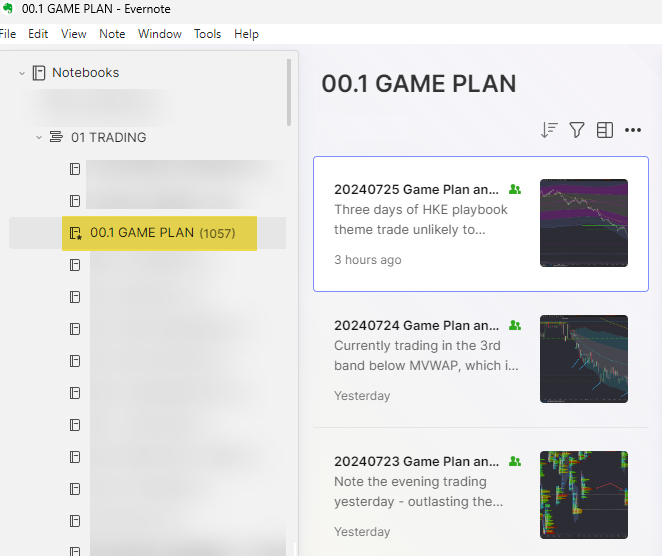
Imagine doing the same thing every single day. Boring, right? But can we get more boring? You bet.
Imagine doing the same thing daily on the same instrument for the last 1000 trading days. (More Yawn)
Specialisation payoff
Check out what Dr Brett Steenbarger has to say on specialising:
"I've seen very successful product/asset class specialists as well as macro generalists; much to be said for depth of knowledge over broad surface knowledge"
What happens next?
You become an expert at trading that instrument when you specialise.
Trading is fiercely competitive. You are up against the likes of Michael Jordan, Roger Federer, and Lionel Messi every single moment you trade.
Stop for a second to consider the luxury of being an expert in a world of superstars.
Now hold that thought while considering the following extract from a recent publication from Capital Flows Research:
"Unless you have a latency edge.... the only way to generate alpha is by having the highest quality interpretation of all relevant information.
Once you establish the correct interpretation of the data, you must time your actions correctly in order to establish a position that has a different time preference or risk tolerance than the market."
Simply put
-
You solve what the market is doing/likely to do.
-
You follow multiple points of evidence waiting for a trade you know intimately to show up.
-
You take money from the market like a world poker champion repeatedly taking the pot at a table of amateurs.
But what's in the plan?
You're okay with the daily ritual of completing a plan, the source of trades that make you money. But the problem is you need to know what goes in the plan. Right?
To illustrate, imagine a crime investigation show.
The first step in solving a homicide is to gather all crucial evidence/discard irrelevant evidence.
You'll often see a wall with photos of items and people of interest, maybe a timeline, and notes relevant to solving the crime.
But the real work is solving when, how and who.
Your game plan also gathers essential evidence. But we're not trying to solve what happened in the past; We're solving what's likely to occur in the upcoming trading session.
At a minimum, my game plan gathers the following evidence.
-
Identify market themes.
-
Determine other players' positioning.
-
Gauging buyers' or sellers' intent.
-
Determine which traders will get outplayed (trapped).
From here, I can:
-
Create a map of where, how, and how far price will move.
-
Identify where and where not to trade for the safest and easiest opportunities.
Tangible payoffs
A little-understood concept is that profits come from planning. Buying and selling are merely executing your plan.
Real-time execution is a separate skill and equally crucial for intraday traders.
But game planning is a problem-solving skill that reaches its optimum potential at approximately 50.
It is an exciting prospect if you are not there yet, knowing you'll only get better.
Or, if you are there, it's equally as exciting because it's where you can develop a genuine competitive advantage over younger traders.
You can see 90 minutes of trading from early Thursday evening—just one of many similar sequences doing exactly the same thing this week.
No emotional discomfort or stress of sitting in trades deep in the red.
Executing the plan to make money safely. Boring right?
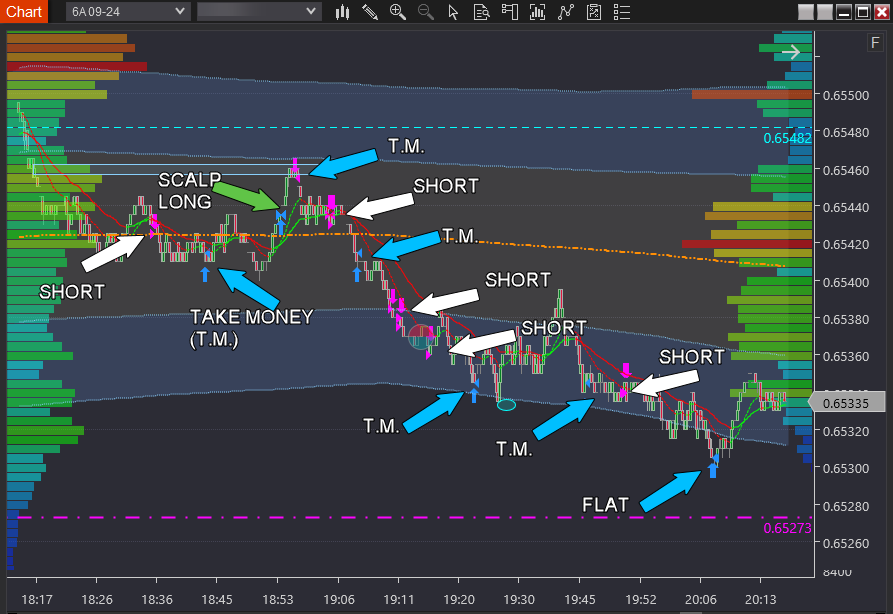
Watch the real-life trading advantages of a specialist [Video]
Author

Adam Fiske
Boss Trading
Adam is an industry-trained trader with 19 years of professional trading experience.