Ether is gaining field versus falling Bitcoin
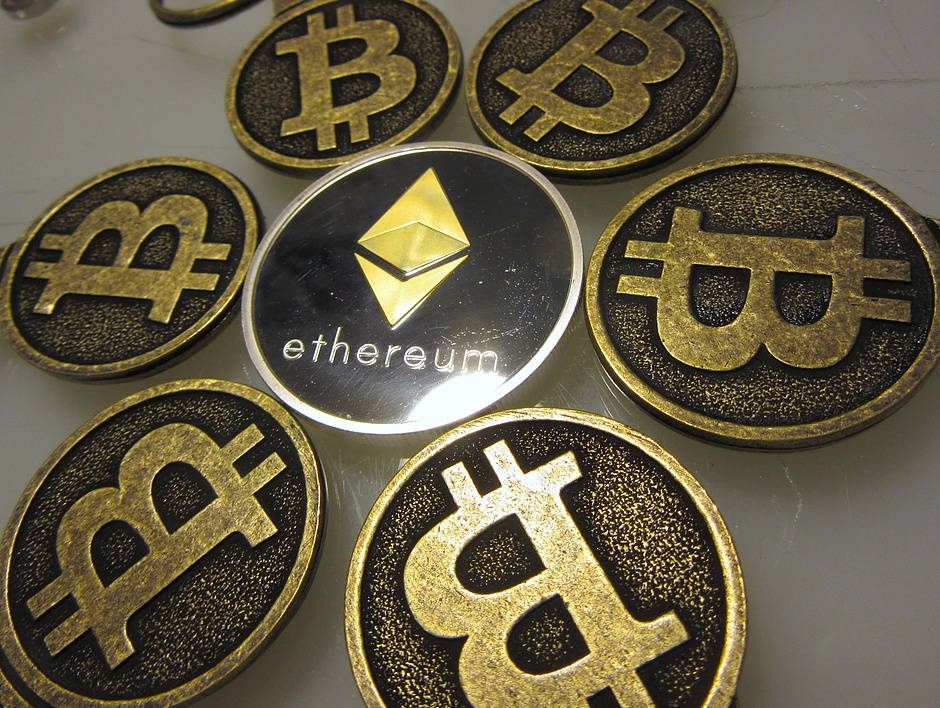

The recovery in cryptocurrency prices is running out of steam.
Bitcoins 10K resistance is certainly the most widely watched psychological level. The most popular cryptocurrency tested the $10K resistance in the continuation of the April rebound, but the failure to clear offers weighed on the short-term positive momentum across the board and sent the price of Bitcoin 20% lower from the peak.
From a technical standpoint, the move below the $8,200-support (major 38.3% retracement on April May recovery) should encourage a further downside correction to $7,850.
Some traders who have been left behind the April rebound are looking for an interesting price dip to jump on a rejuvenated rally which could eventually push Bitcoin past the 10K level. Nevertheless, the decline below the critical 8,200-support could dent the bulls' appetite in the short-run.
On the other hand, we don't rule out a possibility of a sudden pick-up in positive momentum. A rising conviction that Bitcoin would break above the 10K level could easily generate a significant upside momentum.
We maintain our three-month price target unchanged at $12,000.
Ether Online: Online gaming and the blockchain technology
Ether failed to consolidate above $800, but the ETH/BTC is rising steadily on the back of encouraging news for Ether-traders.
Ether Online has recently launched the alpha testing of Pet Rush, the very first MMORPG (massive multiplayer online role-playing) game on blockchain, where players could buy, sell their assets and earn ETH. As such, Ethereum is becoming a pioneer in online gaming industry based on blockchain technology.
Ether Online is scheduled to enter the beta stage on May 17th. Top players will be rewarded from the global jackpot every day, and early estimates show that the reward could go up to 4ETH, approximately $3000.
Ether Online is one of the first of its kind, but the online gaming on blockchain has the potential to expand further.
Time will show whether this could push Ethers price significantly higher, but the least we could say, Ethereums innovative and avant-gardist projects should pay back sooner rather than later.
The million-dollar question: Currency, Commodity or Stock?
The US Commodity Futures Trading Commission (CFTC) defined cryptocurrencies as commodities back in 2015 and even allowed the trading of futures on major cryptocoins such as Bitcoin and Ether.
Only a couple of months ago, Judge Jack Weinstein, a New Yok district judge, also stated that virtual currencies are goods exchanged in a market for a uniform quantity and value and they fall well within the common definition of commodity. He concluded that therefore, cryptocurrencies can be regulated by CFTC as a commodity.
In the meantime, the Financial Commission has launched ICC, a committee certifying new ICOs in the same way than the forex industry.
But, as cryptocurrencies become increasingly known to investors and policymakers, it becomes obvious that many of them have stock-like properties.
A quick glance to Ethereum, Ripple and Bitcoin Cash reveals that they indeed have company-like structures and operations.
Therefore, lawmakers are now discussing whether the cryptocurrencies, or at least some of them, should be regulated as stocks rather than commodities.
The latter reasoning makes sense. But more importantly, this consideration grants value to some of the major cryptocurrencies, which do have valuable underlying operating systems and products.
Hence, it could be safe to say that at least a part of the April price recovery in some major cryptocurrencies, including Ether, has been fundamentally justified.
Author
Ipek Ozkardeskaya
Swissquote Bank Ltd
Ipek Ozkardeskaya began her financial career in 2010 in the structured products desk of the Swiss Banque Cantonale Vaudoise. She worked in HSBC Private Bank in Geneva in relation to high and ultra-high-net-worth clients.