USD/CAD Forecast: CAD continues climbing on NAFTA, all eyes on the jobs report
- The Canadian Dollar continues enjoying progress on NAFTA talks.
- The main event of the week is the Canadian jobs report.
- The technical picture looks bearish on the USD/CAD but the medium and long-term bias on the FX Poll is bullish.

This was the week: NAFTA and GDP help
The Canadian Dollar continued getting a boost from the talks on the North American Free Trade Agreement (NAFTA). While most progress has been made on the US-Mexican front, a full NAFTA deal will undoubtedly remove the dark clouds from the Canadian economy and the currency..
In addition, Canadian monthly GDP for May rose by 0.5%, above expectations. The economy is finally enjoying a spring bounce.
In the US, the Fed left the interest rate unchanged and slightly upgraded its wording on the economy. A rate hike in September is on the cards. Worsening trade relations between the US and China pushed the greenback higher against some currencies, but not against the C$.
Canadian events: Jobs report closely watched
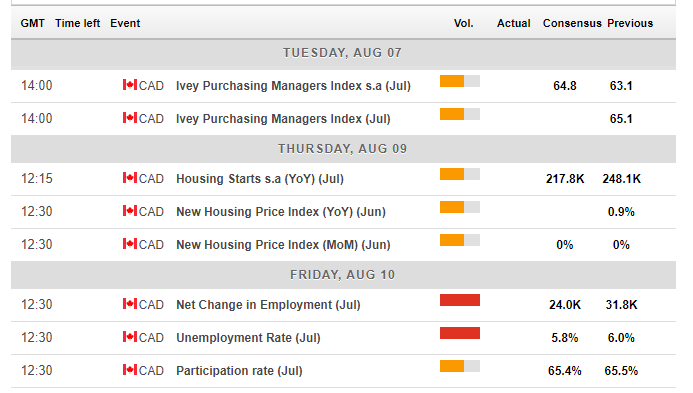
The week begins with the Ivey Purchasing Managers' Index which carries expectations for another increase on high ground. Housing starts, which have been upbeat, will likely drop from the highs. The New House Price Index (NHPI) is also of interest.
However, the best is kept for last: the jobs report. After two months of job losses, Canada enjoyed a significant increase in jobs in June: 31,800. Another meaningful rise is on the cards and the unemployment rate is expected to drop from 6% seen last time. Any change in the jobless rate should be measured against changes in the participation rate. The composition of jobs and wages could also play a role if the headline figure comes out within expectations.
Here is the Canadian calendar for this week.
US events: Inflation eyed
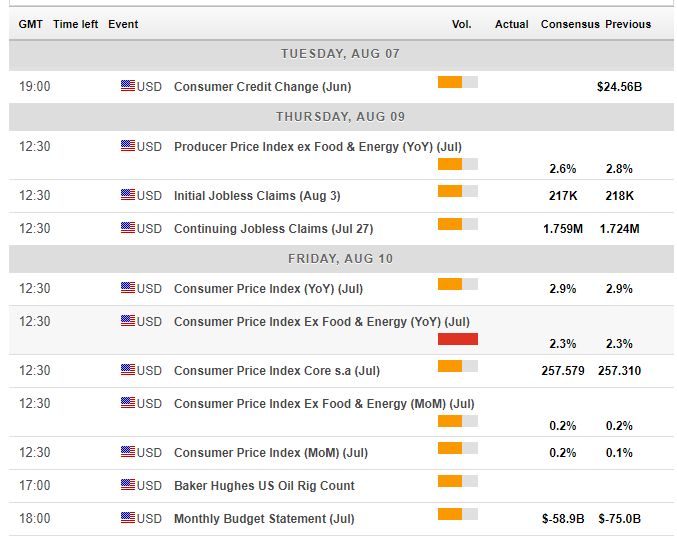
After the Fed and the Non-Farm Payrolls, the US calendar is lighter now. The Producer Price Index is of interest after reaching high levels. It also serves as a warm-up towards Friday's big event: the Consumer Price Index.
Core CPI, which is of interest to the Federal Reserve, accelerated to 2.3% YoY in June. The same level is forecast for July. Any faster pace could make the case for a faster pace of rate hikes. A drop would be disappointing.
Here are the critical American events from the forex calendar:
USD/CAD Technical Analysis
The pair dropped below the 50-day Simple Moving Average, a bearish sign. It still trades significantly above the 200-day SMA. The Relative Strength Index (RSI) and Momentum are only marginally down. All in all, the bias is very slightly bearish.
1.2970 was the low point at the wake of August. Further down, 1.2860 was a swing low in early June. Lower, 1.2730 supported the pair back in May.
The USD/CAD has some resistance at 1.3100 that separated ranges in July and is also a round number. 1.3220 capped the pair in mid-July and stronger resistance awaits at 1.3295 which held the USD/CAD down later in the month.
-636688866602387825.png)
USD/CAD Sentiment
While Trump is quite unpredictable, a crisis in NAFTA talks seems to have lower chances than further progress. A deal that sidelines Canada may weigh on the loonie but this also seems unlikely, at least now. Under these circumstances and with an improving Canadian economy, there is room for the C$ to rise and the USD/CAD to fall.
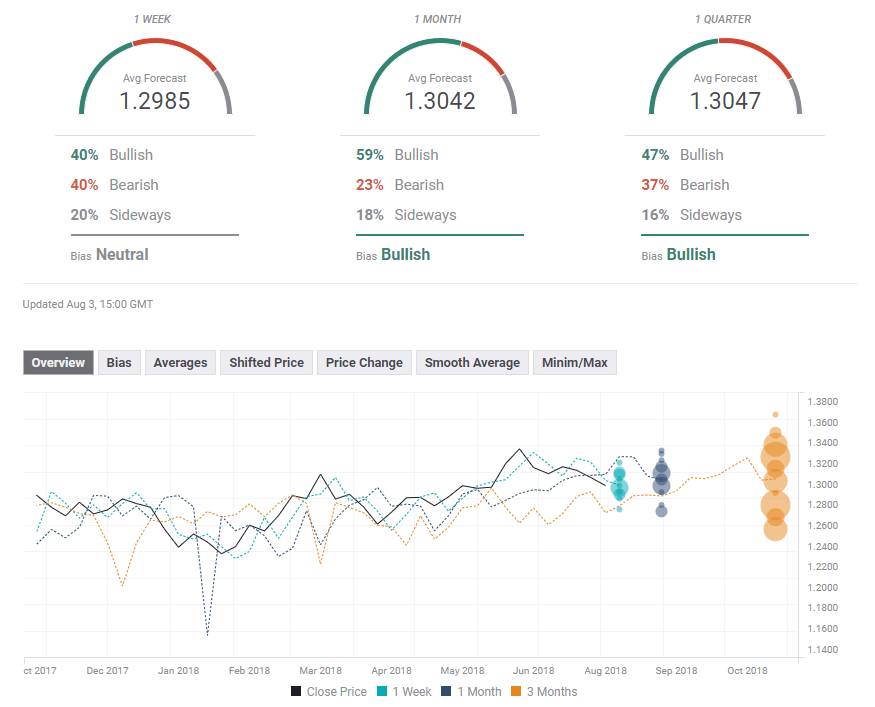
The FXStreet forex poll of experts shows a neutral tendency in the short term but bullish in the medium and longer terms. The bias has become more bullish in the medium and longer terms.
Related Forecasts
Author

Yohay Elam
FXStreet
Yohay is in Forex since 2008 when he founded Forex Crunch, a blog crafted in his free time that turned into a fully-fledged currency website later sold to Finixio.