US Non-Manufacturing Purchasing Managers’ Index Preview: Manufacturing leads the way

- Service sector index forecast to decline after February’s strong rebound
- Manufacturing PMI was unexpectedly stronger in February
- Recovering manufacturing orders point to improved service performance
The Institute for Supply Management (ISM) will release its non-manufacturing Purchasing Managers’ Index for March on April 3rd at 10:00 am EDT, 14:00 GMT.
Forecast
The non-manufacturing index is predicted to drop to 58.0 in March from 59.7 in February. The business activity index is expected to fall to 61.5 from 64.7. The employment index was 55.2 in February and 57.8 in January. The new orders index was 65.2 in February and 57.7 in January.
Business sentiment in 2018
Optimism in the US business community saw its highest levels in a generation in the last half of 2018.
Manufacturing PMI
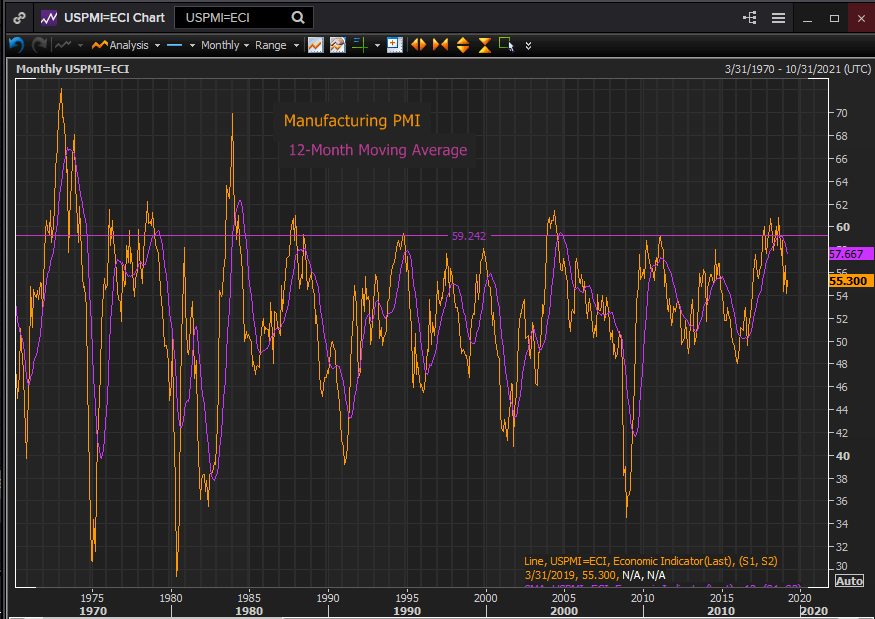
The manufacturing index reached 60.8 in August the highest since September 2004. The 12- month average scored 59.242 in November the best since November 2004 and one of the four highest measures in since 1984.
The 35 day partial government shutdown that ended in late January helped drop the manufacturing gauge to 54.3 in December. After an unexpected jump to 56.6 in January it slipped in February to 54.2 the lowest it had been since November 2016.
The March statistic that was released on April 1st had been forecast to rise modestly to 54.5. Instead it climbed to 55.3 well above the 50 division between expansion and contraction.
The important new orders index a gauge of future business moved up to 57.4 in March and has now improved more than 6 six points from its December low at 51.3.
Reuters
Service PMI
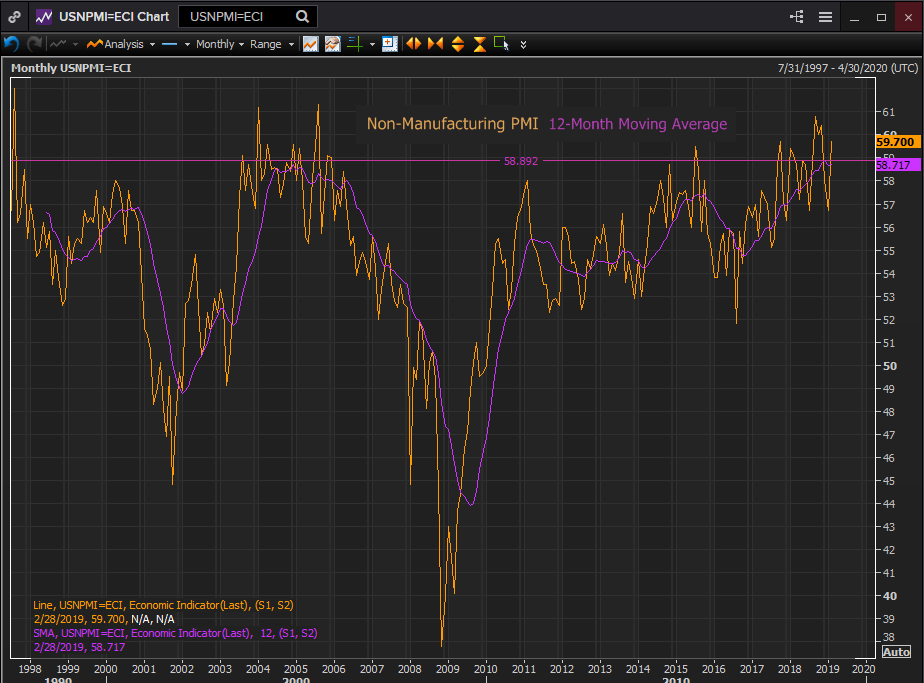
The non-manufacturing PMI also touched 60.8 in September its best level in 13 years. The 12-month moving average was 58.892 in December the highest in 21 year history of the series. The shutdown dropped the index to 56.7 in January from 60.4 in November. The strong rebound in February to 59.7 was well over the 57.3 prediction, and coupled with the better than expected result in the manufacturing index suggests there is still vitality in the much larger service sector.
Reuters
With most other measures of US economic performance, from the labor market to wages and consumer sentiment shedding whatever inhibitions that may have extended from the political drama in Washington, and with the bounce in manufacturing new orders, optimism in the service sector, 70% of the US economy, will likely take another healthy leg higher in March
Author

Joseph Trevisani
FXStreet
Joseph Trevisani began his thirty-year career in the financial markets at Credit Suisse in New York and Singapore where he worked for 12 years as an interbank currency trader and trading desk manager.
















