Stocks fall, oil and gold rise as tensions increase

European stocks declined sharply on Monday as investors continued focusing on the escalating situation in Russia. In Germany, the DAX dropped by more than 2% as the main bourse suspended trading of Russian companies like VTB and Sberbank. In France and the UK, the CAC 40 and FTSE 100 dropped by more than 2.50%. Some of the worst performing stocks in the UK are those that have an exposure to the Russian market. For example, BP shares dropped by over 5% after the company disposed its stake in Rosneft, a Russian energy company. Evraz shares tumbled by over 27% because of its ownership structure that includes Roman Abromavich. On the other hand, defense companies like BAE Systems jumped.
The price of crude oil, natural gas, and wheat soared on Monday because of their relationship with Russia. Russia is the biggest gas provider in Europe and the third-biggest oil producer in the world after the US and Saudi Arabia. It is also the biggest wheat producer in the world. The main reason is that many companies will find it difficult to pay for Russian goods now that many of its banks have been blocked from the SWIFT network. At the same time, Saudi Arabia hinted that it will stick with the OPEC+ plan to gradually increase supplies.
Gold and the US dollar tilted upwards on Monday as investors rushed to safe-havens. Gold rose to a high of $1,927 while the US dollar rose against most currencies. This happened as the US and other western countries decided to disconnect some Russian banks from the SWIFT network. As a result, the European division of Sberbank said that it could go bankrupt in the near term. The Russian central bank was also forced to suspend trading at the Moscow stock exchange and double its interest rate as the ruble crashed.
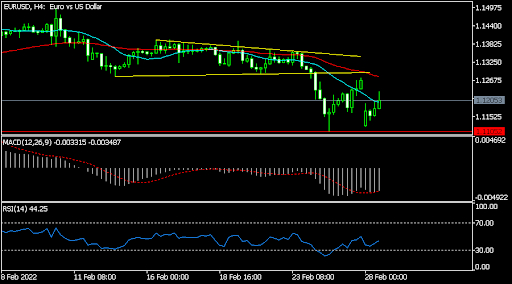
EUR/USD
The EURUSD pair retreated to a low of 1.1120, which was the lowest level since last week. The pair then crawled back as investors moved to buy the dips. It has moved slightly above the 25-day moving average while the Relative Strength Index (RSI) and MACD have moved upwards. Still, the pair will likely continue moving in an upward trend in the near term.
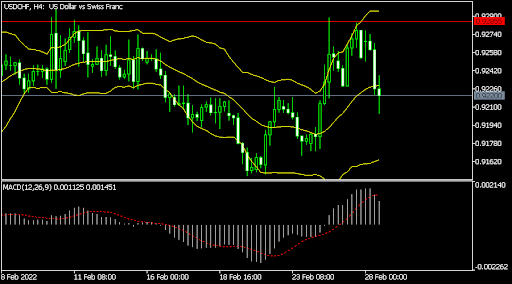
USD/CHF
The USDCHF pair declined to a low of 0.9200, which was the lowest level since February 24th. The price action happened as investors moved to the Swiss franc, which is often seen as a safe haven. It has moved slightly below the key resistance level at 0.9285, which was the highest point last week. It has moved below the neutral line of the Bollinger Bands. The pair will likely keep falling in the near term.
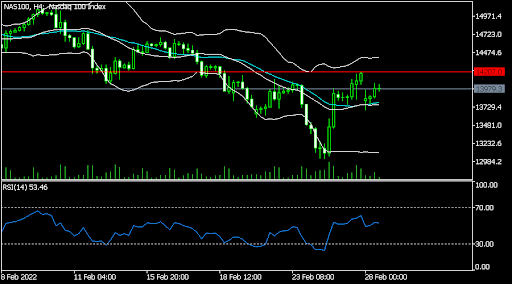
NAS100
The Nasdaq 100 index futures declined to a low of $13,700 as worries about Russia continued. It has recovered some of its losses and is currently trading at $13,975. The pair has moved slightly above the middle line of the Bollinger Bands. The pair will likely keep rising as bulls target last week’s high of $14,200.
Author

OctaFx Analyst Team
OctaFX
OctaFX is a market-leading forex broker, providing personalised forex brokerage services to customers in over 100 countries worldwide.