EUR/USD Weekly Forecast: ECB and US Treasury yields to make it or break it
- Federal Reserve chief Powell pushed government bond yields to fresh one-year highs.
- The European Central Bank may step up the pace of assets purchases in its next meeting.
- EUR/USD has bounced just modestly from a critical Fibonacci support level.

The EUR/USD pair fell to a fresh 2021 low at 1.1892 this week, ending with a handful of pips above this level. The dollar soared across the board following comments from the head of US Federal Reserve Jerome Powell.
Powell revived yields’ frenzy
In a televised interview on Thursday, Powell repeated that the outlook is becoming more positive but remarked that “sustained” progress toward the Fed goals on employment and inflation. A rate hike won’t occur until inflation runs above 2% for some time, something that won’t happen anytime soon. When asked about Treasury yields, he noted that they are not a condition for changing the current monetary policy, adding that substantial progress towards employment and inflation targets is needed.
Treasury yields, which stayed muted until Wednesday, soared with Powell’s words to fresh one-year highs, boosting the greenback. The yield on the benchmark 10-year note topped 1.62% on Friday to settle at around 1.59%.
This week, US President Joe Biden said that he hopes to have coronavirus vaccines available for every American adult by the ends of May, ahead of the previous estimate. There are hopes are of a sooner economic comeback in the country, which would help lift inflation. This would twist the Fed’s hand into raising rates and tightening QE. Policymakers, however, don’t share such a view. If yields keep rallying, the US central bank may have no choice but to include yield-curve control among its policies. The Federal Reserve will have its next monetary policy on March 17.
European economic comeback at risk
Data wise, European figures were worrisome, as preventive lockdowns continue in the Union, with some countries extending them into April. Two particular macroeconomic figures sounded the alarm. January Retail Sales plummeted in Germany and the EU, while services output remained in contraction territory in February, according to Markit. Slow progress in covid immunization in the EU adds to the gloom perspective. Inflation in Germany picked up, but that of the euro area remained subdued in February, according to preliminary estimates.
In the US, the official ISM Manufacturing PMI jumped to 60.8 in February, but the services index resulted at 55.3, down from 58.7 previously. Employment-related data resulted upbeat, as the February Nonfarm Payroll report showed that the country added 379K new positions, more than doubling the market’s expectations. Still, the country has roughly 9.6 million jobs in order to return to pre-pandemic employment levels.
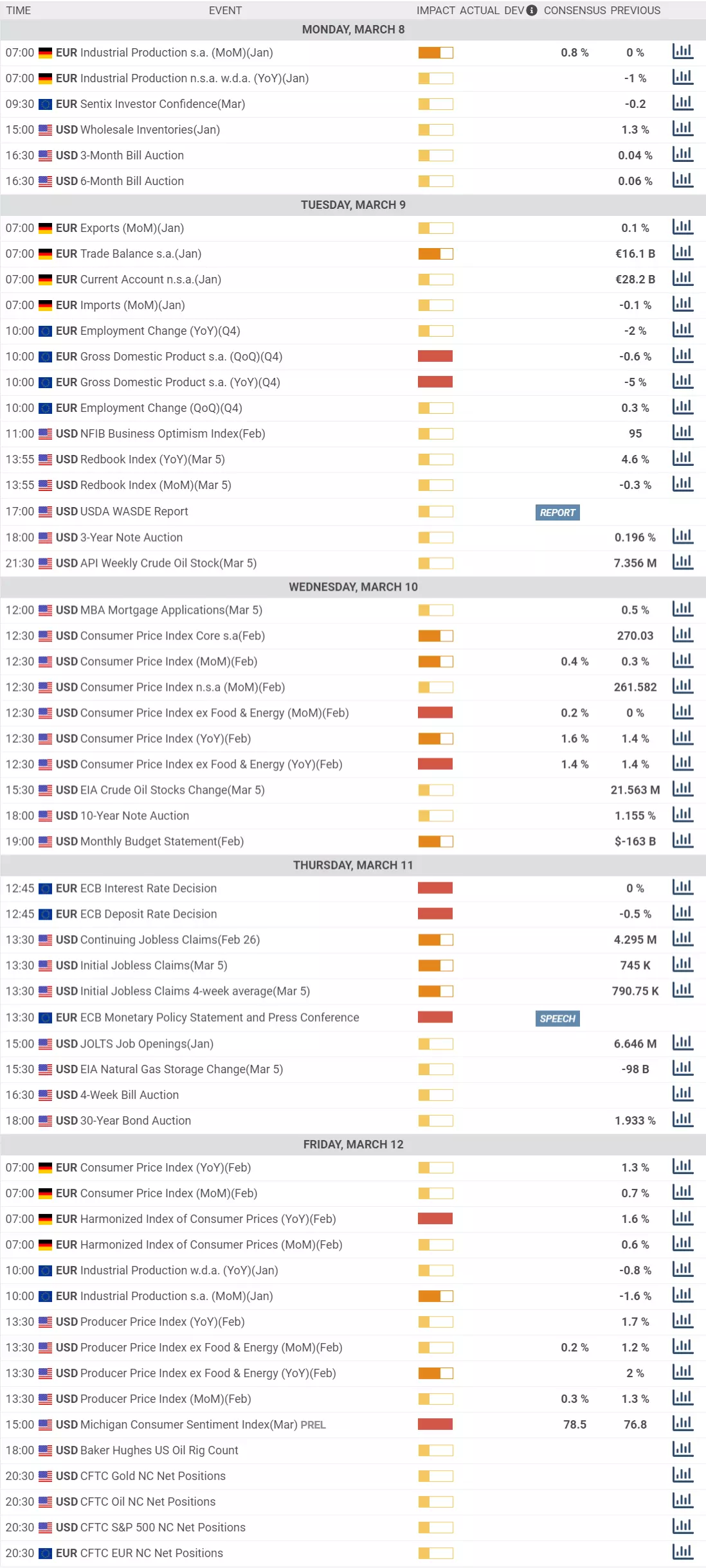
The European Central Bank decision on monetary policy will be the most relevant event next week. Policymakers will likely keep rates on hold but could step up the pace of assets purchases to counter rising bond yields, which could hurt growth prospects.
The EU will publish a revision of its Q4 Gross Domestic Product and March Sentix Investor Confidence, while Germany will release January Industrial Production and the final readings of February inflation.
In the US, the focus will be on inflation and employment-related data. On Friday, the country will publish the preliminary estimate of the March Michigan Consumer Sentiment Index. Nevertheless, yields will likely stay as the main market motor.
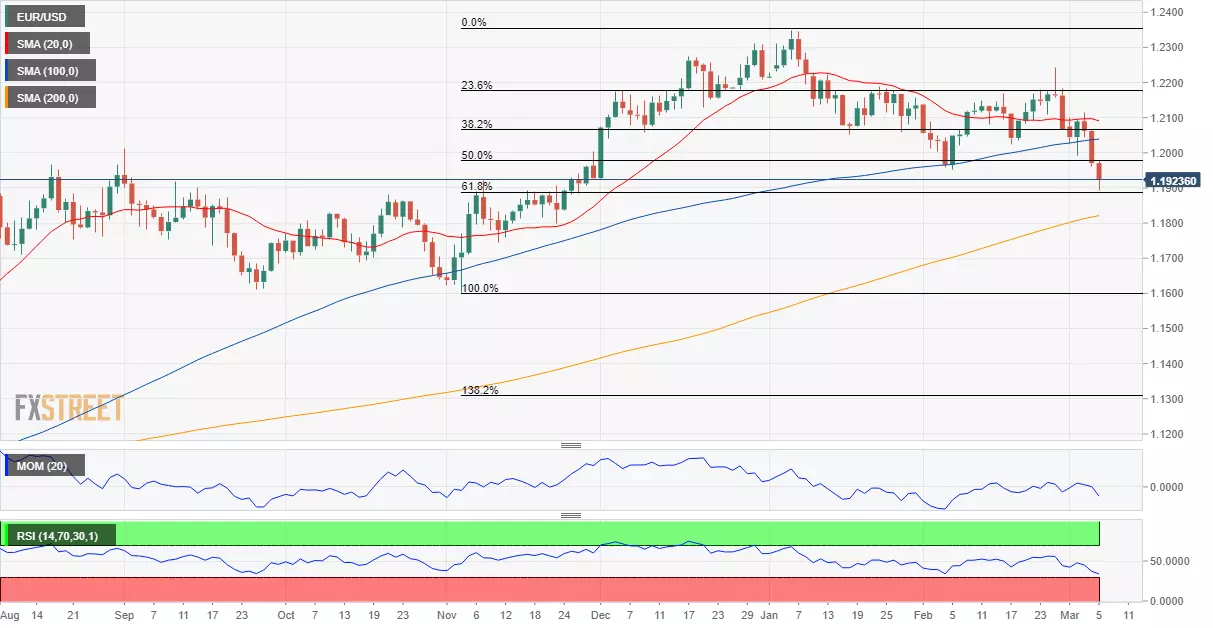
EUR/USD technical outlook
The EUR/USD is down for a second consecutive week and at risk of falling further. The pair is approaching the 61.8% retracement of the November/January rally at 1.1885. The risk has turned south according to the weekly chart, as the pair has broken below its 20 SMA for the first time this year. Technical indicators turned sharply lower, with the Momentum defying its midline and the RSI currently at 49, both hinting another leg south.
In the daily chart, technical readings suggest a bearish continuation ahead, as indicators maintain their downward slopes near oversold readings. The pair has failed to recover beyond a directionless 20 SMA and broke below its 100 SMA. Technical indicators maintain strong bearish slopes near oversold readings. Below 1.1885, the next support level is the 1.1800 figure, en route to 1.1745. The immediate resistance is 1.1970, followed by 1.2060.
EUR/USD sentiment poll
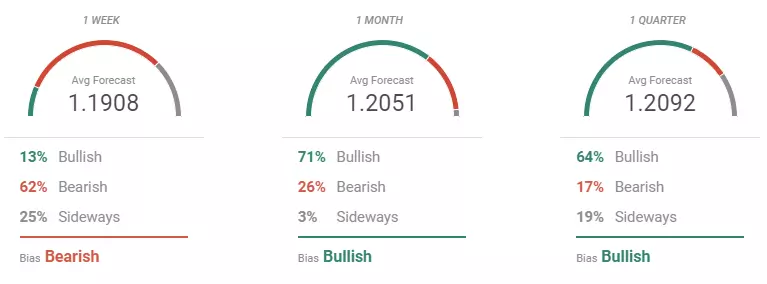
The FXStreet Forecast Poll indicates that the pair will likely continue to fall next week, as 62% of the polled experts are bearish. The average target is 1.1908. However, bulls jump from 13% to 71% in the monthly perspective, with the pair seen back above 1.2000 in the weeks to come. Those seeing the pair up dominate also the quarterly perspective.
In the Overview chart, the weekly and monthly moving averages have turned sharply lower, while the longer-term one maintains its neutral stance. Still, the same chart shows that lower targets have been added, somehow indicating a better perspective for the greenback.
Related Forecasts:
GBP/USD Weekly Forecast: Boris' reopening insufficient vs King Dollar as stimulus set for sign-off
Author

Valeria Bednarik
FXStreet
Valeria Bednarik was born and lives in Buenos Aires, Argentina. Her passion for math and numbers pushed her into studying economics in her younger years.
















