Bank of England lowers the growth forecast as Brexit uncertainty makes more damage
- The MPC voted unanimously to maintain Bank rate at 0.75%.
- The Committee also voted unanimously to maintain the stock of UK government bond purchases, financed by the issuance of central bank reserves, at £435 billion.
- UK economic growth slowed in late 2018 and appears to have weakened further in early 2019 as Brexit is set to make more damage than originally estimated.
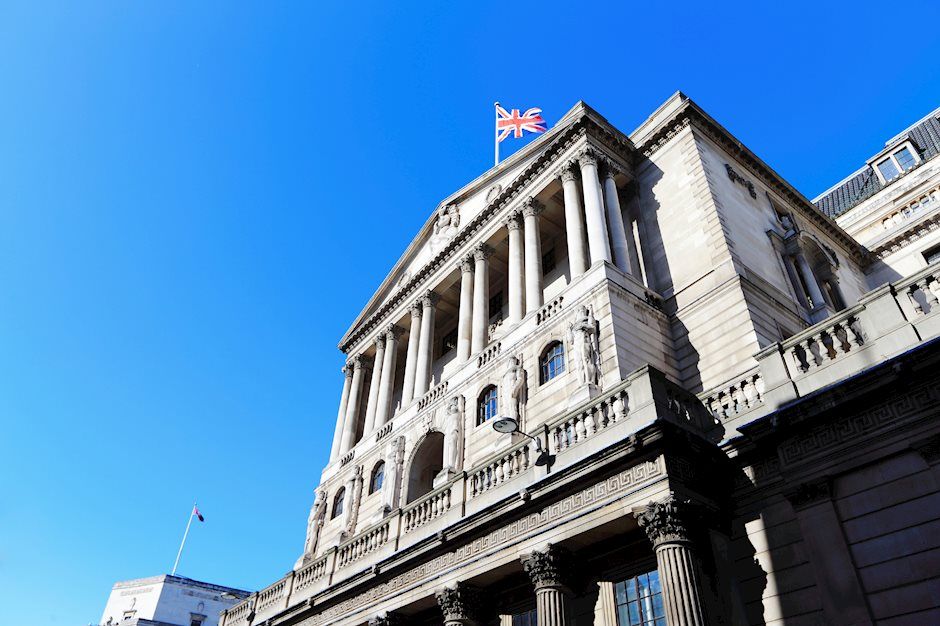

The Bank of England’s Monetary Policy Committee (MPC) held the Bank rate and the stock of the assets purchased unchanged in line with the market expectations while citing Brexit uncertainties ion lowering the short-term outlook for the UK growth.
The Bank of England cited its own research in Agents summary to confirm that more than half of the UK companies began to implement no-deal Brexit contingency plans. Moreover, the Brexit uncertainty could lead to greater volatility of the economic data that would, in turn, be less of a signal for the outlook. Overall the Bank of England cuts growth forecast to 1.2% y/y for the final quarter of 2018 from November's 1.7% y/y as Brexit damage probability increased.
“The UK economic growth slowed in late 2018 and appears to have weakened further in early 2019,” the Bank of England wrote in a statement on Thursday. The Bank of England lowered the forecast for 2019 by 0.4% and that is the biggest cut since August 2016 and represents the weakest annual GDP growth rate since 2009.
In terms of the main policy target, the inflation, the MPC saw inflation dropping to 2.1% in December, but expects it to decline to 2% due to oil price effect with more enduring long-term effects coming to play in the second half of the forecast three-year period.
“Demand growth exceeds the subdued pace of supply growth and excess demand builds over the second half of the forecast period. As a result, domestic inflationary pressures firm, as the upward pressure on inflation of Sterling's past depreciation wanes,” The Bank of England wrote in a statement.
The main reason is the Brexit uncertainty as the Bank of England said that the economic outlook will continue to depend significantly on the nature of EU withdrawal, in particular: the new trading arrangements between the European Union and the United Kingdom; whether the transition to them is abrupt or smooth.
The MPC though warned that the monetary policy response to Brexit, whatever form it takes, will not be automatic and could be in either direction, repeating the outlook for its "gradual and limited" monetary policy tightening outlook.
Author
Mario Blascak, PhD
Independent Analyst
Dr. Mário Blaščák worked in professional finance and banking for 15 years before moving to journalism. While working for Austrian and German banks, he specialized in covering markets and macroeconomics.