XAU/USD at near-two month highs, bulls eye retest of $1830
- Spot gold hit its highest level in nearly two months above $1815 in recent trade, boosted as US yields drop.
- The precious metal has pulled off an impressive recovery from Thursday lows around $1760.

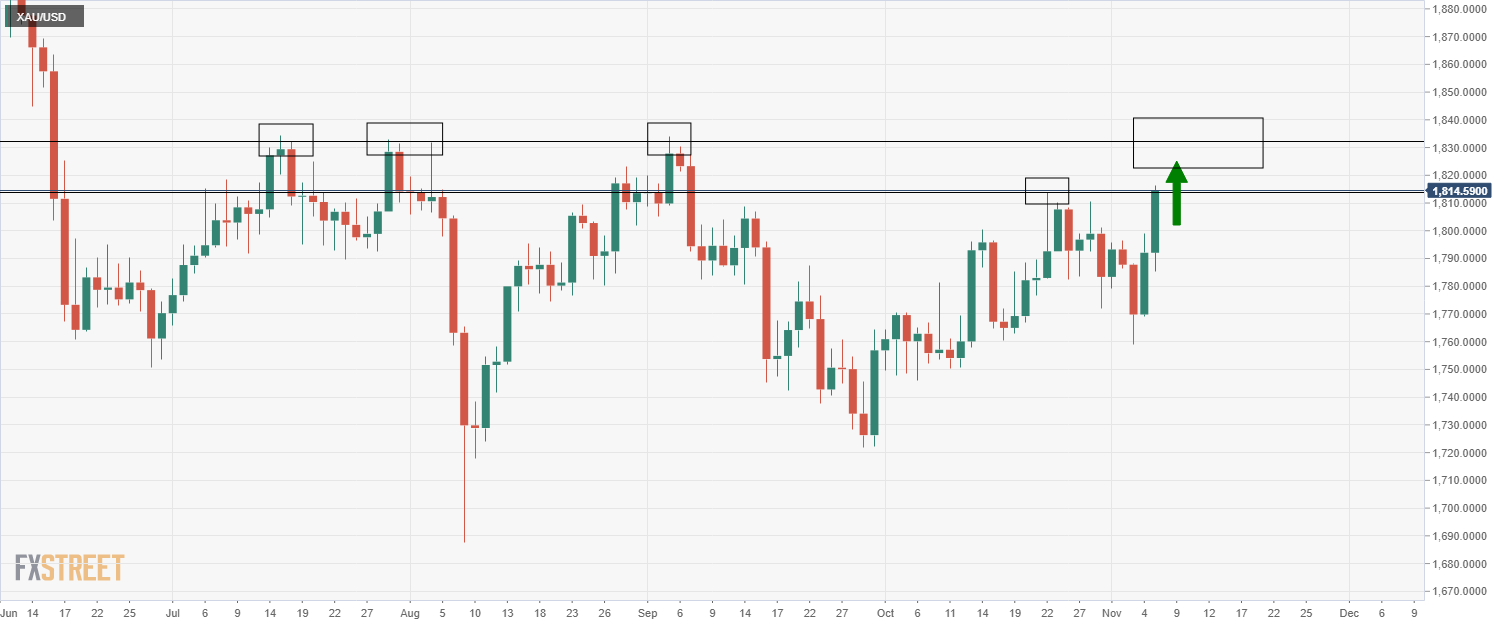
Spot gold (XAU/USD) hit two-month highs on Friday, printing highs in the $1815.00s, slightly above the October high at $1813.85. With spot prices now up over $20 on the day, that marks an impressive more than $50 turn-around from previous weekly lows around the $1790 mark set on Wednesday. If prices can manage a clean break above the October highs, that could open the door to an extension of gains towards the next key area of support, a quadruple top in the low $1830s that gold was unable to get above despite multiple tests in July, August and September.
Yields fall sharply
A sharp decline in long-term US government borrowing costs, which reduces the opportunity cost of holding precious metals, thus incentivizing market participants to invest, has been the major fact driving the gains on Friday, as was also the case on Thursday when the precious metal recovered sharply from weekly lows. For reference, US 10-year yields have fallen sharply from around 1.55% to 1.45%, despite the strong US labour market report released ahead of the US market open and a similar move lower has also been witnessed in US real yields, with the 10-year TIPS dropping sharply from around -1.03% to current levels around -1.10%. Gold’s cause is also helped by the fact that the US dollar has pulled back after hitting fresh year-to-date highs earlier in the session. The Dollar Index is now flat on the day at 94.30 having at one point been above 94.60.
What's driving the drop in yields?
Some analysts are perplexed by the market’s reaction to the October US jobs report, which saw headline payrolls beat expectations by 100K, a positive revision to the September payroll number of more than 100K, a larger than expected fall in the unemployment rate and a further rise in the YoY rate of wage growth. Typically, a better-than-expected US labour market report would be expected to boost optimism about the health of the US economy and boost the likelihood that the Fed is going to be more hawkish, thus pushing up interest rates and bond yields (and the dollar).
One reason why this may not have been the case is the fact that markets may still be focused on this week’s plethora of central bank updates rather than on US economic data; the RBA, Fed and BoE all issued monetary policy decisions and while the Fed was interpreted quite neutrally by markets, the RBA and BoE were interpreted as unequivocally dovish, contributing to a broad-based decline in global bond yields, which seems to have carried over into Friday. Some also cited technical buying of the US 10-year bond as it broke a key area of resistance to the upside (when prices rise yields fall and in terms of yields, this area of support was around 1.51%).
Another reason why bonds might have dropped sharply could be because markets have also been quite heavily focussed on who US President Joe Biden is going to pick as his next Fed Chair. Odds this morning favoured Jerome Powell’s reappointment, given that he was spotted visiting the White House on Thursday. But since then, both Powell and fellow Board of Governors member Lael Brainard (who is VERY popular in the Democrat party) have been spotted at the White House, which has increased speculation that Brainard might get the nod. Recently, Brainard has been seen as one of the more dovish Fed members (who is seen as preferring to prioritize getting the US back to full-employment rather than prioritising bringing down inflation), so her nomination might be harmful to the prospect of rate hikes in 2022.
Author

Joel Frank
Independent Analyst
Joel Frank is an economics graduate from the University of Birmingham and has worked as a full-time financial market analyst since 2018, specialising in the coverage of how developments in the global economy impact financial asset