Ueda Speech: BoJ Governor speaks on interest rate outlook after the expected hike
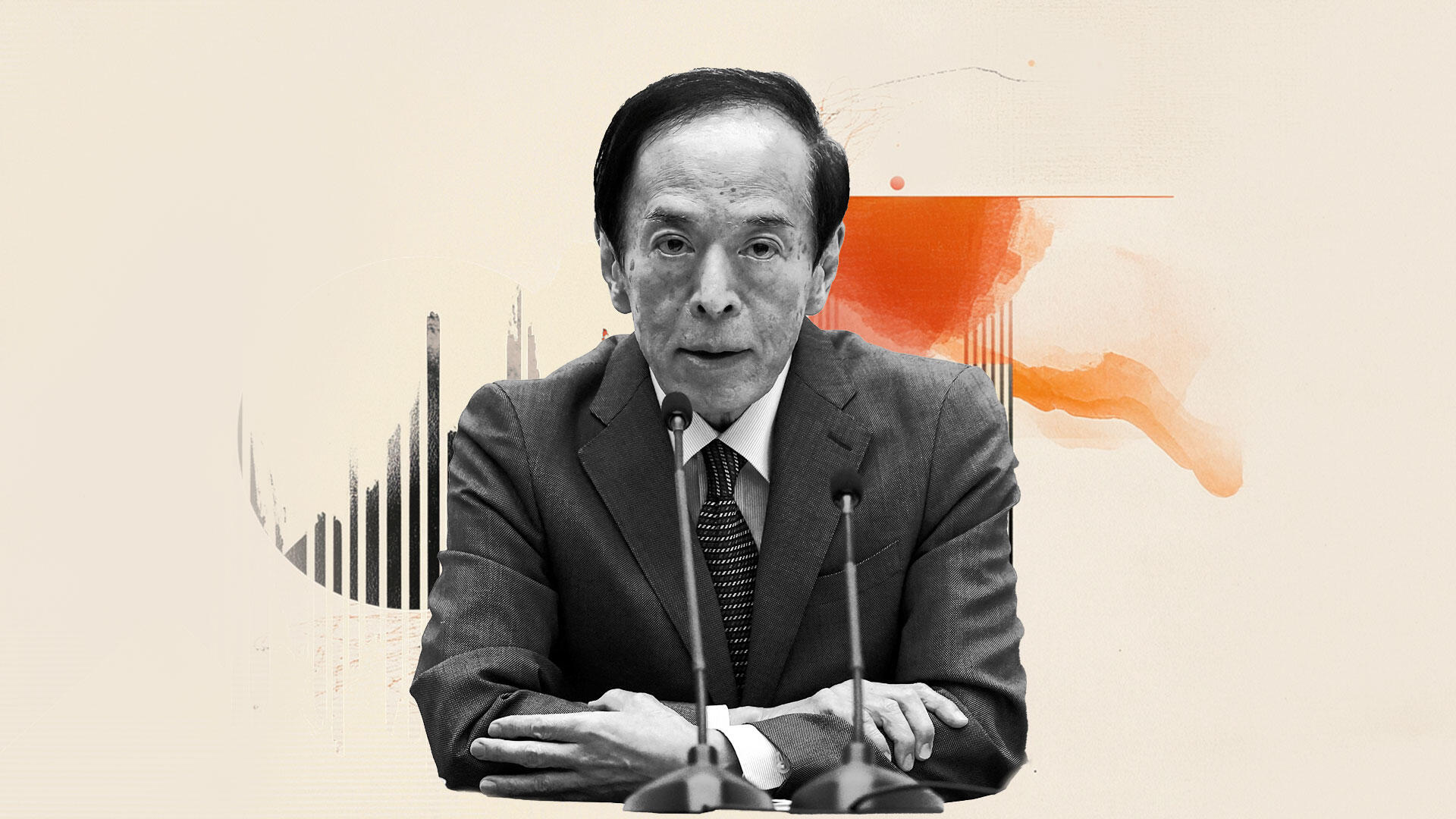
Bank of Japan (BoJ) Governor Kazuo Ueda is speaking at a press conference, explaining the reasons behind raising the key interest rate by 25 basis points (bps) to 0.75% on Friday.
BoJ press conference key highlights
Will continue to raise policy rate if economy, prices move in line with forecast, in accordance with improvements in economy, prices.
On US economy, trade policies: uncertainties remain but have declined.
No special meaning to 30-year high level in short-term rates.
Will closely look at impact of latest rate change.
Still some distance to lower end of range of neutral rate.
Several board members suggested recent weak Yen possibly affecting underlying inflation.
Don't expect to be able to provide a much narrower range for neutral rate right away.
Policy focuses on underlying inflation, when asked about possibilities of rate hike even headline inflation subsides.
Rate hike is 'indeed possible' if wage rises wold continue to spill out to prices.
Underlying inflation would not come down if wages rise.
Economic Indicator
BoJ Press Conference
The Bank of Japan (BoJ) holds a press conference at the end of each one of its eight scheduled policy meetings. At the press conference the Governor of the BoJ communicates with media representatives and investors regarding monetary policy. The Governor talks about the factors that affect the most recent interest rate decision, the overall economic outlook, inflation, and clues regarding future monetary policy. Hawkish comments tend to boost the Japanese Yen (JPY), while a dovish message tends to weaken it.
Read more.Next release: Fri Dec 19, 2025 06:30
Frequency: Irregular
Consensus: -
Previous: -
Source: Bank of Japan
The section below was published on December 19 at 03:25 GMT to cover the Bank of Japan's monetary policy announcements and the initial market reaction.
The Bank of Japan (BoJ) board members decided to raise the short-term interest rate by 25-basis-point (bps) to 0.75% from 0.50% following the conclusion of its two-day monetary policy review meeting on Friday.
The decision came in line with the market expectations.
The Japanese central bank raised benchmark interest rates to its highest in 30 years, as it seeks to move ahead with policy normalization set forth last year.
Summary of the BoJ policy statement
Summary of the BoJ policy statement
BoJ makes policy decision by unanimous vote.
Real interest rates are expected to remain at significantly low levels.
Will continue to raise policy rate if economy, prices move in line with forecast, in accordance with improvements in economy, prices.
Will conduct monetary policy as appropriate from perspective of sustainably, stably achieving 2% inflation target.
Wage, inflation likely to continue rising moderately in tandem.
Economy has recovered moderately although some weakness seen.
Labour market conditions have continued to be tight, corporate profits to remain at high levels on whole.
Japan's economic growth is likely to be moderate.
The likelihood of realizing the baseline scenario has been rising.
Even after rate change, real interest rates remain deeply negative.
Real interest rates are expected to remain significantly negative.
Even after rate change, monetary environment remains accomodative, support economy.
Considering such factors as labour and management on spring wage talks, highly likely that firms will continue to raise wages steadily next year.
While uncertainties remain over US Economy and impact of trade policy, these uncertainties have declinedunderlying CPI inflation has continued to rise moderately
BoJ board member Takata opposed the description regarding the outlook for prices, considering that the level of therate of increase in the CPI, including underlying CPI inflation, already had generally reached the price stability target.
BoJ board member Tamura opposed description regarding the outlook for underlying CPI inflation.
BoJ board member Tamura considered underlying CPI inflation was likely to be at a level that was generally consistent with theprice stability target from the middle of the projection period.
Likelihood of underlying inflation converging around BoJ target in latter half of BoJ's three-year projection period is heightening
Underlying inflation continues to rise moderately.
Inflation expectations rising moderately.
Consumer inflation likely to fall below 2% towards first half of next fiscal year, then rise thereafter.
Must be vigilant to risks including fx market developements, overseas developments, corporate wage, price-setting behaviour.
Market reaction to the BoJ policy announcements
USD/JPY edges higher above 156.00 in an immediate reaction to the BoJ rate decision. The pair is up 0.28% on the day, as of writing.
Japanese Yen Price This week
The table below shows the percentage change of Japanese Yen (JPY) against listed major currencies this week. Japanese Yen was the weakest against the British Pound.
| USD | EUR | GBP | JPY | CAD | AUD | NZD | CHF | |
|---|---|---|---|---|---|---|---|---|
| USD | 0.15% | 0.03% | 0.14% | 0.10% | 0.56% | 0.56% | -0.16% | |
| EUR | -0.15% | -0.13% | -0.02% | -0.07% | 0.42% | 0.39% | -0.30% | |
| GBP | -0.03% | 0.13% | 0.21% | 0.07% | 0.54% | 0.52% | -0.17% | |
| JPY | -0.14% | 0.02% | -0.21% | -0.01% | 0.43% | 0.41% | -0.05% | |
| CAD | -0.10% | 0.07% | -0.07% | 0.01% | 0.47% | 0.46% | -0.08% | |
| AUD | -0.56% | -0.42% | -0.54% | -0.43% | -0.47% | -0.02% | -0.71% | |
| NZD | -0.56% | -0.39% | -0.52% | -0.41% | -0.46% | 0.02% | -0.69% | |
| CHF | 0.16% | 0.30% | 0.17% | 0.05% | 0.08% | 0.71% | 0.69% |
The heat map shows percentage changes of major currencies against each other. The base currency is picked from the left column, while the quote currency is picked from the top row. For example, if you pick the Japanese Yen from the left column and move along the horizontal line to the US Dollar, the percentage change displayed in the box will represent JPY (base)/USD (quote).
This section below was published on December 19 at 00:34 GMT as a preview of the Bank of Japan Interest Rate Decision.
BoJ rate decision Overview
The Bank of Japan (BoJ) will announce its interest rate decision between 03.30 and 05.00 GMT, followed by Governor Kazuo Ueda's press conference at 06.30 GMT.
The BoJ is widely expected to raise interest rates to 0.75% from the current 0.50% at the conclusion of its two-day policy meeting on Friday. This would mark a 30-year high for the policy rate and underscore the central bank's confidence in achieving sustained wage gains and keeping inflation durably around its 2% target.
The Bank of Japan (BoJ) announces its interest rate decision after each of the Bank’s eight scheduled annual meetings. Generally, if the BoJ is hawkish about the inflationary outlook of the economy and raises interest rates it is bullish for the Japanese Yen (JPY). Likewise, if the BoJ has a dovish view on the Japanese economy and keeps interest rates unchanged, or cuts them, it is usually bearish for JPY.
How could the BoJ rate decision affect USD/JPY?
USD/JPY trades on a negative note on the day in the lead up to the BoJ interest rate decision. The pair loses ground after data showed a softer-than-expected rise in US Consumer Price Index (CPI) inflation.
A rate hike will likely strengthen the Japanese Yen (JPY) against the US Dollar (USD). The first upside barrier for the pair is seen in the 155.95-156.00 zone, representing the December 18 high and the psychological mark. The next resistance level emerges at the December 9 high of 156.96, en route to the November 21 high of 157.60.
On the other hand, the December 18 low of 155.28 will offer some comfort to buyers. Extended losses could see a drop to the December 17 low of 154.51. The next contention level is located at the November 7 low of 152.82.
Central banks FAQs
Central Banks have a key mandate which is making sure that there is price stability in a country or region. Economies are constantly facing inflation or deflation when prices for certain goods and services are fluctuating. Constant rising prices for the same goods means inflation, constant lowered prices for the same goods means deflation. It is the task of the central bank to keep the demand in line by tweaking its policy rate. For the biggest central banks like the US Federal Reserve (Fed), the European Central Bank (ECB) or the Bank of England (BoE), the mandate is to keep inflation close to 2%.
A central bank has one important tool at its disposal to get inflation higher or lower, and that is by tweaking its benchmark policy rate, commonly known as interest rate. On pre-communicated moments, the central bank will issue a statement with its policy rate and provide additional reasoning on why it is either remaining or changing (cutting or hiking) it. Local banks will adjust their savings and lending rates accordingly, which in turn will make it either harder or easier for people to earn on their savings or for companies to take out loans and make investments in their businesses. When the central bank hikes interest rates substantially, this is called monetary tightening. When it is cutting its benchmark rate, it is called monetary easing.
A central bank is often politically independent. Members of the central bank policy board are passing through a series of panels and hearings before being appointed to a policy board seat. Each member in that board often has a certain conviction on how the central bank should control inflation and the subsequent monetary policy. Members that want a very loose monetary policy, with low rates and cheap lending, to boost the economy substantially while being content to see inflation slightly above 2%, are called ‘doves’. Members that rather want to see higher rates to reward savings and want to keep a lit on inflation at all time are called ‘hawks’ and will not rest until inflation is at or just below 2%.
Normally, there is a chairman or president who leads each meeting, needs to create a consensus between the hawks or doves and has his or her final say when it would come down to a vote split to avoid a 50-50 tie on whether the current policy should be adjusted. The chairman will deliver speeches which often can be followed live, where the current monetary stance and outlook is being communicated. A central bank will try to push forward its monetary policy without triggering violent swings in rates, equities, or its currency. All members of the central bank will channel their stance toward the markets in advance of a policy meeting event. A few days before a policy meeting takes place until the new policy has been communicated, members are forbidden to talk publicly. This is called the blackout period.
Author

Lallalit Srijandorn
FXStreet
Lallalit Srijandorn is a Parisian at heart. She has lived in France since 2019 and now becomes a digital entrepreneur based in Paris and Bangkok.

















