|

USD/JPY finds a floor at 105.26 as Trump impose tariffs on China.

  • Trump plans to impose tariffs on China, reviving trade war fears. 
  • USD/JPY is trading at the lower end of its multi-week range. 

The USD/JPY is trading at around 105.73 down 0.28% on the day as the White House takes steps to restrict Chinese investment and to put tariffs on $50B in Chinese imports for stealing technology. Any protectionist news can be interpreted by the market as USD bearish. However, so far the USD seems quite supported with the dollar index trading at 89.83 but showing signs of bull exhaustion at the time of writing.

In the US, Friday will see FOMC´s Member Bostic delivering a speech at 12.10. 

Coming up next in Japan is the National CPI dataset which is not as popular as the Tokyo CPI. 

Earlier in the US Session, we saw the Initial Jobless Claims for the week ended March 16th coming worse-than-expected while the Continuing jobless claim came in at 1.828m better than anticipated. The Housing Price Index and the Markit Manufacturing PMI in March came both above expectation.  

USD/JPY 1-hour chart
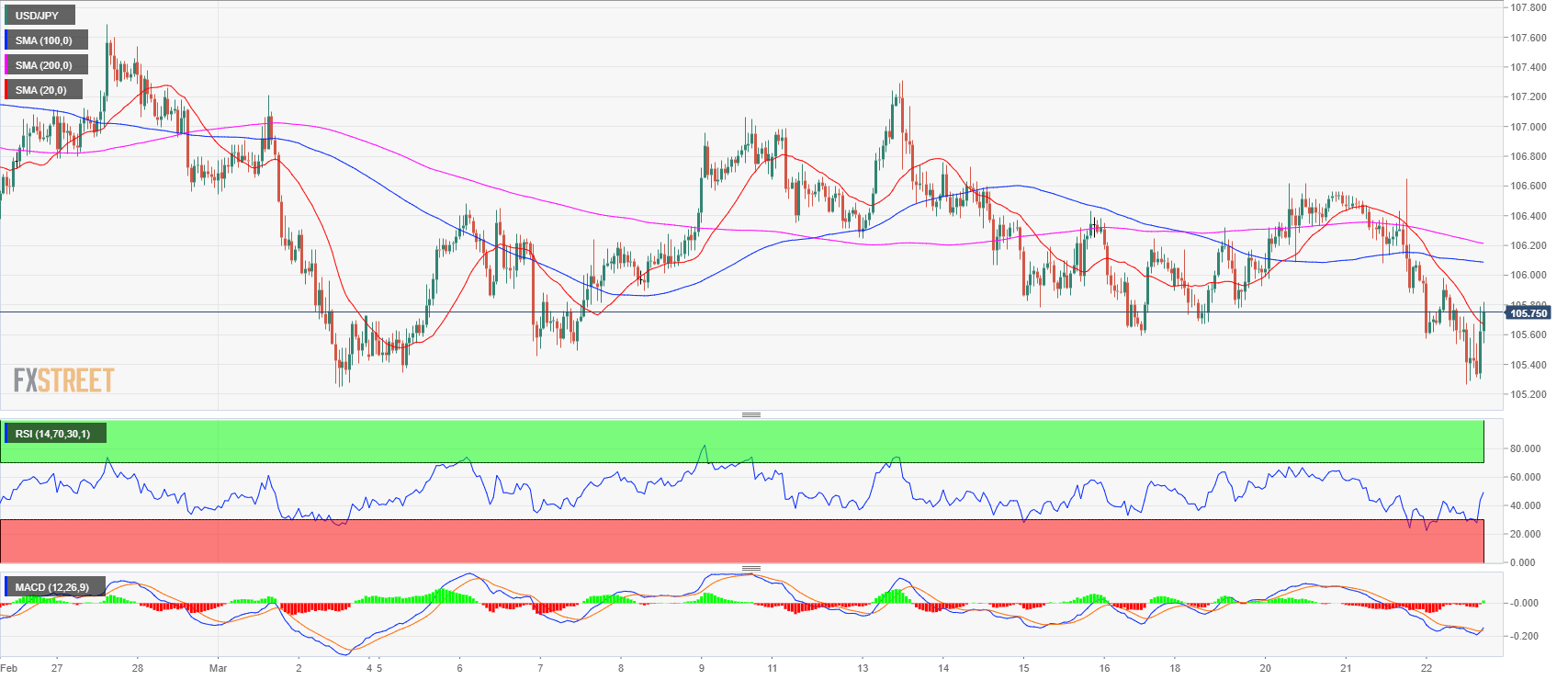
The bulls found support at the 105.26 level earlier in the European session and the market managed to bring it  up to 105.80 before finding resistance. The bulls broke above the 20 SMA which is seen as an encouraging sign for further higher prices. 

USD/JPY 5-min chart
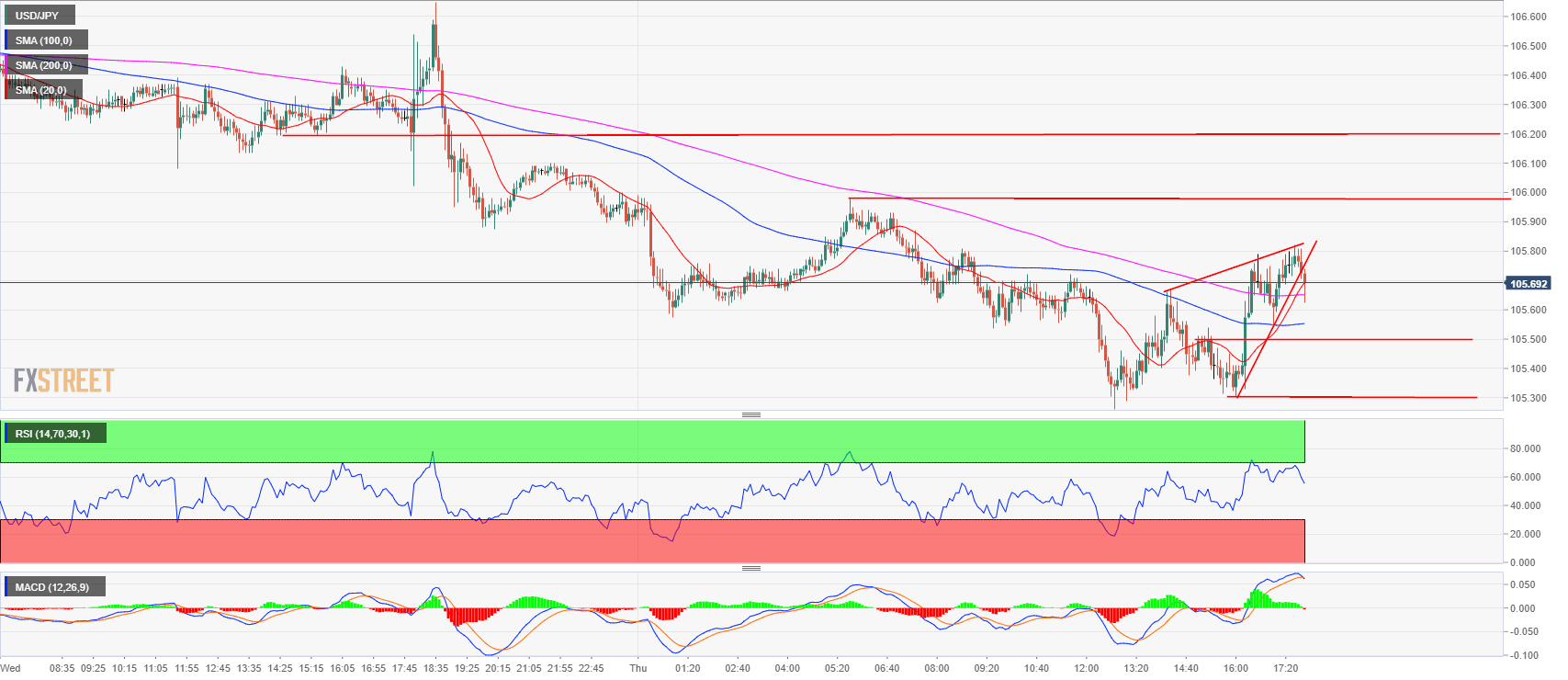
The USD/JPY on the 5-minute chart has formed a wedge pattern at the 105.80 resistance. The structure implies that we could see some resistance at this level. However, if the wedge fails we might have a breakout equal to the bull leg we say today from the bottom at 105.26. Support is seen at 105.50 previous supply zone and 105.30 previous swing low. Resistance is seen at 106 previous high and at 106.20 previous supply zone. 

Author

Flavio Tosti

Flavio Tosti

Independent Analyst

 

More from Flavio Tosti
Share:

Editor's Picks

EUR/USD meets initial support around 1.1800

EUR/USD remains on the back foot, although it has managed to reverse the initial strong pullback toward the 1.1800 region and regain some balance, hovering around the 1.1850 zone as the NA session draws to a close on Tuesday. Moving forward, market participants will now shift their attention to the release of the FOMC Minutes and US hard data on Wednesday.
 

GBP/USD bounces off lows, retargets 1.3550

After bottoming out just below the 1.3500 yardstick, GBP/USD now gathers some fresh bids and advances to the 1.3530-1.3540 band in the latter part of Tuesday’s session. Cable’s recovery comes as the Greenback surrenders part of its advance, although it keeps the bullish bias well in place for the day.

Gold hangs near one-week low; looks to FOMC Minutes for fresh impetus

Gold is consolidating just above the $4,850 level, having touched a one-week low on Tuesday, amid mixed cues. Signs of progress in US–Iran talks dent demand for the traditional safe-haven bullion. Meanwhile, rising bets for more Fed rate cuts keep the US Dollar bulls on the defensive and act as a tailwind for the non-yielding yellow metal. Traders also seem reluctant ahead of the FOMC Minutes, which would offer cues about the Fed's rate-cut path and provide some meaningful impetus.

DeFi could lift crypto market from current bear phase: Bitwise

Bitwise Chief Investment Officer Matt Hougan hinted that the decentralized finance sector could lead the crypto market out of the current bear phase, citing Aave Labs’ latest community proposal as a potential signal of good things to come.

UK jobs market weakens, bolstering rate cut hopes

In the UK, the latest jobs report made for difficult reading. Nonetheless, this represents yet another reminder for the Bank of England that they need to act swiftly given the collapse in inflation expected over the coming months. 

Ripple slides to $1.45 as downside risks surge

Ripple edges lower at the time of writing on Tuesday, from the daily open of $1.48, as headwinds persist across the crypto market. A short-term support is emerging at $1.45, but a buildup of bearish positions could further weaken the derivatives market and prolong the correction.
















