USD/CHF flat lines above 0.8650, US Retail Sales loom
- USD/CHF trades flat around 0.8655 in Thursday’s early European session.
- The US CPI inflation eased to 2.9% in July, the smallest increase since March 2021.
- The rising Middle East geopolitical tensions might boost the safe-haven flows, benefiting the CHF.

The USD/CHF pair trades on a flat note near 0.8655 during the early European session on Thursday. Traders might prefer to wait on the sidelines ahead of the top-tier US economic data on Thursday. Meanwhile, the USD Index (DXY), a measure of the value of the US Dollar relative to a basket of foreign currencies, currently trades around 102.55, losing 0.05% on the day.
The US Consumer Price Index (CPI) inflation report indicated that price pressures are on track to return to the Federal Reserve (Fed) 2% target. However, the expectation of a deeper rate cut from the Fed has eased. According to the CME FedWatch Tool, financial markets are now pricing in nearly 41% odds of a 50 basis points (bps) rate cut by the Fed in September, down from 50% prior to the release of US CPI data.
Atlanta Fed President Raphael Bostic said on Tuesday he wanted to see more evidence before supporting lower interest rates. Meanwhile, Chicago Fed President Austan Goolsbee noted on Wednesday that he becomes more worried about the labor market than inflation due to the recent progress on price pressures and weak employment data.
Investors will keep an eye on the US Retail Sales and weekly Initial Jobless Claims on Thursday for fresh impetus. The Retail Sales are expected to rise 0.3% MoM in July, while the Initial Jobless Claims for the week ending August 10 are estimated to rise by 235K, compared to 233K in the previous week. Also, the Fed’s Alberto Musalem and Patrick Harker are set to speak later in the day.
On the Swiss front, the escalating geopolitical tensions in the Middle East could boost the safe-haven currency like the Swiss Franc (CHF) and create a headwind for USD/CHF. The local news agency Aljazeera reported that Israeli military aircraft struck Hamad City as artillery blasted residential buildings in Khan Younis in the southern Gaza Strip after dozens were killed in attacks across the Palestinian territory on Wednesday. The development surrounding geopolitical risks will be in focus by market players and it might influence the pair for the time being.
Swiss Franc FAQs
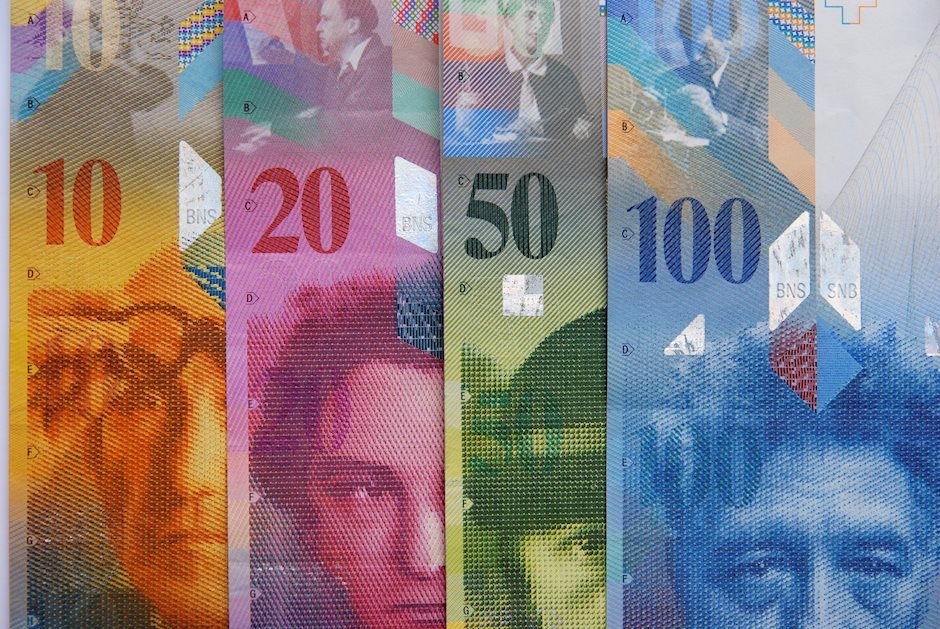
The Swiss Franc (CHF) is Switzerland’s official currency. It is among the top ten most traded currencies globally, reaching volumes that well exceed the size of the Swiss economy. Its value is determined by the broad market sentiment, the country’s economic health or action taken by the Swiss National Bank (SNB), among other factors. Between 2011 and 2015, the Swiss Franc was pegged to the Euro (EUR). The peg was abruptly removed, resulting in a more than 20% increase in the Franc’s value, causing a turmoil in markets. Even though the peg isn’t in force anymore, CHF fortunes tend to be highly correlated with the Euro ones due to the high dependency of the Swiss economy on the neighboring Eurozone.
The Swiss Franc (CHF) is considered a safe-haven asset, or a currency that investors tend to buy in times of market stress. This is due to the perceived status of Switzerland in the world: a stable economy, a strong export sector, big central bank reserves or a longstanding political stance towards neutrality in global conflicts make the country’s currency a good choice for investors fleeing from risks. Turbulent times are likely to strengthen CHF value against other currencies that are seen as more risky to invest in.
The Swiss National Bank (SNB) meets four times a year – once every quarter, less than other major central banks – to decide on monetary policy. The bank aims for an annual inflation rate of less than 2%. When inflation is above target or forecasted to be above target in the foreseeable future, the bank will attempt to tame price growth by raising its policy rate. Higher interest rates are generally positive for the Swiss Franc (CHF) as they lead to higher yields, making the country a more attractive place for investors. On the contrary, lower interest rates tend to weaken CHF.
Macroeconomic data releases in Switzerland are key to assessing the state of the economy and can impact the Swiss Franc’s (CHF) valuation. The Swiss economy is broadly stable, but any sudden change in economic growth, inflation, current account or the central bank’s currency reserves have the potential to trigger moves in CHF. Generally, high economic growth, low unemployment and high confidence are good for CHF. Conversely, if economic data points to weakening momentum, CHF is likely to depreciate.
As a small and open economy, Switzerland is heavily dependent on the health of the neighboring Eurozone economies. The broader European Union is Switzerland’s main economic partner and a key political ally, so macroeconomic and monetary policy stability in the Eurozone is essential for Switzerland and, thus, for the Swiss Franc (CHF). With such dependency, some models suggest that the correlation between the fortunes of the Euro (EUR) and the CHF is more than 90%, or close to perfect.
Author
Lallalit Srijandorn
FXStreet
Lallalit Srijandorn is a Parisian at heart. She has lived in France since 2019 and now becomes a digital entrepreneur based in Paris and Bangkok.