|

US: Healthcare failure and tax - ING
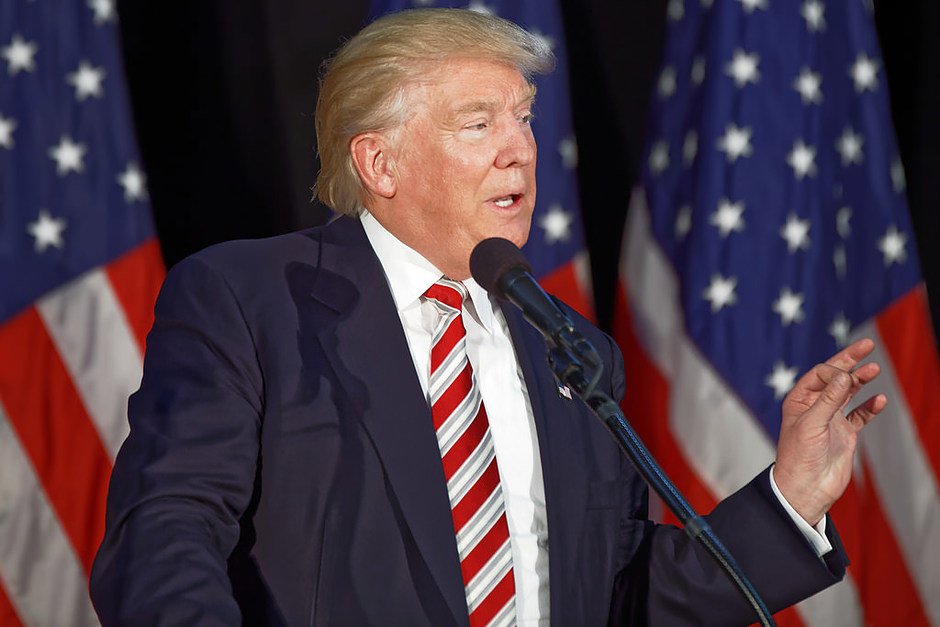
Donald Trump’s efforts to repeal and replace Obamacare have been abandoned for now, which leaves less room for the aggressive tax cuts meaning at the minimum a dilution and delay, according to James Knightley, Chief International Economist at ING.

Key Quotes

“Donald Trump’s efforts to repeal and replace Obamacare have failed given that two more Senators announced that they would not support the bill in addition to two others who had already stated their opposition. As a result, the Republican Senate majority leader Mitch McConnell found himself short of the votes needed to get it passed. Instead, Republicans took the decision to repeal, but with a two year delay, which should theoretically give them enough time to come up with the replacement that has so far eluded them. This will be voted on “in the coming days”.”

“Given Donald Trump’s linking of healthcare reform with “meaningful” tax cuts this development suggests that there is even less scope for aggressive fiscal stimulus being approved in the near-term. At the very least it implies a dilution and delay. Several Fed officials had already factored out aggressive fiscal loosening in terms of their own forecasts, but the market is clearly of the mindset that this reduces the prospect of Federal Reserve rate hikes given that growth is not going to be as strong as it might have been. It does, in our view, make it more likely that the next Fed rate hike will be in December rather than September, but does not necessarily impact on the timing of the Fed’s balance sheet reduction programme, which could start as soon as September.”

Author

Sandeep Kanihama

Sandeep Kanihama

FXStreet Contributor

Sandeep Kanihama is an FX Editor and Analyst with FXstreet having principally focus area on Asia and European markets with commodity, currency and equities coverage. He is stationed in the Indian capital city of Delhi.


More from Sandeep Kanihama
Share:

Editor's Picks

EUR/USD rises to 1.1800 neighborhood amid renewed USD selling and trade uncertainties

The EUR/USD pair regains positive traction during the Asian session on Wednesday and jumps to the 1.1800 neighborhood in the last hour, reversing the previous day's modest losses. The intraday move up is sponsored by the emergence of fresh US Dollar, which continues to be weighed down by persistent trade-related uncertainties.

GBP/USD remains stronger above 1.3500 following Trump’s State of the Union

GBP/USD remains in the positive territory for the fourth successive session, trading around 1.3510 during the Asian hours on Wednesday. The pair appreciates as the US Dollar remains subdued following US President Donald Trump’s first State of the Union address of his second administration before a joint session of Congress.

Gold re-attempts $5,200 amid tariffs and geopolitical woes

Gold buyers are back in the game early Wednesday after seeing a correction from monthly highs on Tuesday. The US Dollar slips after Trump’s SOTU fails to impress and as AI-driven worries ease. Dovish Fed bets also weigh.  Gold looks north so long as the key 61.8% Fibo resistance at $5,142 holds on the daily chart.

Bitcoin, Ethereum and Ripple post cautious recovery amid downside risks

Bitcoin, Ethereum, and Ripple are posting a cautious recovery on Wednesday following a market correction earlier this week.  BTC is approaching a key breakdown level, while ETH and XRP are rebounding from crucial support levels.

The Citrini report: How a debatable AI narrative can shake Wall Street

That AI-related headline alone was enough to rattle investors.US stocks slid sharply on Monday after a widely circulated Citrini Research memo outlined a hypothetical “2028 Global Intelligence Crisis”, warning that rapid AI adoption could push US unemployment into double digits as early as by mid-2028.

XRP pressured by weak ETF flows and declining retail interest

Ripple (XRP) is edging lower, trading above its intraday low of $1.32 at the time of writing on Tuesday. The decline from its weekly opening of $1.39 reflects heightened volatility in the broader cryptocurrency market, accentuated by tariff-triggered uncertainty.