US Dollar holds on to intraday gains as markets head to safe havens on weak China trade data
- The Greenback partly recovers Friday’s losses.
- US Treasury yields trade sideways around 4.61%.
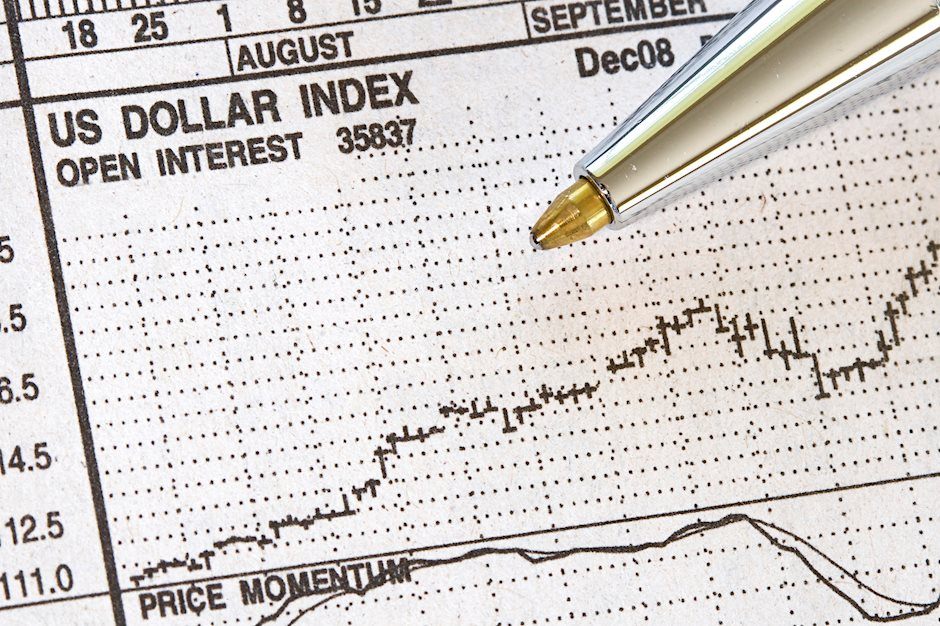
- The US Dollar Index is trying to recover from last week’s drop, though still has a long way to go.

The US Dollar (USD) is recovering further and picks up speed as the US session kicks off. Traders are trying to let the dust settle in the aftermath of the disappointing US jobs report. Instead, investors try to look forward and might see the US Dollar Index recover some partial losses.
On the economic data front, a few more data points after a very calm Monday. The US trade balance already came out and revealed a bigger than expected deficit. Meanwhile, speeches from Fed Governor Christopher J. Waller and New York Fed President John C. Williams f might deliver some more interest-rate guidance to the markets.
Daily digest: US Dollar supported by safe havens
- A few suprise comments from Chicago Fed member Austan Goolsbee, who said the Fed will not precommit to any rate decisions. The Fed is paying attention to the movements in the bond market though.
- China trade data showed a decline in exports by 6.4%, while imports rose by 3.0%.
- US Goods and Services Trade Balance for September saw an even bigger deficit of $-61.5 billion, against the previous $-58.7 billion.
- The Redbook Index went from 5.3% to 3.1%.
- Many Fed speakers will take the stage: at 15:00 GMT Fed Governor Christopher J. Waller is due to speak, followed by New York Fed President John C. Williams at 17:00 GMT.
- The US Treasury is heading back to the markets for a 3-year note auction .
- Consumer Credit Change numbers for September are due atr 20:00 GMT: Previous data saw a decline of $15.63 billion, and an increase of $10 billion is expected.
- Asian equities are setting the tone: red. That comes on the back of weaker export data out of China. Asian equities are all down over 1%. European equities are mildly in the red, as they areUS equity futures.
- The CME Group’s FedWatch Tool shows that markets are pricing in a 90.2% chance that the Federal Reserve will keep interest rates unchanged at its meeting in December.
- The benchmark 10-year US Treasury yield trades at 4.61%, finding some calmer ground after the volatile week last week.
US Dollar Index technical analysis: US Dollar welcomes safe haven flows
The US Dollar is no longer speculators’ favoured trade this year. Recent data from the Commodity Futures Trading Commission (CFTC) sees US dollar contracts coming off their highs. This means that speculators are starting to unwind their US Dollar Index holdings. This could be a sign that more profit taking is underway, and that more weakness could be in the cards for the Greenback.
The DXY is looking for support near 105.00, though it is struggling to find it. Any shock events in global markets could spark a sudden turnaround and favour safe-haven flows into the US Dollar. A return first to 105.51 would make sense, near the 55-day Simple Moving Average (SMA). A break above could mean a test on the descending trend line near 105.88.
On the downside, a big air pocket is developing and could see the DXY drop to 103.98, near the 100-day SMA, before finding ample support. In case it turns into a falling knife, 103.52 – the 200-day SMA – could act as circuit break. If that level snaps as well, the road is open to head to 101.00.
Fed FAQs
What does the Federal Reserve do, how does it impact the US Dollar?
Monetary policy in the US is shaped by the Federal Reserve (Fed). The Fed has two mandates: to achieve price stability and foster full employment. Its primary tool to achieve these goals is by adjusting interest rates.
When prices are rising too quickly and inflation is above the Fed’s 2% target, it raises interest rates, increasing borrowing costs throughout the economy. This results in a stronger US Dollar (USD) as it makes the US a more attractive place for international investors to park their money.
When inflation falls below 2% or the Unemployment Rate is too high, the Fed may lower interest rates to encourage borrowing, which weighs on the Greenback.
How often does the Fed hold monetary policy meetings?
The Federal Reserve (Fed) holds eight policy meetings a year, where the Federal Open Market Committee (FOMC) assesses economic conditions and makes monetary policy decisions.
The FOMC is attended by twelve Fed officials – the seven members of the Board of Governors, the president of the Federal Reserve Bank of New York, and four of the remaining eleven regional Reserve Bank presidents, who serve one-year terms on a rotating basis.
What is Quantitative Easing (QE) and how does it impact USD?
In extreme situations, the Federal Reserve may resort to a policy named Quantitative Easing (QE). QE is the process by which the Fed substantially increases the flow of credit in a stuck financial system.
It is a non-standard policy measure used during crises or when inflation is extremely low. It was the Fed’s weapon of choice during the Great Financial Crisis in 2008. It involves the Fed printing more Dollars and using them to buy high grade bonds from financial institutions. QE usually weakens the US Dollar.
What is Quantitative Tightening (QT) and how does it impact the US Dollar?
Quantitative tightening (QT) is the reverse process of QE, whereby the Federal Reserve stops buying bonds from financial institutions and does not reinvest the principal from the bonds it holds maturing, to purchase new bonds. It is usually positive for the value of the US Dollar.
Author
Filip Lagaart
FXStreet
Filip Lagaart is a former sales/trader with over 15 years of financial markets expertise under its belt.