US Dollar down but not out, eyes on US CPI
- The US dollar could be on the verge of a significant break to the downside.
- Risk-off start to the week, however, should offer immediate support.

The US Dollar fell on Friday on the back of the US jobs report that had something for everyone. US Nonfarm Payrolls increased 261,000 last month, data showed, also offering a revision show 315,000 jobs added instead of 263,000 as previously reported. Economists polled by Reuters had forecast 200,000 jobs, with estimates ranging from 120,000 to 300,000. However, the Unemployment Rate rose to 3.7% from September's 3.5%. Average hourly earnings increased 0.4% after rising 0.3% in September, but the rise in wages slowed to 4.7% year-on-year in October after advancing 5.0% in September.
DXY, an index that measures the greenback vs. a basket of currencies dropped to 110.72 from a high of 112.993. It did so despite the fed funds futures on Friday pricing in a 52.5% chance of a 75-basis-point interest rate hike next month and a 47.5% probability of a 50-basis-point increase. Reuters reported that the odds of a 75-basis-point rise went as high as 64% immediately after the payrolls data. The Fed's terminal rate, or the level at which rates would peak, slipped to 5.09% late on Friday, from about 5.2% just before the data.
China and CPi are the drivers
However, it was a risk-on mood that also helped to sink the greenback with speculation that Chinese authorities were working on plans to scrap a system that penalizes airlines for bringing virus cases into the country. This boosted investor hopes that China’s pandemic policy may soon be loosened. Nevertheless, there is a weekend report that rebuttals such news which is a positive for the greenback at the start of the week when investors will be quickly turning their attention to the US inflation data.
''Core prices likely slowed modestly in Oct, but to a still strong 0.4% MoM pace,'' analysts at TD Securities said. ''Shelter inflation likely remained the key wildcard, though we look for used vehicle prices to retreat sharply. Importantly, gas prices likely shifted from offering relief to the Consumer Price Index in recent months to contributing to it in Oct. All told, our m/m forecasts imply 7.9%/6.5% YoY for total/core prices.''
DXY technical analysis
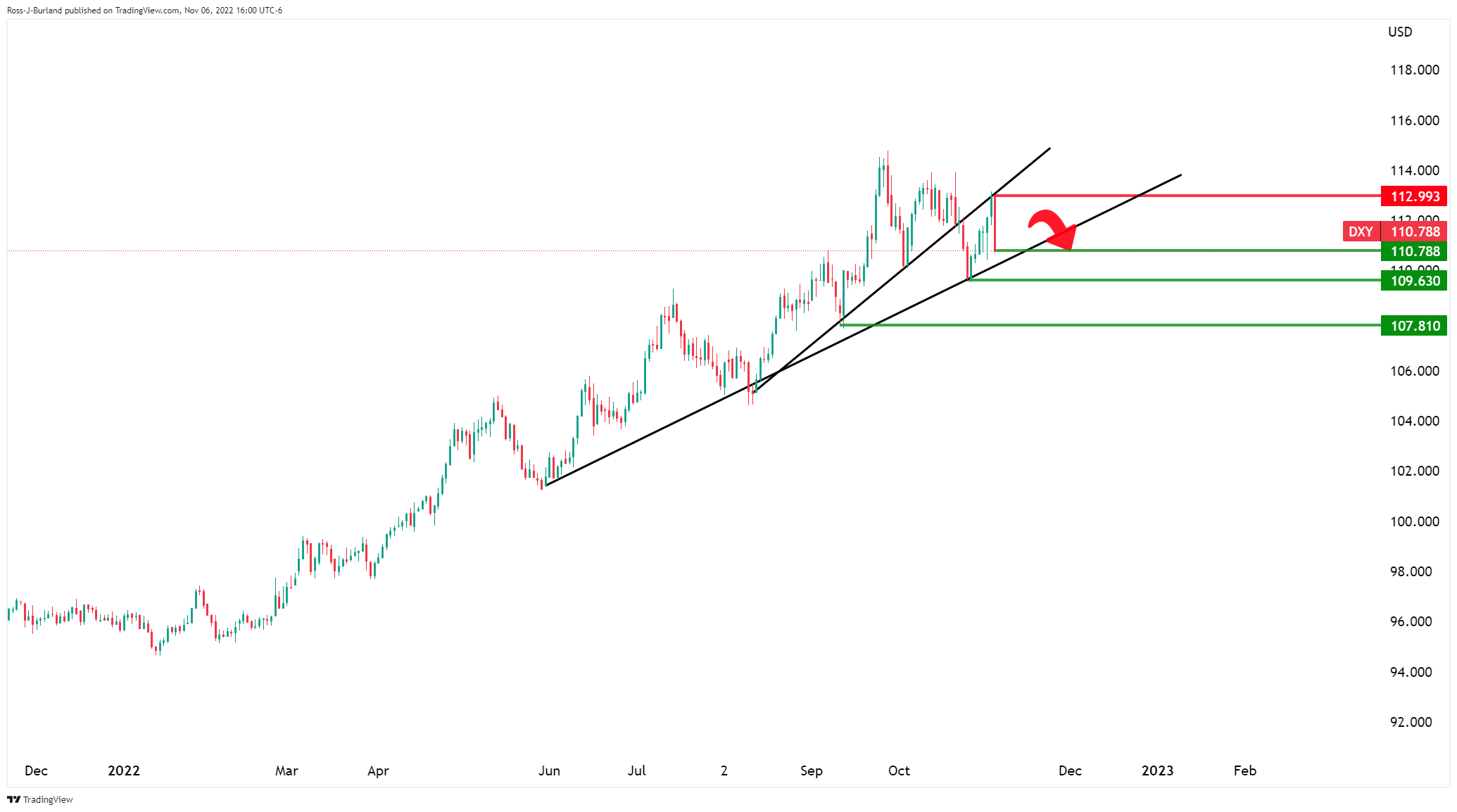
The price is testing a key area of support but is on the backside of the micro trendline which could be bearish for the week ahead. A move below 110.80 then 109.63 and 107.80, would be significant for the outlook for forex in the final weeks of the year.
Author

Ross J Burland
FXStreet
Ross J Burland, born in England, UK, is a sportsman at heart. He played Rugby and Judo for his county, Kent and the South East of England Rugby team.